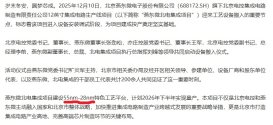
China has developed many prototypes over the years. In 2016, they developed a prototype of a 90nm lithography machine. In 2023 they developed a prototype of a 28nm lithography machine. Now they have supposedly developed a prototype of an EUV lithography machine. The problem is that we have never heard proof that any of these prototypes ever made it to the mass production for commercial use stage. The only machines in use for mass production are ASML, and to a lesser extent, Nikon and Canon. At this point, I'd be more impressed with a confirmed report of any Chinese front end lithography machine of any node size in use for mass production on a commercial line, than another prototype of even the most advanced capability.
Looks like you at stage 2 of tech denial/copium curve.
- It's not a "real" EUV, just a SeeSeePee propaganda.
- Okay it's an actual prototype, but just a lab test unit for research use.
- Okay, it's commercial grade, but low-yields, costly, economic suicide. At what cost?
- Okay, decent yields, but it was espionage, stolen, reverse engineered.
- Okay, even if they figured out a lot themselves, but limited scalability and capacity. Unclear performance parameters.
- Okay, decent capacity, but "only" Chinese customers, no Western market or export appeal.
- Okay, EUV exports, but not high-NA!
- Okay, high-NA, but let me sell you ASML EUV to get you addicted to Western tech stack.
- Okay, you have legit high-NA EUV, but that's dangerous overcapacity and national security concern, must ban!
- Overall, EUV is junk tier technology that even primitives can do, boring. Legacy stone age tools. Try jet engine tech, does WS-10 do better than 400 hrs MTBF?
Exclusive: How China built its ‘Manhattan Project’ to rival the West in AI chips
Reuters article riddled with disinformation and flaws that tries to undersell the vast monumental challenge of "
" as NYT calls it, which is replicating an independent supply chain for semiconductors and developing EUV.
The availability of parts from older ASML machines on secondary markets has allowed China to build a domestic prototype, with the government setting a goal of producing working chips on the prototype by 2028, according to the two people. (
)................Export-restricted components from Japan’s Nikon and Canon are being used for the prototype, one of the people and an additional source said. (
)
How did they conclude "second hand DUV parts" from Nikon and Canon can make assemble EUV? DUV is fundamentally different from EUV...and it is not interchangeable Lego pieces... This gives off "
Russia is recycling washing machine chips" vibes.
It was built by a team of former engineers from Dutch semiconductor giant ASML who
reverse-engineered the company's extreme ultraviolet lithography machines or EUVs, according to two people with knowledge of the project. (
)
...................
No EUV system has ever been sold to a customer in China, ASML told Reuters. (
)
How did they conclude 'reverse engineering' without ASML shipping an actual EUV unit on hand to disassemble, analyze, and inspect? You can't really call it 'reverse engineering' without an EUV sample unit on-hand. Rather, the more appropriate term is '
indigenous innovation' or '
independent re-implementation', let's not devalue this as simply copy-paste, it's a monumental task to re-implement this technology independent without a working unit in front of you.
The team includes recently retired, Chinese-born former ASML engineers and scientists—prime recruitment targets because they possess sensitive technical knowledge but face fewer professional constraints after leaving the company, the people said. (
).............. The company said it safeguards EUV knowledge by ensuring only select employees can access the information even inside the company. (
)
I am sure it's helpful to have former ASML engineers to contribute knowledge, but even ASML admits only a select few engineers have access to the core technology or know-how of the entire system itself. It is deeply misleading to suggest that hiring a limited number of former ASML employees would be sufficient to recreate an EUV system from scratch. ASML engineers are typically specialists, each focused on a narrow component or process within a highly complex, multi stage workflow. Even if you take it to the extreme by recruiting the entirety of ASML’s engineering staff would still be insufficient without the underlying materials science, supplier ecosystems, and manufacturing capabilities required to actually implement the tech, rather than simply understand its theoretical steps. You have to master the underlying industrial processes to implement it in practice, not just hire the fragmented bits of knowledge behind it for pennies on the dollar.
A team of around 100 recent university graduates is focused on reverse-engineering components from both EUV and DUV lithography machines, according to the people. (
)
First off, this is a "Manhattan level project", yet it relies on a team of
100 recent university graduates to allegedly hand-disassemble and reassemble? REALLY? Has China run out of professional seasoned engineers like "Russia has run out of missiles"? This also gives me "China throws cheap bodies in human waves at problem" vibes. Really, only
100 recent university graduates? Try tens of thousands of seasoned engineers and professional scientist with decades of scientific experience, not a bunch of noobs led by a few Western-trained ASML specialists.