
You are using an out of date browser. It may not display this or other websites correctly.
You should upgrade or use an alternative browser.
You should upgrade or use an alternative browser.
Russia Economy Thread
- Thread starter NiuBiDaRen
- Start date
Power of Siberia 2 should be cheapest option since Russia is bringing the Pipeline to Mongolia border and increase gasification of entire regions. There are also newer and more efficient gas compressors and modern construction techniques.
They are expecting new power supply of 229MW to this one Gold field. unlike other countries Russia Gold reserves almost entirely made up of local Gold and they do sell overseas.
This Amur GCC complex is designed for the advanced processing of hydrocarbon feedstock into high-tech materials for the Russian and global market. Russia is doing every thing on bigger scale.
This long article describing Putin effort to fundamentally restructure society so it can practice traditional values. and it has direct impact on female participation in labor market. to counter act this short fall in labor market the education system has to change that enable super intelligent people with long life expectancy in STEM. AI and Robotics will play role in it.
Miller is confident that Power of Siberia 2 will be built ahead of schedule.
"In short, this is a Gazprom-scale project, a global one. We know how to build projects like this, and we love it. I'm confident that, like Power of Siberia, we'll build the Power of Siberia 2 gas pipeline not only on time and with high quality, but also ahead of schedule," he said.
11:30 PM, February 4, 2026
Khabarovsk Krai has requested additional gas volumes via the Power of Siberia pipeline.
Khabarovsk Krai Governor Dmitry Demeshin asked Deputy Prime Minister Alexander Novak to allocate additional gas to the region via the Power of Siberia pipeline following the launch of the Belogorsk-Khabarovsk gas pipeline in 2027. By 2029, the region will need 9 billion cubic meters of gas per year.
This is request from North Korea for supplying hydrocarbon and Fertilizer.Mongolia switches to Russian fuel: 100% of petroleum product imports will come from Russia.
March 17, 2026 – Ulaanbaatar made a strategic choice in favor of Russia. By 2026, Mongolia will be fully self-sufficient in petroleum products from Russia. This decision was dictated by external circumstances, but it cements the long-standing partnership between the two countries.
Mongolia's Deputy Minister of Industry and Mineral Resources, Begzsuren Enkhtuvshin, officially announced that the country will switch to 100% imports of petroleum products from Russia in 2026. This is due to China's ban on fuel exports, closing the previous supply channel.
"This year, we will not be able to import petroleum products from China, so supplies from Russia will cover 100% of Mongolia's fuel needs," TASS quotes the deputy minister as saying.
In reality, the transition to Russian fuel is not a revolution, but an evolution. Even before the ban, China was a minor supplier: Mongolia already received approximately 97% of its petroleum products from Russia.
Request for product export to the DPRK: search for suppliers
The Primorsky Krai Export Support Center (a structural division of the My Business Center), together with the Ministry of International and Foreign Economic Relations of the region, continues to work to expand business contacts with partners from the DPRK.
The Trade and Economic Department of the DPRK Consulate General in Vladivostok has sent a request to find Primorsky Krai companies willing to supply the following commodity items:
➣ AI-92 gasoline (volume: 1,000 tons/month)
➣ Diesel fuel (volume: 1,000 tons/month)
➣ Bitumen (volume: 3,000 tons/month)
➣ Urea (fertilizer) (volume: 500 tons/month)
➣ Crude oil (volume: from 6,000 tons/month)
They are expecting new power supply of 229MW to this one Gold field. unlike other countries Russia Gold reserves almost entirely made up of local Gold and they do sell overseas.
Polyus launches Vitim substation for Russia's largest gold deposit
11:00 18.03.2026
Rosseti has connected the Vitim substation to the Unified National Electric Grid (UNEG), a move made possible by investments in infrastructure development in Eastern Siberia. The power supply involves facilities of the Peleduy Power Ring, which connects the northern Irkutsk Region, the Trans-Baikal Territory, and the Republics of Buryatia and Sakha (Yakutia).
Infrastructure development
MES Siberia, a branch of PJSC Rosseti, expanded the 220 kV Sukhoi Log substation by installing two 220 kV line cells with modern switching devices. This enabled the generation of 15 MW of power for the field, where pilot production and the construction of the plant are underway. Future plans call for increasing the capacity to 229 MW.
Russian gold producer Polyus 2025 pre-tax profit rises 12% to $6.3 bln
This Amur GCC complex is designed for the advanced processing of hydrocarbon feedstock into high-tech materials for the Russian and global market. Russia is doing every thing on bigger scale.
Amur Gas Chemical Combine has completed testing of one of the most powerful and environmentally friendly boiler houses in the Russian petrochemical industry.
March 19,
SIBUR's Amur Gas Chemical Complex successfully completed comprehensive testing of its 200 MW boiler plant. The facility has confirmed its operational readiness, becoming a key component of the complex's energy infrastructure. It is currently the most modern and technologically advanced facility in its capacity class in the Russian Far East.
The project was implemented using 100% domestic solutions. The main boiler equipment, software, and automated process control systems (APCS) were manufactured in Russia. The use of Russian digital systems guarantees high control reliability and the facility's technological independence.
This long article describing Putin effort to fundamentally restructure society so it can practice traditional values. and it has direct impact on female participation in labor market. to counter act this short fall in labor market the education system has to change that enable super intelligent people with long life expectancy in STEM. AI and Robotics will play role in it.
President Vladimir Putin defends traditional values and the domestic role of women in Russia.
Expectations from the female labor market
Labor economists predict a serious stagnation in women's professional growth due to the simultaneous pursuit of excellence in the corporate world and the exclusive commitment to managing the home and family. The lack of real and effective government support policies is forcing thousands of highly qualified professionals to abandon their careers prematurely, creating a talent shortage in critical economic sectors already suffering from a shortage of specialized labor and commercial isolation
Vietnam first nuclear plant. Russia has the largest number of countries as clients where first Nuclear plant is built by Russian and this happening at time Russia is doing largest expansion domestically surpassing Soviet efforts in much spread out geographic Area all the way to East.
This is the main idea of article. Science is accelerating.
Russia want complete decouple from Europe but Asia will have to built deep storage of gas that filled in summer and ships that operate in Arctic. Arc 4 should be with in most countries capabilities.
They are changing english name to Cyrillic on iconic products. that is reverse of Soviet.
UAZ plans to register the name of Hunter SUV

The price is 1/6 of Europe but Russia goes full cycle from raw materials. they already have smaller battery plant for EV heavy vehicles.
Russia, Vietnam agree deal on nuclear power plant construction
This is the main idea of article. Science is accelerating.
The main resource of the modern world isn't oil or uranium. It's time. According to the theory of relativity, time passes more slowly for those who move quickly, meaning they can accomplish more.
No limitations on task complexity and scale.At the speed of an atom
How Russian nuclear science and industry are accelerating
March 19, 2026, 9:30 AM
Patriarchs of Speed
And speed is crucial here. Because in today's global technology market, the dichotomy is "if not us, then us." The essence of our work today is the rapid response to challenges, when the time from idea to industrial prototype is extremely compressed. For us, speed isn't a race for immediate results, but a way to exist in a highly competitive environment where external players strive to isolate us technological
Playing ahead
Where is speed most visibly manifested? In physics, in the movement of atoms. But it's invisible to the naked eye. The same is true for the nuclear industry—from the average person's perspective, nothing much has happened in this field in the last couple of decades. But if we "adjust our lenses" and look more closely, we see many interesting and impressive things.
Small modular reactors (SMRs) are being talked about around the world as a promising new form of nuclear energy. They are seen as a near-panacea for solving specific energy supply problems. And here in Russia, in Chukotka, a small modular power unit consisting of two reactor units has been operating for almost six years. This is the world's first floating nuclear power plant, the Akademik Lomonosov.
What truly manifests the new nuclear energy is our flagship project, "Breakthrough," which we are implementing in Seversk. We are currently completing the world's first industrial-scale Generation IV technology with a closed nuclear fuel cycle based on fast neutron reactors. By the end of the decade, Russia will have an energy system operational that will solve the problem of radioactive waste. While modern nuclear power with thermal reactors utilizes the potential of only about 1% of natural uranium, fast reactors make it possible to incorporate uranium-238, which accounts for over 99% of natural uranium, into the fuel cycle. This greatly increases the resource base. But most importantly, fast reactors, combined with a molten salt afterburner reactor, will radically reduce the lifetime of radioactive waste. From millennia to hundreds of years. We are literally accelerating time, helping nature return to equilibrium more quickly.
In December 2024, we launched pilot production of the fuel fabrication module for the "heart" of the new power complex—the innovative BREST-OD-300 fast reactor. We recently manufactured the unique OS-5 fuel assembly with a liquid metal sublayer. This isn't just a step—it's a quantum leap in materials science. We're shortening the path from laboratory prototype to reactor production faster than our predecessors could have dreamed of even 30 years ago.
Why are data centers near nuclear power plants all about speed? Because we provide data centers with not just clean and affordable energy, we also provide them with predictability.
n a world where mining and artificial intelligence require megawatts of energy, energy stability is becoming a critical factor in the speed of the digital economy.
The main resource of the modern world isn't oil or uranium. It's time. According to the theory of relativity, time passes more slowly for those who move quickly, meaning they can accomplish more.
March 23, 2026
Additive manufacturing and robotics for metallurgy were discussed at the Eurasian Technology Congress.
"We see a huge demand from metallurgists for additive manufacturing solutions for refurbishing worn components, printing tooling with conformal cooling, and rapidly manufacturing spare parts. As an industry integrator in additive manufacturing, we are ready to offer the market a full range of services – from powder materials and our own equipment to R&D and post-processing, and our references are supported by successful projects implemented at nuclear industry facilities," Ilya Kavelashvili noted in his speech.
"Today, we are witnessing the confluence of two powerful trends – additive manufacturing and robotics. Their combination allows us not only to automate routine operations but to completely rethink the very logic of product creation. As Rosatom's industry integrator for robotics, we see this synergy as the foundation for the manufacturing of the future, where the complexity and scale of tasks are no longer limitations."
Russia want complete decouple from Europe but Asia will have to built deep storage of gas that filled in summer and ships that operate in Arctic. Arc 4 should be with in most countries capabilities.
Novatek's Strategic Venture: Russia Taps Vietnam for LNG Contracts
Russia's leading LNG producer, Novatek, has signed a preliminary contract with a Vietnamese buyer to commence LNG supplies. The deal follows years of negotiations, aligning with Russian President Vladimir Putin's warning of halting supplies to Europe. This move indicates a strategic shift towards Southeast Asian markets.
PetroVietnam Gas has been confirmed to be in discussions with Novatek, as Russia recalibrates its gas export strategy. This shift is in response to President Vladimir Putin's recent statements indicating potential cessation of gas supplies to Europe, aiming instead to secure more enduring engagements with other regions.
They are changing english name to Cyrillic on iconic products. that is reverse of Soviet.
UAZ plans to register the name of Hunter SUV
The price is 1/6 of Europe but Russia goes full cycle from raw materials. they already have smaller battery plant for EV heavy vehicles.
The first cluster for the production of energy storage systems is being formed in Russia.
It will meet almost the entire market demand for modern batteries, according to the secretariat of Russia's First Deputy Prime Minister Denis Manturov.
MOSCOW, March 20. /TASS/. The first cluster for the production of energy storage systems is being formed in Russia. It will meet almost the entire Russian market demand for modern batteries. This was announced by the secretariat of First Deputy Prime Minister Denis Manturov. He held a meeting on the development of energy storage system production in the country and, together with Moscow Mayor Sergei Sobyanin, inspected the construction of two of the country's largest battery factories.
"Today, it's impossible to imagine energy development without the production of storage systems. The potential for their application is enormous: increasing the reliability of urban grids, developing electric transport, and providing autonomous power supply to remote areas. Energy storage technologies are becoming the foundation for a fundamentally new energy consumption model. Within five years, the combined capacity of Russian manufacturers should reach over 12 GWh, which will cover the majority of the country's needs. Equally important, localizing storage system production provides a powerful boost to related industries," Manturov said in the statement.
As noted in the report, the traction battery currently accounts for approximately 35% of the cost of electric vehicles. Localizing battery production will reduce costs and increase the economic attractiveness of electric vehicles.
Once fully operational, the two plants will be able to produce up to 33 million battery cells per year. Investments in the projects will exceed 105 billion rubles, according to the statement.
This Putin policy speech. emphasis on AI, Robotics and digital platforms . Russia extraction salaries are nearly double of manufacturing.
ASEAN has larger GDP than India. there is no reason Russia trade cannot reach $100b and it is full decoupling going from Europe.

Russia airborne internet is getting closer to operational.
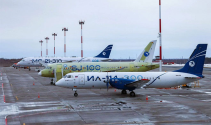
I think this first time maybe in world history that three different size aircraft doing same test. SJ-100 has the longest range and highest speed (965 km/hour) so far.
ASEAN has larger GDP than India. there is no reason Russia trade cannot reach $100b and it is full decoupling going from Europe.
Emphasis is going East and South.The Russian Foreign Minister met with ASEAN ambassadors in Moscow.
Trade between Russia and ASEAN is growing rapidly, with plans to triple its volume to $100 billion in the coming years.
the claim in these extreme conditions JSC Kama Atom performed better than competitors for example range. we have to see how long term reliability of tires, batteries, suspension components. they claim it has comfort of D class like Camry and among shortest run radiusRussia has oil reserves for export, will use them - deputy PM
MOSCOW. March 26 (Interfax) - Russia has diversified routes for oil exports, and reserves of crude are available, Deputy Prime Minister Alexander Novak told reporters when answering a question about whether the country could quickly redirect supplies from Baltic ports.
"We have diversified supply routes. As you know, there are pipeline supplies via the ESPO [East Siberia Pacific Ocean] pipeline, Skovorodino-Mokhe, through Kazakhstan; there are ports in the Black Sea and the Baltic, so there are reserves. We will use them," he said.
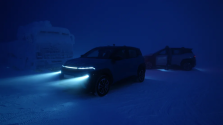
The domestically produced Atom electric car passed tests in Surgut at -42°C.
Kama JSC reported on subzero weather testing . The tests took place in Surgut, where temperatures dropped to -42°C. The developer stated that the electric vehicle's operating range is -30°C to +40°C, and all major systems performed without significant issues. The tests lasted two weeks on public roads and snowy country roads, covering a total mileage of over 1,500 km.
To evaluate the effectiveness of the climate control system, the interior temperature was maintained at a constant 24°C with an outside temperature of -42°C. Fully warming the interior from -30°C to this temperature took 25 minutes. Tests of the high-voltage battery's thermal management efficiency and charging speed at various charging stations showed that at -30°C, the car fully charges from 20-80% in approximately 45 minutes.
Finally, Kama stated that for comparative purposes, they conducted similar tests with the most popular electric vehicles from other manufacturers. Across key parameters—energy efficiency, warm-up speed, and heat retention—the Atom's results were comparable to, or even better than, its competitors'. For example, the Russian electric car traveled further on a single charge than its competitors.
Russia airborne internet is getting closer to operational.
Russian aircraft will have stable internet access – the new Efir-600 antenna has passed tests.
The Moscow Scientific Research Institute of Radioelectronics and Radioelectronics (MNIISR) has completed a key stage of testing the Efir-600 antenna, which is capable of providing broadband internet and stable communications on board aircra
In the future, the Efir-600 will find application not only in aviation but also in maritime navigation, including icebreakers, and on railways. The platform's versatility allows the technology to be scaled to various modes of transport requiring reliable satellite communications on the move.
I think this first time maybe in world history that three different size aircraft doing same test. SJ-100 has the longest range and highest speed (965 km/hour) so far.
New Russian aircraft undergo extreme testing
what size of GDP consumes this much electricity considering Gas consumption is next to US. they want to increase 50% in addition off the grid single family homes and Agro farms additional.
This further agreements with DP World. Dubai based Ports owner. They already part of NSR. They are signing agreements ahead of time As robotics and advance tech in mining will produce unique products. Russia is very integrated into Royal Kingdom economic and Aviation market. this synergies creating shift to Asia and Africa through Pacific and North-South Corridor.
Electricity generation in Russia increased by 3.1% in January–February 2026.
Electricity production in Russia in January–February 2026 reached 226 billion kWh, a 3.1% increase compared to the same period last year. Growth was recorded across all major power plant types, but at varying rates. Rosstat provides the data.
This Siberian branch of RAS visit to Kazakhstan. mostly related to new research and high tech cities.Remote control of a solar power station was implemented for the first time in Russia.
For the first time in the Unified Energy System of Russia, the plant has implemented comprehensive remote control from the control center for three key parameters simultaneously: active and reactive power, switching devices, and the status of relay protection and emergency control devices. According to Alexander Kirichenko, Director of the Rostov Regional Dispatch Center, the high level of automation allows for prompt response to changes in the power system and minimizes the impact of human error.
The performance of the digital automated process control system (APCS) was confirmed by comprehensive tests involving specialists from the Rostov Regional Dispatch Office (RDO), a branch of JSC SO UES.
Kalmykia's power system is unique: it consists almost entirely of renewable energy sources. With the commissioning of the Laganskaya Solar Power Plant, the share of renewable energy in the region's total installed generating capacity has reached 96.9%.
The Siberian Branch of the Russian Academy of Sciences is strengthening its cooperation with Kazakhstan.
During the talks, the focus was on participating in the creation of new science and high-tech cities, nuclear issues, including nuclear medicine, and inter-university ties.
"Some Russian universities are planning to open branches in Kazakhstan," V. Seliverstov recalled. "In particular, there are discussions about a branch of Novosibirsk State University at Al-Farabi Kazakh National University (Almaty), but the puzzle hasn't yet come together. Joint laboratories and expanded student exchanges at all levels could be the first step before branching out." According to the scholar, L.N. Gumilyov Eurasian National University and Nazarbayev University (Astana) also hold great potential for cooperation.
"Overall, there's confidence that Siberians will develop long-term and strong ties with Kazakhstan," Valentin Parmon concluded. "This should also be facilitated by the fact that many of Kazakhstan's current leaders in scientific and technological development received their education in Siberia: for example, Timur Miftakhovich Zhantikin, Deputy Chairman of the Kazakh Nuclear Energy Agency, is a graduate of NSU. Cooperation with Nazarbayev University, which is positioned as Russia's equivalent of Moscow State University, is very important. Collaboration with it, as well as with other universities and research institutions in Kazakhstan, seems very interesting and promising."
This further agreements with DP World. Dubai based Ports owner. They already part of NSR. They are signing agreements ahead of time As robotics and advance tech in mining will produce unique products. Russia is very integrated into Royal Kingdom economic and Aviation market. this synergies creating shift to Asia and Africa through Pacific and North-South Corridor.
Russia is new to Soybean oil. its infrastructure shift to East.Rosatom will gain access to 40% of the world’s container ports thanks to DP World
The Russian state corporation Rosatom and the port operator DP World (UAE) have agreed to create a new joint business.
The transport group FESCO will be part of it, Russian media reports.
The participants in the agreement are Rosatom’s subsidiary Global Logistics, DP World Russia FZE and Far Eastern Shipping Company (the parent company of the FESCO transport group).
“The partnership with DP World is in line with Rosatom’s strategy to create a global logistics operator for the effective implementation of national tasks to develop the transport potential of both the company and the Northern Sea Route corridor. DP World owns about 40% of container ports around the world, and as part of the creation of the joint company, Rosatom will gain access to them. for the Northern Sea Route,” said a representative of Rosatom.
The state corporation and DP World already have a joint venture established in 2023. In LLC “International Container Logistics” in “Rosatom Logistics” (a structure of the state corporation “Rosatom”) – 51%, in the company DP World Russia FZE – 49%.
This Russia rare earth refining cluster in Siberia. $9b and done. when you compared to Oil/Gas the investments are mere 5% over same period. Oil/Gas importance cannot be reduced.
There are approximately 500K People work from ROSATOM and this can double in next few years. this is like indirectly eliminating small business and create giant corporation with centralized research/design and trained people on AI/Robotics. These Nuclear cities will become Silicon Valleys. intersection of AI, Material science and Semiconductors.
Denis Manturov has become the head of the Mendeleev Valley Board of Trustees.
Currently, its main task is the development of the Angara-Yenisei metallurgical cluster.
The first meeting of the newly created council took place yesterday, where for deep processing of non-ferrous, rare, and rare earth metals was discussed.
Over the past three years, three major deposits—Ak-Sug, Tastygskoye, and Bolshetagninskoye—have been licensed in the Siberian Federal District, fundamentally changing the raw material supply situation for the domestic industry. According to the Russian Ministry of Natural Resources, the Siberian Federal District now accounts for 40% of Russia's lithium reserves and 50% of its niobium and tantalum reserves.
The cluster's creation was announced last year. Investment in the project is estimated at 700 billion rubles. Siberia has significant reserves of rare earth elements. It would be profitable and logical to organize their processing locally, utilizing the scientific and industrial base of the Krasnoyarsk Territory and beyond.
"A single framework integrates the raw material base, scientific research and technological development, multi-stage personnel training, advanced processing of valuable mineral resources, and the production of finished products that meet current and future market needs. This approach enables a consistent transition to a high-value-added economy, the creation of added value within the country, and the development of sovereign technological chains in critical sectors," the Deputy Prime Minister stated.
This is transition to metal based saving society.A pile of metals: a way to significantly increase the production of rare earth compounds has been found.
NUST MISIS scientists have proposed producing neodymium carbonate by precipitation. This process involves obtaining a solid precipitate from concentrated nitric acid solutions of neodymium using saturated solutions of ammonium carbonate salts. The new technology enables the formation of particles of uniform shape and size with a tangerite-type structure without lengthy recrystallization and heating.
"Using a concentrated neodymium solution has increased the process's productivity by 10 times and reduced waste by at least five times compared to known analogues. This opens up the possibility of controlling the particle structure, which is important for the production of catalysts, ceramics, pigments, and electronic components," said Elena Bogatyreva, professor in the Department of Non-Ferrous Metals and Gold at NUST MISIS and the patent's author.
The second patent describes a method for producing cerium dioxide powders, a material in demand, among other things, in automotive catalysts and polishing compounds. Unlike traditional methods based on prolonged calcination, the MISIS scientists' development utilizes microwave heating of a cerium carbonate suspension.
"This method reduces the thermal treatment time from several hours to 1-2 minutes, eliminates the washing and drying steps of the precipitate, and reduces reagent costs. The resulting cerium dioxide powder has a spheroidal particle shape and a high proportion of finely dispersed fractions, which increases its efficiency for further use," added Elena Bogatyreva.
Russians will be able to sell gold bars more easily.
The Ministry of Finance has prepared a draft resolution requiring refineries that purify precious metals to issue electronic certificates for gold bars, . This will make investing in physical gold easier.
Currently, certificates confirming the purity of precious metals are often issued only in paper form. Buyers sometimes lose the document, complicating the sale of the asset, as banks then require a guarantee and costly appraisal.
There are approximately 500K People work from ROSATOM and this can double in next few years. this is like indirectly eliminating small business and create giant corporation with centralized research/design and trained people on AI/Robotics. These Nuclear cities will become Silicon Valleys. intersection of AI, Material science and Semiconductors.
Russia can replace both US and Qatar in Helium market. 44% of China Helium import is now coming from Russia and it is worth $140m and this before current price rise. this Helium has very wide application around world.— What are your plans for the future?
We will transfer the successful practices of master planning, the Rosatom School, and the Rosatom Cultural Territory to new regions, especially the Far East and the Arctic, where we will be expanding with new stations. We will continue the digital transformation of urban infrastructure and develop interactive projects like the Atomic Dictation, implemented by the Atomic Cities Union, which engage thousands of people in industry-related activities.
We envision the nuclear cities of the future as "responsible Silicon Valleys," where cutting-edge science and sustainable technologies, a unique cultural environment and family values, economic sustainability and environmental safety, combine. Our goal is for every resident of such a city to be able to proudly say, "I'm here for a reason. This is my home, my work, and my future." Rosatom, and our department as part of it, will do everything possible to make this vision a reality for more and more people.
this Belarus biggest business delegation to Muscat, Oman. See that wording Strategic ports. Belarus has now entered into Russia Africa strategy. Africa integrated into Royal Kingdoms.PublishedMarch 23, 2026Category:
Helium production in Russia continues to grow.
Helium exports to China last year totaled approximately 12.2 million cubic meters. In monetary terms, this figure reached $140 million. Over the past five years, Russia's share of Chinese helium imports has grown from 1% to 44%, allowing domestic producers to displace Qatari and American competitors in the noble gas market.
Shoigu already mentioned last year creating new world order based on Russian minerals and there are endless breakthroughs in solid minerals. Putin mentioned 300 deposits last year alone. Shoigu was Russian defense minister (Drones/AI/Robotics) he has that indepth experience across Soft and Hard Power.
every new mining and energy project has battery and renewable energy. The built rate is faster.
This long article about Rosatom to transform Russia into EV and battery storage power comparable to its Oil/Gas industry. when Robotics Dark factories are created there is no reason Russia cannot make EV for export just like Russia is largest Nuclear fuel and reactor exporter. and they are not leaving in the market of mobile charging at apartment complex. already 150KW mobile system built. that automatically approach vehicle. Rosatom is at 350KW fast charging now.

when there is extreme weather. Russia NG production is comparable with US.
February 17, 2026
Russia's breakthrough in microelectronics: New gallium source surpasses global deposits
Scientists from the Russian Geochemical Institute (GEOKHI RAS) have discovered record gallium reserves in corundums in the Southern Urals.
The results exceeded expectations: the gallium content in Ural corundum reaches 370 grams per ton, almost 25 times higher than the average level in the Earth's crust. By comparison, in the Khibiny massif, where most of Russia's gallium is currently mined from apatite-nepheline ores, the element's concentration is only 24 grams per ton.
Academician Liya Kogarko, head of the "Geochemistry of Alkaline Magmatism" laboratory at the Vernadsky Institute of Geochemistry and Analytical Chemistry of the Russian Academy of Sciences, noted that among all the studied samples—from Vietnam, Tajikistan, China, and other countries—it was the Ural corundums that demonstrated record gallium content. In the future, with increasing demand for this metal and the development of a cost-effective technology for extracting it from its oxide form, the Ilmenogorsk massif could become a vital source of this strategic raw material.
“We must possess the most advanced technologies and rely on fully sovereign domestic products,” he stressed.
Shoigu: An AI computing center will be created in Siberia
SAYANOGORSK, /Republic of Khakassia/, November 7. /TASS/. A computing center for artificial intelligence (AI) is planned to be built at an industrial cluster in the Angara-Yenisei region, announced Secretary of the Russian Security Council (SC) Sergei Shoigu.
He clarified that the project is planned to be completed by 2032 and will be implemented by the Rusal company.
The project is planned to be completed by 2032, the Secretary of the Security Council announced.
Rusal's project will be one of the first within this cluster. Also among the anchor projects of the first phase will be a project to process concentrate from the Tastygskoye deposit and produce lithium hydroxide, which Elbrusmetall JSC will implement by 2030, and the construction of a multi-product, low-tonnage chemical plant for high-purity products, which Khimmed JSC plans to build by 2028.
every new mining and energy project has battery and renewable energy. The built rate is faster.
This map shows ports that are connected to mining and energy projects and presumably everything exported without entering Atlantic ocean.In Russia, wind turbines and solar panels are becoming more cost-effective than traditional thermal power plants.
Zhikharev noted that the price of electricity from solar panels and wind turbines in the Far East is 12-13 rubles per kWh, while thermal generation costs over 20 rubles. Moreover, renewable energy power plants are being built more quickly.
Meanwhile, the government has no plans to change the level of local content for renewable energy equipment in Russia; in fact, it will increase. Rosatom noted that it could increase the share of Russian equipment in wind farms from 68% to 85%.
This long article about Rosatom to transform Russia into EV and battery storage power comparable to its Oil/Gas industry. when Robotics Dark factories are created there is no reason Russia cannot make EV for export just like Russia is largest Nuclear fuel and reactor exporter. and they are not leaving in the market of mobile charging at apartment complex. already 150KW mobile system built. that automatically approach vehicle. Rosatom is at 350KW fast charging now.
Charged in Russia: How Rosatom is driving domestic electric mobility
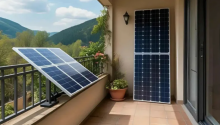
Solar panels on balconies will become a reality in Russia: the State Duma supported amendments to develop microgeneration.
when there is extreme weather. Russia NG production is comparable with US.
Gas production in Russia increased by 8.8% in the first two months of 2026.
A cold winter helped Russia increase gas production by 8.8% to 128.7 billion cubic meters.
LNG production
In January and February, Russia produced 6.2 million tons of liquefied natural gas, a 7.3% increase year-on-year. The Urals Federal District led the way, with production jumping 16.5% to 4.2 million tons. Meanwhile, the Northwest experienced a sharp decline: LNG production plummeted by 71%, reaching just 83,300 tons. This was due to US sanctions imposed in early January against the Gazprom LNG Portovaya and Cryogaz-Vysotsk plants.
Further doubling down. This also East-West circular. and Train alone provide 50% boost in Oil exports.
that North Sea route is competitive only because primary resource for transport is still Oil/Gas but powered by new energy and metal extraction for high tech. They want to transition to heavy Hydrogen-electric vehicles.
This two studies seem opposite of each other. Russia has enormous potential in EVs since Lithium reserves are the largest.
This video from Dagestan mountains. Shephard are moving horses from upper elevation to lower in unsual snowfall. and they do for lambs. this among the high paid jobs in the region. A Shephard makes about $15K per season. if two season work than $30K expected and they still cannot find people. Russia per capita PPP GDP should be well over $100K.
Mongolia also part of it.April 15, 2026, 5:48 PM
Entry maneuver: Russia will accelerate the development of the North-South corridor through the Caspian Sea.
New factories and cargo terminals will be built in the Astrakhan region in the coming years. Which countries are interested in cooperation?
According to him, the Persian Gulf countries are extremely interested in creating large logistics hubs for Russian grain on their territory. Moreover, the region's states are willing to invest in the development of these projects.
The North-South International Transport Corridor is becoming especially important because it offers an alternative to Western-controlled sea routes. Furthermore, the corridor could connect Russia with friendly countries and enhance the resilience of global trade, Patrushev emphasized. Previously, EU countries detained several tankers in the Baltic Sea that were allegedly carrying Russian cargo.
Central Asia, Afghanistan crank up Russian fuel imports as MidEast supplies dry up
By Reuters
April 15, 20263:58 AM PDTUpdated April 15, 2026
MOSCOW, April 15 (Reuters) - Central Asia and Afghanistan increased fuel imports from Russia and Belarus by rail by more than 50% in the first quarter as Moscow diverts energy flows from Europe and the curbs deliveries from the Middle East, traders said on Wednesday.
The traders said supplies to the region in January-March increased to 3.347 million metric tons.
that North Sea route is competitive only because primary resource for transport is still Oil/Gas but powered by new energy and metal extraction for high tech. They want to transition to heavy Hydrogen-electric vehicles.
United Shipbuilding Corporation has designed an Arctic-class container ship for Rosatom.
Russia and China will create a cross-border hydrogen freight corridor.
Russia and China have agreed to create the first cross-border hydrogen freight corridor. Rostec and a consortium of Chinese investors signed a memorandum to this effect. The project will open up new opportunities for environmentally friendly freight transport between the countries, according to the Rostec State Corporation press service.
The initiative will build a network of refueling stations and organize localized hydrogen production along major highways. Plans also include the mass production of hydrogen-powered trucks, which will be adapted to harsh climates and long-distance transport. Hydrogen production will be based on natural gas, which is in line with the concept of developing "blue" hydrogen.
The Russian company TopTech will be involved in the construction of modular hydrogen production units. The project will help reduce carbon dioxide emissions and improve the efficiency of freight transport in the low temperatures of Siberia and the Far East.
The corridor's development will support the creation of a high-tech hydrogen logistics industry in the Russian Far East. Similar routes are already in operation in China: by 2026, more than five hydrogen corridors will be operational, involving over a thousand heavy-duty vehicles. The parties will soon form a joint working group to develop further steps.
This two studies seem opposite of each other. Russia has enormous potential in EVs since Lithium reserves are the largest.
Business Modeling Center Case Study: The Prospects of Solid-State Batteries
Realistic forecasts are more conservative: the first mass-produced solid-state and semi-solid-state batteries will be able to increase the driving range by 20% with the same battery weight compared to modern lithium-ion solutions.
After the first enthusiastic reports about the superiority of solid-state batteries, a long lull in the media followed. At first glance, one might even conclude that these innovative developments had led nowhere, and the solid-state battery market had died before it was even born.
At the same time, lithium-ion batteries with liquid electrolyte have fallen in price by a factor of four to five over the past ten years, and their technical characteristics are constantly improving. At the same time, charging infrastructure is being developed in many countries. An acceptable price-to-quality ratio ensures lithium-ion batteries' leadership in the mass market segment.
While studying the market, Rosatom Innohub specialists noted a decline in media activity among companies. Their analysis suggests that market players are now convinced of the viability of these technologies, and production and capital expenditures have become the primary concerns. The media silence marks the transition from the era of R&D and laboratory testing to the era of established production processes.
for Putin only people with traditional values should reside or control wealth and this changing economics.SAKHALIN SCIENTISTS HAVE DISCOVERED A NEW SOURCE OF ELECTRICITY
As Ivan Tananaev, Deputy Director General for Science at the Kola Science Center of the Russian Academy of Sciences and Academician of the Russian Academy of Sciences, noted, the study is more than just a comparison of two synthesis methods. It represents a systematic step from a fundamental understanding of the crystal chemistry of ionic conductivity in a spinel structure to the targeted creation of a functional material with tailored properties.
"We not only demonstrated that zinc ferrite is a promising base for solid-state battery cathodes, but also identified the optimal technological route for its production, which is crucial for future industrial implementation," the academician explained.
The results obtained lay the foundation for the creation of battery cell prototypes that could eventually replace traditional solutions in portable electronics and electric vehicles.
The Bank of Russia's Board of Directors has decided to issue a commemorative coin in 2026, "First President of the Chechen Republic Akhmat-Khadzhi Abdulhamidovich Kadyrov, on the 75th anniversary of his birth," in the "Outstanding Personalities of Russia" series.
This video from Dagestan mountains. Shephard are moving horses from upper elevation to lower in unsual snowfall. and they do for lambs. this among the high paid jobs in the region. A Shephard makes about $15K per season. if two season work than $30K expected and they still cannot find people. Russia per capita PPP GDP should be well over $100K.
In the mountains of Dagestan: shepherds and their loyal fighters – here are high salaries and silence
The land of eagles and mountains reaching to the sky
Shepherds lead their flocks up to 500 kilometers. They work in shifts of 2–3 weeks. The shepherds primarily eat the local dish khinkal.
Shepherds' salaries are quite high. They can earn up to a million rubles per season. However, there's a severe labor shortage. Young people are flocking to the big cities.