
News on China's scientific and technological development.

tokenanalyst

Lieutenant General
Registered Member

China's first cyclic olefin polymer project (Phase I) signed.​


On April 1, 2026, China achieved a significant milestone in its special chemical industry when China National Chemical Engineering Co., Ltd. (CNCEC) and Cycloxetine New Materials (Ningbo) Co., Ltd. signed the contract for Phase I of China's first cyclic olefin polymer (COP) project. This agreement marks a strategic breakthrough for CNCEC, establishing a new phase in its development of advanced materials. The initial phase involves constructing a 5,000-ton/year production line specifically for COP resin, setting the stage for future expansion and industrial integration within Ningbo.

Cyclic olefin polymers are high-performance amorphous transparent materials known for their exceptional optical clarity, low birefringence, heat resistance, and chemical stability, making them ideal replacements for glass in optics, medicine, and AR/VR technologies. This project is designed not only to secure the supply chain but also to serve as a critical "bottleneck" solution for national security by shifting dependence on imported high-end polymers.
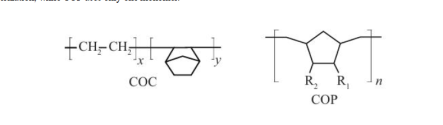
1775148553897.png

Looking ahead, this initiative aims to build a complete closed-loop industrial chain starting with key monomer raw materials before advancing to polymer production in Phase II. Cycloxetine New Materials, a high-tech enterprise dedicated to import substitution and ultra-pure material innovation, will leverage its existing patents and small-batch capabilities to scale up operations. The successful completion of this project will strengthen China's position in the global optical materials market, promote industrial upgrading, and ensure long-term supply chain resilience for domestic manufacturers producing next-generation lenses and optical devices.

Please, Log in or Register to view URLs content!
 

broadsword

Brigadier

Could China’s metal-like composite make drones, planes and rockets 26% stronger?​

Next-generation fighter jets and spacecraft stand to see performance gains from weight reduction and structural resilience​


Please, Log in or Register to view URLs content!
in Beijing
Published: 10:00am, 3 Apr 2026

Challenging six decades of convention, Chinese scientists have proposed a new composite material manufacturing method that could improve the strength and reliability of structures used in
Please, Log in or Register to view URLs content!
, aircraft and spacecraft.

By introducing an advance in the so-called balanced lay-up approach – a method of stacking fibre layers symmetrically and in opposing angles to minimise internal stresses – the research team reported strength gains of up to 26 per cent.
It also led to a 13 per cent improvement in joint performance, while reducing curing deformation during the manufacturing process that could result in defects.


The advance could broaden design flexibility across
Please, Log in or Register to view URLs content!
, as lower curing deformation means fewer distortions during production, according to a statement on March 9 from the Institute of Mechanics at the
Please, Log in or Register to view URLs content!
.

Greater design flexibility would be especially beneficial for high-precision components such as fuselages, wings and load-bearing panels, it added.

Led by Qiu Cheng, the research team developed a new design that allows engineers to vary thickness in response to load distribution.
This enables composite structures to be processed more like metals, including machining and shaping with greater freedom than traditionally possible.

Such performance gains could have direct implications for next-generation fighter jets, uncrewed aerial vehicles and spacecraft for which weight reduction and structural resilience are critical.

According to the team, improved joint strength in particular addresses a long-standing weakness in composite materials, potentially improving durability under complex stress conditions.

At the core of the advance is a shift away from the conventional lay-up paradigm that has guided composite material design for roughly 60 years.

Historically, engineers have relied on a limited set of fibre orientations – typically 0, 45, 90 and minus 45 degrees – based largely on accumulated engineering experience rather than a fully developed theoretical framework.
While effective, this approach constrains optimisation and limits the ability to tailor materials to complex loading environments.

The new balanced lay-up methodology, by contrast, is derived from fundamental mechanical principles and introduces a broader family of stacking configurations.
This enables continuous variation in layer orientation and thickness, aligning material distribution more closely with real-world stress patterns.

According to the researchers, the field has long lacked a comprehensive theoretical system, leaving room for optimisation.
Their approach, they said, offered a pathway beyond experience-driven design towards a more systematic and predictive framework.
Amid the promising results, the technology remains at an early research stage.

Further work is needed to validate performance across multiple domains, including thermal, electrical and optical properties, as well as long-term durability and cost-effectiveness in industrial settings.

The researchers were now seeking collaboration with industry partners to accelerate testing and potential commercialisation.
Looking ahead, the team suggested that such materials could support emerging sectors such as low-altitude aviation and green manufacturing where lightweight, high-strength structures were increasingly in demand.
 

tphuang

General
Staff member
Super Moderator
VIP Professional
Registered Member
Please, Log in or Register to view URLs content!

太钢 deliverecwide-width, ultra-thin nickel-based alloy C276 baseband. This batch of baseband successfully produced nearly 50 km of REBCO high-temperature superconducting strip containing pinning components. All 40 12mm wide strips were from the same roll of 500mm wide, 50-micron thick nickel-based alloy baseband. Avg self-field critical current of this batch of strips at 77K reached 705A/12mm.
 

tphuang

General
Staff member
Super Moderator
VIP Professional
Registered Member
Please, Log in or Register to view URLs content!

TZCO/Taiyuan Heavy Industry’s 5600mm Cold Straightening Machine Successfully Shipped.

this equipment offers "single-machine comprehensive coverage" for plates ranging in thickness from 6 to 50 mm. Its straightening range represents a 36% improvement over single-roll models, placing its technological capabilities at the forefront of international standards and enabling users to handle diverse orders with greater flexibility and efficiency.
 

broadsword

Brigadier
April 8, 2026

Safer sodium battery eliminates thermal runaway with a heat-triggered polymer barrier​


Some batteries have been known to catch fire or explode at high temperatures or when under stress. This safety concern has pushed researchers to experiment with different ways to design safer batteries that can ideally still perform reliably and efficiently. Sodium-ion batteries (NIBs) are considered a promising alternative to lithium-ion batteries, but still face safety risks, especially at high capacities. But now, a team of researchers in China has designed a new type of electrolyte for NIBs that may eliminate these risks, allowing for stable performance across a wide temperature range.

The thermal runaway problem​

The main risk associated with batteries involves a process called thermal runaway. Thermal runaway is a rapid and uncontrolled increase in temperature that occurs when heat generation exceeds heat dissipation. This can lead to intense,
Please, Log in or Register to view URLs content!
or explosions that are exceptionally difficult to extinguish, release toxic gases, and can even reignite after being extinguished.
Some electrolytes are designed to be "nonflammable," often by using phosphate esters or fluorinated compounds. However, most
Please, Log in or Register to view URLs content!
only prevent fire, and do not fully eliminate thermal runaway in large batteries. The team involved in the new study notes that the thermal stability of the electrolyte, the stability of the electrode–electrolyte interfaces and the interactions between the anode and cathode at high temperatures must be considered comprehensively when creating a truly safe battery that can resist thermal runaway.
The safety test of the cells. Credit: Nature Energy (2026). DOI: 10.1038/s41560-026-02032-7

A polymerizable, nonflammable electrolyte​

In the new study,
Please, Log in or Register to view URLs content!
in Nature Energy, researchers take a different approach to stopping thermal runaway. Instead of relying on reactions between decomposition products and free radicals in an electrolyte to stop thermal runaway, the team developed a new
Please, Log in or Register to view URLs content!
(PNE) for sodium-ion batteries. The electrolyte works by forming a protective polymer barrier when temperatures increase, blocking dangerous reactions between the electrodes. This also impedes side reactions and the generation of reductive gases.

"This design not only achieves the non-flammability but also enables thermal self-protection through
Please, Log in or Register to view URLs content!
of phosphoric acid, a decomposition product of triethyl phosphate (TEP), forming an insulating polymer network to block the mechanical and chemical crosstalk between cathode and anode at high temperature," the study authors explain.

Impressive results in safety and performance tests​

The team tested the new electrolyte in commercial-sized 1.45 Ah and 3.5 Ah cylindrical sodium-ion cells in a series of safety tests, including nail-penetration tests, accelerating rate calorimeter (ARC) testing for thermal stability and thermal abuse testing. The electrolyte experienced no thermal runaway, even at 300°C (572°F) or after nail-penetration tests.

Electrochemical performance was measured over hundreds of charge/discharge cycles at various temperatures and showed that the batteries had a high energy density and stable performance across a wide temperature range. When compared to other electrolytes, the PNE electrolyte outperformed them in safety and durability under stress.

"Using CNFM as cathode and HC as anode with the designed
Please, Log in or Register to view URLs content!
, the cell possesses a capacity of 3.5 Ah and can endure up to 700 cycles at room temperature with 85.7% capacity retention. Moreover, it demonstrates exceptional durability even under high-temperature conditions of 60 °C, allowing for stable cycling up to 700 cycles with 88.1% capacity retention. [Additionally], excellent discharge capacity retention can be [retained] at low temperature environments of −20 °C (92.6%), −30 °C (84.5%) and −40 °C (64.1%), respectively," the study authors write.

The new electrolyte design could inspire safer battery designs for grid storage, electric vehicles and other high-capacity applications. Although the study focused on specific cell chemistries, further research may adapt this approach to other battery chemistries and formats, and under real-world conditions.
 

tokenanalyst

Lieutenant General
Registered Member

A global first! China's hydrogen-powered aero-engine successfully completed its maiden flight, with ceramic materials playing a crucial role​


On April 4, 2026, China achieved a historic milestone in aerospace engineering as the world’s first megawatt-class hydrogen fuel cell turboprop engine successfully completed its maiden flight. The test, conducted at Zhuzhou Lusong Airport in Hunan Province, featured a drone powered by the domestically produced AEP100 MW engine, which operated flawlessly for 16 minutes. During the flight, the aircraft covered 36 kilometers at a speed of 220 kilometers per hour and an altitude of 300 meters, demonstrating a stable output power of 1 megawatt (approximately 1,200 horsepower). This achievement marks the most powerful hydrogen fuel cell aircraft engine ever flown, transitioning the technology from experimental stages to practical engineering application.​

1775768760244.png

The success of this maiden flight is attributed to the Chinese research team’s breakthrough in overcoming four critical technological barriers that had previously stalled global progress. First, they tamed hydrogen’s volatile combustion characteristics using a multi-stage swirl combustion chamber and a micro-orifice injection system, achieving over 99.5% combustion efficiency with minimal nitrogen oxide emissions. Second, they solved the "ice and fire" challenge of managing liquid hydrogen at -253°C alongside turbine temperatures reaching thousands of degrees, utilizing advanced lightweight sealing materials and cryogenic high-pressure pipeline technology. Third, they mitigated the risk of hydrogen embrittlement by developing hydrogen-resistant special alloys and ceramic matrix composites. Finally, they achieved millimeter-level precise fuel flow control through adaptive algorithms and high-precision modules, ensuring stable engine operation despite hydrogen’s low density and high compressibility.

Ceramic materials played a pivotal role in enabling these technological leaps, particularly through the application of ceramic thermal barrier coatings (TBCs). A 0.3 mm thick coating was instrumental in eliminating backfire risks and protecting engine components from extreme heat. These TBCs, typically composed of Yttria-Stabilized Zirconia (YSZ) ceramics, provide essential thermal insulation for metal and superalloy parts, allowing engines to operate at higher temperatures and efficiencies. The integration of these advanced ceramic coatings not only enhanced the safety and performance of the hydrogen engine but also underscored the material's critical importance in next-generation aerospace propulsion systems.

Beyond traditional thermal barrier coatings, Ceramic Matrix Composites (CMCs) were crucial in addressing the structural demands of the hydrogen-powered engine. CMCs combine the high-temperature resistance, hardness, and oxidation resistance of traditional ceramics with improved toughness, earning them the reputation of being "unbreakable." These composites are ideal for high-stress, high-temperature environments ranging from 1,000°C to potentially 3,000°C, making them suitable for critical components such as rocket nozzles and scramjet engines. In the context of the AEP100 MW engine, CMCs ensured that critical components maintained strength and durability against hydrogen embrittlement and extreme thermal stress, thereby preventing structural failure during flight.

Looking ahead, experts from the Aero Engine Corporation of China (AECC) predict that hydrogen-powered aviation will gain significant economic and energy security advantages as green hydrogen production costs decline. The technology is expected to be initially deployed in the low-altitude economy, serving sectors such as unmanned aerial cargo transport and island logistics. Over time, these advancements will likely scale up to support manned regional and mainline aircraft, positioning China at the forefront of clean aviation technology. This maiden flight not only validates the feasibility of megawatt-class hydrogen propulsion but also sets a new global standard for sustainable aerospace innovation.​


Please, Log in or Register to view URLs content!
 

sunnymaxi

Colonel
Registered Member

A global first! China's hydrogen-powered aero-engine successfully completed its maiden flight, with ceramic materials playing a crucial role​


On April 4, 2026, China achieved a historic milestone in aerospace engineering as the world’s first megawatt-class hydrogen fuel cell turboprop engine successfully completed its maiden flight. The test, conducted at Zhuzhou Lusong Airport in Hunan Province, featured a drone powered by the domestically produced AEP100 MW engine, which operated flawlessly for 16 minutes. During the flight, the aircraft covered 36 kilometers at a speed of 220 kilometers per hour and an altitude of 300 meters, demonstrating a stable output power of 1 megawatt (approximately 1,200 horsepower). This achievement marks the most powerful hydrogen fuel cell aircraft engine ever flown, transitioning the technology from experimental stages to practical engineering application.​

View attachment 173217

The success of this maiden flight is attributed to the Chinese research team’s breakthrough in overcoming four critical technological barriers that had previously stalled global progress. First, they tamed hydrogen’s volatile combustion characteristics using a multi-stage swirl combustion chamber and a micro-orifice injection system, achieving over 99.5% combustion efficiency with minimal nitrogen oxide emissions. Second, they solved the "ice and fire" challenge of managing liquid hydrogen at -253°C alongside turbine temperatures reaching thousands of degrees, utilizing advanced lightweight sealing materials and cryogenic high-pressure pipeline technology. Third, they mitigated the risk of hydrogen embrittlement by developing hydrogen-resistant special alloys and ceramic matrix composites. Finally, they achieved millimeter-level precise fuel flow control through adaptive algorithms and high-precision modules, ensuring stable engine operation despite hydrogen’s low density and high compressibility.

Ceramic materials played a pivotal role in enabling these technological leaps, particularly through the application of ceramic thermal barrier coatings (TBCs). A 0.3 mm thick coating was instrumental in eliminating backfire risks and protecting engine components from extreme heat. These TBCs, typically composed of Yttria-Stabilized Zirconia (YSZ) ceramics, provide essential thermal insulation for metal and superalloy parts, allowing engines to operate at higher temperatures and efficiencies. The integration of these advanced ceramic coatings not only enhanced the safety and performance of the hydrogen engine but also underscored the material's critical importance in next-generation aerospace propulsion systems.

Beyond traditional thermal barrier coatings, Ceramic Matrix Composites (CMCs) were crucial in addressing the structural demands of the hydrogen-powered engine. CMCs combine the high-temperature resistance, hardness, and oxidation resistance of traditional ceramics with improved toughness, earning them the reputation of being "unbreakable." These composites are ideal for high-stress, high-temperature environments ranging from 1,000°C to potentially 3,000°C, making them suitable for critical components such as rocket nozzles and scramjet engines. In the context of the AEP100 MW engine, CMCs ensured that critical components maintained strength and durability against hydrogen embrittlement and extreme thermal stress, thereby preventing structural failure during flight.

Looking ahead, experts from the Aero Engine Corporation of China (AECC) predict that hydrogen-powered aviation will gain significant economic and energy security advantages as green hydrogen production costs decline. The technology is expected to be initially deployed in the low-altitude economy, serving sectors such as unmanned aerial cargo transport and island logistics. Over time, these advancements will likely scale up to support manned regional and mainline aircraft, positioning China at the forefront of clean aviation technology. This maiden flight not only validates the feasibility of megawatt-class hydrogen propulsion but also sets a new global standard for sustainable aerospace innovation.​


Please, Log in or Register to view URLs content!
@Alfa_Particle CMC alloys used on this hydrogen powered AEP-100 Engine.

this shows AECC productionized CMC material. great
 

sunnymaxi

Colonel
Registered Member
curious, can those materials be used for lh2 tanker ships as well?
CMC are lightweight alternatives to metal alloys with superior physical and thermal properties. these alloys are widely used beyond engines for high-temperature, wear-resistant, and structural applications. it is traditionally used in Aerospace/aviation field but can be used in ships components like marine gas turbines , pumps and exhaust system.
 
Top