

You are using an out of date browser. It may not display this or other websites correctly.
You should upgrade or use an alternative browser.
You should upgrade or use an alternative browser.
Turkey Military News, Reports, Data, etc.
- Thread starter Jeff Head
- Start date


As is tradition:

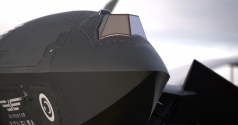
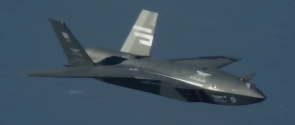
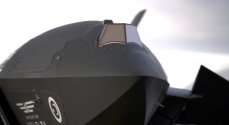
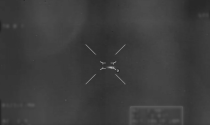
Even as is, this thing now comes with the sensor payload of either:
Even as is, this thing now comes with the sensor payload of either:
- An F-16-grade GaN radar + EOTS
- IRST + EOTS
It's scary how they basically tested (sans the IRFS/BÜRFIS, and possibly the IVDL) Kaan's entire sensor and datalink suite on a fighter-form airframe with the Kizilelma this early.
The only thing that won't be achieved ahead of Kaan's Q4 2028 service entry is the IWB certification, which will still be made available to Block 10 birds through a software update.
It's crazy to think about considering how, back in 2022, we viewed the 2022-2028 timeline for the Kaan in such a doomerist way.
The only thing that won't be achieved ahead of Kaan's Q4 2028 service entry is the IWB certification, which will still be made available to Block 10 birds through a software update.
It's crazy to think about considering how, back in 2022, we viewed the 2022-2028 timeline for the Kaan in such a doomerist way.
Only thing KAAN that is bothersome is the engine. Turkey have experience in developing sensor suite and data link. They are building flying airframes of different aircrafts. We are starting to know how good they are at it but without a homebuild engine the jet cannot fly without US approval. It will be interesting to see how fast they will nail it.It's scary how they basically tested (sans the IRFS/BÜRFIS, and possibly the IVDL) Kaan's entire sensor and datalink suite on a fighter-form airframe with the Kizilelma this early.
The only thing that won't be achieved ahead of Kaan's Q4 2028 service entry is the IWB certification, which will still be made available to Block 10 birds through a software update.
It's crazy to think about considering how, back in 2022, we viewed the 2022-2028 timeline for the Kaan in such a doomerist way.
Last edited:
The F-16-grade, 1152-TRM GaN FCR can track targets at the 200–300 km range; we know that for certain.Only thing KAAN that is bothersome is the engine. Turkey have localy developed sensor suite and data link. We dont know how good they are but without a homebuild engine the jet cannot fly without US approval. It will be interesting to see how fast they will nail it.
We also had the former head of the Presidency of the Defence Industries slip that the nose radar element of the IRFS/BÜRFİS is going to have ~2,000 T/R modules. (Kaan's old prototype (GTU-0/P0) has 2x120kVA power generation -for everything-)
Check our posts from this past year, EO systems and RF systems have become Aselsan's bread and butter, as well as a strong suit thanks to continuous hard work; so no worries, they're pretty competitive.
Still waiting for these engines... faster they get them faster they can do middle finger to a lot of problem makers.The F-16-grade, 1152-TRM GaN FCR can track targets at the 200–300 km range; we know that for certain.
We also had the former head of the Presidency of the Defence Industries slip that the nose radar element of the IRFS/BÜRFİS is going to have ~2,000 T/R modules. (Kaan's old prototype (GTU-0/P0) has 2x120kVA power generation -for everything-)
Check our posts from this past year, EO systems and RF systems have become Aselsan's bread and butter, as well as a strong suit thanks to continuous hard work; so no worries, they're pretty competitive.
They’re supposed to start initial tests in 2026, integrate one into a Kaan prototype in 2028, and certify it for production by 2032, so that both Turkish and Indonesian Block 30 birds can receive them on schedule. Let’s wait and see what happens; minor delays won’t surprise anyone.Still waiting for these engines... faster they get them faster they can do middle finger to a lot of problem makers.
The TEI team is also used to working on looser schedules, thanks to the inherent characteristics of the engine industry; especially in comparison to TAI and Aselsan, whose employees basically lived at the campus 24/7.
In any case, the TF10000 of the Kızılelma and ANKA-3 (TF6000) will be in production by then to fend off Israel & Greece; the entire F-16B30/40/50 fleet is going to receive that 1,152 GaN T/R-M FCR I mentioned, as well as SLEP, and the 44 Typhoons will arrive.
Turkey hit the ground running... that’s freaking fast if they achieve most of these with minimal delay.They’re supposed to start initial tests in 2026, integrate one into a Kaan prototype in 2028, and certify it for production by 2032, so that both Turkish and Indonesian Block 30 birds can receive them on schedule. Let’s wait and see what happens; minor delays won’t surprise anyone.
The TEI team is also used to working on looser schedules, thanks to the inherent characteristics of the engine industry; especially in comparison to TAI and Aselsan, whose employees basically lived at the campus 24/7.
In any case, the TF10000 of the Kızılelma and ANKA-3 (TF6000) will be in production by then to fend off Israel & Greece; the entire F-16B30/40/50 fleet is going to receive that 1,152 GaN T/R-M FCR I mentioned, as well as SLEP, and the 44 Typhoons will arrive.
The MURAD-100A GaN FCR project has finally progressed to an advanced stage after five years of delays, and is now in a semi-LRIP state, integrated onto five different platforms. Aselsan's Aselflir-600 series EO-sensors provide clear resolution images from 225 km away, and the Toygun EOTS/Karat IRST together essentially form updated, miniaturized, and repackaged versions of the Aselpod, with MWIR- and LWIR- sensors, respectively.Turkey hit the ground running... that’s freaking fast if they achieve most of these with minimal delay.

Aselsan already produces dozens of large AESA radar sets (CENK-family, ALP-family, STR-family) like this annually, even down to the in-house GaN RF power amplifiers, and has recently invested in facilities that will at least double its land-based radar production soon.
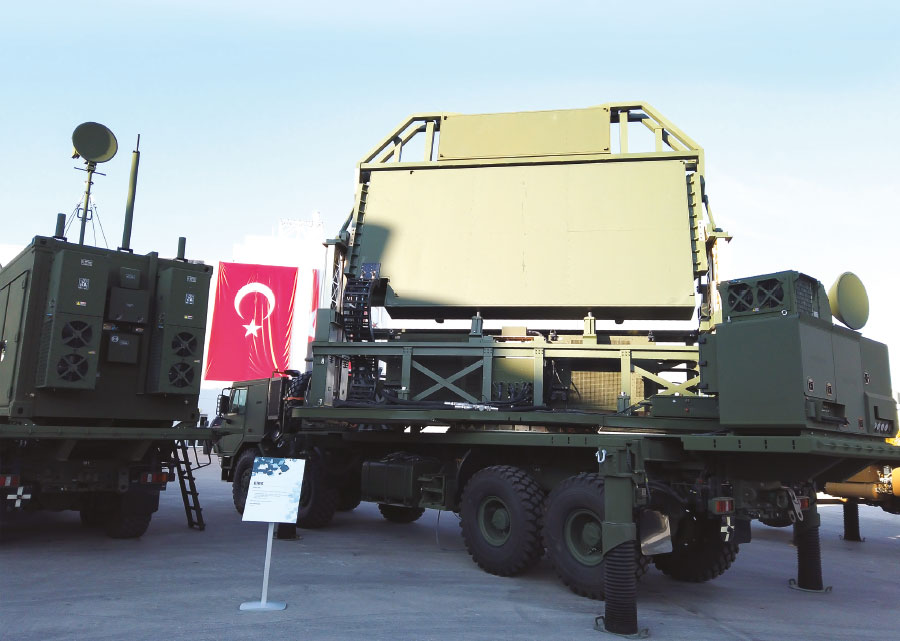

All of this wasn’t achieved in a day, after all. There are 50 years of hard work behind these impressive developments.