
You are using an out of date browser. It may not display this or other websites correctly.
You should upgrade or use an alternative browser.
You should upgrade or use an alternative browser.
Chinese semiconductor thread II
- Thread starter vincent
- Start date

China successfully achieved Domestically produced 6N-grade (99.9999%) high-purity hydrogen fluoride for semiconductors breaks long standing Western monopoly.
on July 19, Binhua Group held a press conference to announce the production and new product launch of electronic-grade high-purity hydrogen fluoride gas. The group announced that its subsidiary, Dasheng Core Materials, has successfully achieved large-scale production of 6N-grade high-purity hydrogen fluoride , with key product indicators reaching international first-class levels.
High-purity hydrogen fluoride is an indispensable core raw material in chip etching and cleaning processes , and is known as the "chemical engraving knife" of the semiconductor industry.
This technological breakthrough by Binhua Group is not a single-point breakthrough, but an innovative achievement of a whole-process system encompassing process, engineering, testing, and filling : the company has overcome four core technologies: multiple distillation coupling, low-precipitation equipment material selection, clean cylinder protection, and precise detection of trace impurities, strictly controlling the content of metal ion impurities to below 1ppb, and solving the problem of secondary pollution in the entire production, storage, and transportation chain.
the company has already begun product promotion to key enterprises in the industry.
This is a ridiculous post that refuses to acknowledge that the skyrocketing memory prices are a deliberate price manipulation orchestrated by Samsung and Hynix through production line cuts. A lawsuit regarding the surge in DRAM prices caused by production cuts is currently underway in the United States.


demand for CXMT and YMTC chips is just so high. more expansion, more LTA with big players like ByteDance and Tencent.
Kaimeride and Bluecore Computing Partner to Launch Domestic RISC-V AI Platform for Finance
Kaimerruide (Suzhou) Information Technology and Bluecore Computing Power (Shenzhen) have signed a strategic agreement to promote the large-scale application of domestically produced computing power in China's financial sector. They are creating an intelligent computing platform based on RISC-V architecture. This aims to solve issues with traditional general-purpose computing, such as the disconnect between underlying hardware and upper-layer financial applications, while ensuring high performance, stability, compliance, and full localization.
Bluecore provides the hardware foundation, specifically the LX500, described as the world's first RISC-V+AI intelligent converged CPU for servers. It integrates general-purpose and AI computing on a single chip, supporting local large model computation. Kaimeride brings extensive experience in financial asset management systems and AI applications. Their proprietary data infrastructure and AI matrix (embedded in their VIVA product line) cover investment research, transaction compliance, and operations management.
The goal is to provide integrated, end-to-end software and hardware solutions that accelerate the digital and intelligent transformation of financial institutions using secure, stable, and independently controllable domestic technology. This collaboration marks a move from technology verification to actual industry implementation for domestic computing power, addressing the financial sector's specific needs for real-time performance, stability, and regulatory compliance.
Commercially speaking, like 7-5 years ago this was a weak area in China IC industry
Xunxin Micro, a "Little Giant" in China's Ultra-High-Speed ADC Chip Industry, Initiates Listing Preparations on the Beijing Stock Exchange
Xunxin Microelectronics (Suzhou) Co., Ltd. (hereinafter referred to as "Xunxin Micro"), a leading company in the domestic high-end signal chain analog chip field, has officially launched its IPO process. According to information on the official website of the China Securities Regulatory Commission (CSRC), the company completed its pre-IPO counseling registration with the Jiangsu Securities Regulatory Bureau on July 23, and plans to publicly issue shares to unspecified qualified investors and list on the Beijing Stock Exchange. The counseling institution is Huatai United Securities Co., Ltd.
Founded in 2013 and headquartered in Suzhou Industrial Park, Xunxin Microelectronics is a national-level key "Little Giant" enterprise specializing in specialized and innovative technologies and a national high-tech enterprise. The company focuses on the independent research and development of high-end signal chain analog chips, with core products covering ultra-high-speed data converter chips (ADC/DAC), high-speed serial-to-parallel/parallel-to-serial conversion chips, and microwave monolithic integrated circuits..
It is worth noting that Xunxin Microelectronics is the first domestic chip design company to provide ADCs/DACs with sampling rates greater than 5GSa/s. Its independently developed new generation 50GSPS ultra-high-speed data conversion chip has broken the speed record of domestic high-end data conversion chip products and won the 2024 "China Chip" Excellent Technological Innovation Product Award.
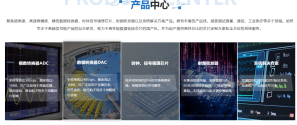
In terms of breakthroughs in core technologies, Xunxin Microelectronics, as one of the main participating units, won the first prize for technological invention in the 2025 China Instrument and Control Society Science and Technology Award for its project "Core Technologies and Applications of 200GSa/s Ultra-high-speed Real-time Oscilloscope". This project made breakthroughs in core technologies such as ultra-high-speed ADC architecture and calibration, breaking the monopoly of foreign high-end high-performance oscilloscopes and core ADC chips.
Xunxin Microelectronics has developed four major product lines, covering wideband low latency, high speed and high precision, high precision and clock chain products, with more than 80 product types. Its products are mainly used in high-end fields such as instrumentation, large scientific facilities, medical equipment, optical communication, wireless communication and radar.
Domestically produced filters accelerate shifting gears.
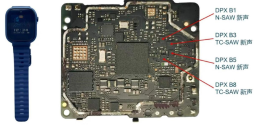
In the semiconductor industry, transformative changes often occur in overlooked corners rather than in high-profile components like processors or AI models. A prime example is the children’s smartwatch market, a category uniquely defined and driven by Chinese companies. Unlike smartphones or TWS earphones, which were pioneered by Western tech giants, children’s smartwatches have evolved entirely within the Chinese ecosystem, progressing from basic safety trackers to AI-integrated smart terminals. Recent teardowns of the Xiaoxun D9 children’s watch reveal a significant shift in the underlying supply chain: the device utilizes four radio frequency (RF) filters from the domestic company Xinsheng Semiconductor (NewSound). These domestically produced components, including N-SAW and TC-SAW duplexers, cover core FDD-LTE frequency bands, demonstrating that Chinese manufacturers now possess the complete capability to support 4G connectivity, video calls, and complex positioning systems within extremely compact devices.
The rapid growth of the "wrist economy" underscores the importance of this technological shift. In the first quarter of 2026, China’s wrist-worn device shipments reached 18.14 million units, with children’s smartwatches accounting for 4.42 million units—a 22.4% year-on-year increase. As these devices transition into highly integrated terminals featuring HD video calls, real-time messaging, and multi-mode positioning, the engineering challenges for RF design intensify. With internal spaces often one-tenth the size of a smartphone’s, children’s watches face severe constraints regarding antenna layout and signal coexistence among LTE, GNSS, Wi-Fi, and Bluetooth. The RF front-end becomes the critical bottleneck, where filter performance directly impacts call clarity, video stability, and positioning accuracy. Specifically, the need for low insertion loss and high out-of-band rejection is paramount to handle interference in complex usage scenarios, such as rapid movement or crowded indoor environments.
The selection of specific filter technologies in the Xiaoxun D9 reflects precise engineering trade-offs aimed at balancing performance, cost, and reliability. The device uses TC-SAW (Temperature Compensated Surface Acoustic Wave) duplexers for the B3 and B8 bands, which are prone to congestion and require high temperature stability due to the device’s proximity to the skin. Conversely, the cleaner B1 and B5 bands utilize more cost-effective N-SAW technology. This strategic combination not only ensures reliable communication links but also optimizes board space by using duplexers instead of discrete components. The inclusion of four domestically produced filters in a cost-sensitive mass-market product signals that Chinese RF components have passed rigorous commercial validation. It marks a transition from passive substitution in high-budget smartphones to proactive adoption in devices where every component must justify its cost-effectiveness.
Behind this achievement lies Xinsheng Semiconductor’s rapid rise as an industry leader through independent innovation. Rather than imitating overseas models, the company developed its own intellectual property portfolio, securing over 230 invention patents in China and the US. Xinsheng is one of the few domestic manufacturers capable of mass-producing a full range of filter technologies, including BAW, SAW, TC-SAW, and TF-SAW. Its products have entered the supply chains of major global brands like Samsung, Xiaomi, and Motorola, and notably, its filters were included in the Unisoc 4G platform reference design—a historic first for the Chinese filter industry. Furthermore, Xinsheng has achieved AEC-Q200 automotive-grade certification, proving its quality control meets international top-tier standards. This technological independence also removes patent infringement risks, facilitating the global expansion of Chinese end-user brands into markets with strict IP scrutiny.
The rapid growth of the "wrist economy" underscores the importance of this technological shift. In the first quarter of 2026, China’s wrist-worn device shipments reached 18.14 million units, with children’s smartwatches accounting for 4.42 million units—a 22.4% year-on-year increase. As these devices transition into highly integrated terminals featuring HD video calls, real-time messaging, and multi-mode positioning, the engineering challenges for RF design intensify. With internal spaces often one-tenth the size of a smartphone’s, children’s watches face severe constraints regarding antenna layout and signal coexistence among LTE, GNSS, Wi-Fi, and Bluetooth. The RF front-end becomes the critical bottleneck, where filter performance directly impacts call clarity, video stability, and positioning accuracy. Specifically, the need for low insertion loss and high out-of-band rejection is paramount to handle interference in complex usage scenarios, such as rapid movement or crowded indoor environments.
The selection of specific filter technologies in the Xiaoxun D9 reflects precise engineering trade-offs aimed at balancing performance, cost, and reliability. The device uses TC-SAW (Temperature Compensated Surface Acoustic Wave) duplexers for the B3 and B8 bands, which are prone to congestion and require high temperature stability due to the device’s proximity to the skin. Conversely, the cleaner B1 and B5 bands utilize more cost-effective N-SAW technology. This strategic combination not only ensures reliable communication links but also optimizes board space by using duplexers instead of discrete components. The inclusion of four domestically produced filters in a cost-sensitive mass-market product signals that Chinese RF components have passed rigorous commercial validation. It marks a transition from passive substitution in high-budget smartphones to proactive adoption in devices where every component must justify its cost-effectiveness.
Behind this achievement lies Xinsheng Semiconductor’s rapid rise as an industry leader through independent innovation. Rather than imitating overseas models, the company developed its own intellectual property portfolio, securing over 230 invention patents in China and the US. Xinsheng is one of the few domestic manufacturers capable of mass-producing a full range of filter technologies, including BAW, SAW, TC-SAW, and TF-SAW. Its products have entered the supply chains of major global brands like Samsung, Xiaomi, and Motorola, and notably, its filters were included in the Unisoc 4G platform reference design—a historic first for the Chinese filter industry. Furthermore, Xinsheng has achieved AEC-Q200 automotive-grade certification, proving its quality control meets international top-tier standards. This technological independence also removes patent infringement risks, facilitating the global expansion of Chinese end-user brands into markets with strict IP scrutiny.
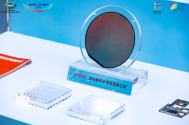
Ultimately, the presence of these four small duplexers on the Xiaoxun D9 motherboard symbolizes a broader maturation of China’s RF industry. While these components lack the visibility of SoCs or cameras, they are fundamental to the user experience, ensuring the stability of connections that parents rely on for their children’s safety. As the global children’s smartwatch market continues to expand, the large-scale application of domestically produced RF devices represents a crucial validation of China’s semiconductor capabilities. This silent accumulation of technical certainty in basic components highlights that true industrial transformation is often built not through grand announcements, but through the reliable performance of essential parts in everyday devices.
Zhongke Feice adds a new patent for photoacoustic testing of metal thin films. AI algorithms drive the upgrade of domestic semiconductor measurement equipment.
It was announced that Zhongke Feice has added a new invention patent in the field of semiconductor testing: "Method, Device, Equipment and Storage Medium for Zero-Point Measurement of Photoacoustic Signals of Metal Thin Films". This technology establishes a photoacoustic response model of metal thin films and combines it with a neural network algorithm to achieve automatic identification of the zero point of the detection signal, thereby improving the accuracy and stability of the thin film measurement process.
Metal thin film measurement is a critical quality control step in the wafer manufacturing process. With the development of advanced processes, DRAM, HBM, and advanced packaging industries, the demand for high-precision testing equipment in semiconductor manufacturing continues to increase.

As a domestic semiconductor testing equipment company, CAS Test has been continuously developing core technologies such as defect detection and optical measurement. By integrating equipment hardware with artificial intelligence algorithms, it has accelerated the localization of semiconductor quality control equipment.
Metal thin film measurement is a critical quality control step in the wafer manufacturing process. With the development of advanced processes, DRAM, HBM, and advanced packaging industries, the demand for high-precision testing equipment in semiconductor manufacturing continues to increase.
As a domestic semiconductor testing equipment company, CAS Test has been continuously developing core technologies such as defect detection and optical measurement. By integrating equipment hardware with artificial intelligence algorithms, it has accelerated the localization of semiconductor quality control equipment.