Chinese semiconductor thread II

def333

Junior Member
Registered Member
he is the president of China's one of the most reputed university and his team involved in the project.

It wasn't his team. He was referring to an alumnus, He Rongmin.

He Rongming (贺荣明)
Director, SMEE

He Rongming graduated from Tongji University in 1985 with a degree in Mechanical Engineering and Management. He began his career at the former Shanghai Electromechanical Industry Administration Bureau, specializing in foreign technology transfer. In 2002, he founded Shanghai Micro Electronics Equipment (Group) Co., Ltd. (SMEE) and served as its Chairman and General Manager until December 2021, leading its growth into a key lithography equipment manufacturer. He currently serves as a Director of the SMEE Group.

 

interestedseal

Junior Member
Registered Member
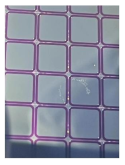
View attachment 176861
The company is one of the few companies developing pellicles for photomasks in China, they shipped KrF pellicles a few years ago. The also developing process for EUV mask fabrication.

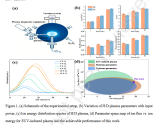
View attachment 176862
Here’s another EUV pellicle material maker. Their carbon nanotube CNT pellicle is next gen tech for EUV masks
其核心产品单壁碳纳米管,是锂电行业高能量密度、快充升级的刚需超级导电剂,更是解决硅基负极导电差、易粉化的唯一核心材料,同时可应用于 EUV 光刻机掩模保护薄膜
Please, Log in or Register to view URLs content!
 

tokenanalyst

Lieutenant General
Registered Member

ZhiXin Semiconductor is enabling short-wave infrared detector chips to go from "aerospace grade" to "consumer grade".​


ZhiXin Semiconductor is achieving a major breakthrough by transitioning short-wave infrared (SWIR) detector technology from exclusive "aerospace grade" use to scalable "consumer grade" applications. Established based on Xi'an University of Technology's Hangzhou Research Institute, the company has built China's first closed-loop R&D platform for the entire SWIR detection chain, covering everything from device design and material epitaxial growth to circuit matching and system verification. This full-stack independence ensures that core components are under domestic control, effectively reducing reliance on foreign imports for critical imaging technologies like "intelligent eyes."

At the heart of this achievement is a proprietary silicon-germanium (SiGe) technology route designed for compatibility and cost efficiency. By utilizing SiGe epitaxial growth combined with mature 8-inch and upcoming 12-inch standard silicon-based CMOS production lines, ZhiXin can manufacture detector chips at significantly lower costs while maintaining high performance near room temperature. The company is currently constructing an 8-inch dedicated SiGe fabrication line in two phases; Phase One is complete, and Phase Two has begun with equipment arriving by September to be fully operational by the end of 2026. This infrastructure enables rapid iteration, strict process control, and a production capacity aiming for several thousand wafers per year once connected to standard 12-inch lines.

With performance metrics now comparable to leading international firms in detection efficiency and noise suppression, ZhiXin is rapidly commercializing its capabilities across consumer electronics, industrial ranging, and drone markets. The company's immediate focus is on finalizing core products for laser ranging and smartphone applications, while long-term plans extend into specialized fields such as low-light night vision, free-space optical communication, and quantum computing. By bridging the gap between high-end scientific research and mass-market affordability, this development serves as a key example of Zhejiang Province's efforts to foster new productivity and cultivate emerging growth drivers through indigenous technological innovation.

Please, Log in or Register to view URLs content!
 

tokenanalyst

Lieutenant General
Registered Member

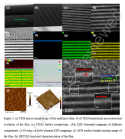
Microstructural Evolution and In-Situ Sn Cleaning of Ru-Capped Mo/Si Multilayers Under EUV-Relevant H/D Isotope Plasma Irradiation​

Abstract​

Extreme ultraviolet lithography (EUVL) relies on Ru-capped Mo/Si multilayer mirrors (MLMs) as its core optical components. However, the long-term stability of these MLMs is severely compromised by EUV-induced hydrogen plasma and Sn contamination. Under relevant EUV-induced plasma conditions, this work systematically investigates the effects of plasma irradiation on the microstructural evolution of the MLMs and clarifies the pivotal role of hydrogen isotopes in inhibiting atomic diffusion and mitigating Sn contaminant redeposition. During the plasma–MLMs interaction process, ion energy triggers granulation of the Ru protective layer, while hydrogen diffusion leads to the formation of surface nanoprotrusions and lattice expansion in the Mo layer. Notably, D plasma alleviates irradiation damage and extends the stress incubation period, owing to its lower peak ion energy and slower diffusion rate relative to H plasma. Nanoprotrusions induced by H/D diffusion can be partially restored through room-temperature relaxation and low-temperature annealing, whereas long-range atomic migration and structural reconstruction driven by ion energy are irreversible. Significantly, D plasma disrupts the equilibrium between Sn removal and redeposition on the Ru surface, enabling more thorough Sn cleaning without high-flow purging. The evolution of irradiation damage and the Sn cleaning performance are dominated by isotope effects, which modulate atomic diffusion behavior, zero-point energy, and the stability of reaction products. This study provides theoretical and technical support for enhancing the radiation resistance of MLMs and realizing efficient Sn removal, thereby facilitating the long-term stable operation of EUVL systems.

1781970440733.png1781970510516.png

Please, Log in or Register to view URLs content!


tokenanalyst

Lieutenant General
Registered Member

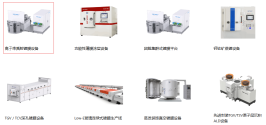
HVAC Ultra-precision optical thin film coating solutions <my guess analog to the Nessy series>​

  1. Extremely high precision in membrane layer control :
    • Thickness control : Reaching the sub-nanometer level requires extremely high uniformity and repeatability of film thickness.
    • Refractive index control : Precisely control the refractive index and extinction coefficient of the thin film material to ensure that the optical constants are consistent with the design.
  2. Extremely low loss and scattering :
    • Absorption loss : In high-power applications such as lasers, absorption must be reduced to the ppm level.
    • Scattering loss : An extremely smooth substrate and film interface is required to minimize scattering loss.
  3. Excellent environmental stability and reliability :
    • It can withstand harsh environments such as extreme temperature, humidity, salt spray, and strong radiation, ensuring that its performance does not degrade over a long period of time.
  4. Complex spectral characteristics :
    • It achieves complex spectral parameters such as ultra-narrowband, ultra-wideband, deep cutoff, and steep transition.
  5. Large-area uniformity :
    • Achieving nanometer-scale film thickness uniformity on large-size substrates.

1. Core coating technology​

  • Ion beam sputtering
    • Principle : The target material is bombarded by an independent ion source, and the sputtered atoms/molecules are deposited onto the substrate at high energy to form a film.
    • Advantages :
      • The film is dense , exhibiting properties close to those of bulk materials, and has excellent environmental stability.
      • Extremely low optical loss : Absorption and scattering losses are extremely low, making it the first choice for high-end laser lenses.
      • Precise and controllable : Process parameters are independently controllable and have good repeatability.
    • Applications : High-reflectivity mirrors, anti-reflection coatings, filters, especially high-power laser films.
  • Ion-assisted deposition
    • Principle : In the traditional thermal evaporation process, the growing film layer is bombarded with an ion source.
    • Advantages :
      • Increase the density of the membrane layer and reduce the loose structure.
      • It improves film stress and enhances adhesion.
      • With a lower cost compared to IBS, it is a compromise solution for many precision applications.
    • Applications : Most precision optical components that require high performance but do not need to be perfect.
  • Magnetron sputtering
    • Principle : Using a magnetic field to confine plasma, increasing the gas ionization rate, and sputtering the target at high speed.
    • Advantages :
      • It has a high deposition rate and is suitable for large-area coating.
      • The film has good uniformity and better stability than traditional evaporation.
    • Applications : Large-area display panels, architectural glass, and optical films for consumer electronics.

2. Precision monitoring and control system​

  • Optical monitoring :
    • Direct light control : Monitors changes in transmittance or reflectance at a specific wavelength in real time during the deposition process, stopping when a preset value is reached. Suitable for applications requiring extremely high precision in the center wavelength, such as ultra-narrowband filters.
  • Crystal Control :
    • Thickness is indirectly controlled by measuring the quality of the film layer deposited on a quartz wafer. This method is suitable for controlling the thickness of most layers in multilayer films and offers good stability.
  • Broadband monitoring :
    • Real-time measurement of the spectrum across the entire wavelength range and fitting it to theoretical designs allows for dynamic correction of process parameters. This is a key technology for realizing ultra-complex membrane systems.

3. Ultra-cleanliness and environmental control​

  • Ultra-high vacuum system : The background vacuum needs to reach 10⁻⁶ Pa or even higher to ensure that the film layer is pure and free of contamination.
  • Precise substrate processing :
    • This includes ultra-precision polishing, rigorous ultrasonic cleaning, and plasma cleaning to ensure that the substrate surface achieves atomic-level cleanliness.
  • Precise temperature control system : controls substrate temperature, affecting film stress and microstructure.

Typical application areas​

  1. High-end laser systems :
    • Requirements : Extremely high damage threshold and extremely low absorption loss.
    • Products : High-reflection mirrors, output coupling mirrors, harmonic separators, etc.
  2. Gravitational wave detection and astronomical observation :
    • Requirements : Achieve extremely low loss and scattering on a single substrate.
    • Product : The core lens of the interferometer, whose performance directly determines the detection sensitivity.
  3. Extreme ultraviolet lithography :
    • Requirement : Achieve a multilayer film with a reflectivity of up to 70% at a wavelength of 13.5 nm.
    • Technology : Mo/Si multilayer film, with requirements for interface roughness and thickness control at the atomic level.
  4. Quantum Communication and Computing :
    • Requirements : High-precision control of a specific wavelength and extremely low fluorescence background.
    • Products : Optical components used in ion traps and single-photon detectors.
1781971191236.png
Please, Log in or Register to view URLs content!
 

tokenanalyst

Lieutenant General
Registered Member

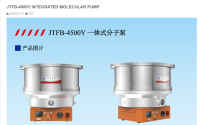
JTVAC Launched a new series of integrated molecular pumps for semiconductor manufacturing.​


1781971584677.png


The company also launched a new series of ultra-high vacuum exhaust series and pumps in 2025 that according to them can meet the requirements of EUV lithography and other semiconductor manufacturing processes.


1781971683540.png

Please, Log in or Register to view URLs content!
 

tokenanalyst

Lieutenant General
Registered Member

San’an and its Partners Achieved Breakthrough in Gallium Oxide Epitaxy​


San'an Optoelectronics, together with the National Engineering Research Center for Wide Bandgap Semiconductors at Xidian University and Hangzhou Garen Semiconductor, has achieved a significant breakthrough in homoepitaxial gallium oxide technology using metal-organic chemical vapor deposition (MOCVD). By precisely optimizing the initial nucleation process and successfully suppressing twin defects, the team enabled the growth of high-quality epitaxial layers on 2-inch substrates with root mean square surface roughness below 0.5nm. These layers exhibit crystal quality comparable to the substrate itself and an electron mobility reaching 100 cm²/V·s, marking a pivotal step toward producing reliable wide bandgap materials essential for advanced power electronics.

1781973142307.png

Leveraging these superior wafers, the collaboration has prioritized the development of lateral power devices, which offer distinct advantages over traditional vertical architectures by utilizing semi-insulating substrates to minimize leakage currents and maintain compatibility with existing silicon manufacturing processes. The fabricated devices demonstrated robust performance without specialized edge-termination structures, achieving a breakdown voltage of 1,420V, an on/off ratio of 10⁵, and threshold-voltage uniformity exceeding 91%. With established capabilities for 2-inch production and a clear path to scaling up to 6-inch wafers, this industry-academia partnership is poised to accelerate the commercialization of gallium oxide technologies in critical high-voltage applications such as smart grids and new-energy vehicles.

Please, Log in or Register to view URLs content!
 
Top