Chinese semiconductor thread II

Some1Guy

Junior Member
Registered Member
Japanese chip equipment sales to China fall 10%, as curbs ‘backfire’

Please, Log in or Register to view URLs content!


$9.19 billion in 2025....still plenty of room to grow for Chinese SME manufacturers!
"The declines were especially sharp for companies making equipment for the front-end process of forming circuits on silicon wafers. Tokyo Electron, Screen Holdings, and Kokusai saw combined China sales fall almost 20 percent from the previous year."

This means that China is either buying the lithography machines from someone else which is highly unlikely OR that they are using their own domestically produced versions which correlates with what the Tongji university President said about the first DUVI machine being delivered to SMIC in summer 2025 and being able to manufacture stably at the 7nm node with multi patterning. These two indicators both suggest that China has already domestically produced lithography machines and they're being bought by fabs and actually used in manufacturing chips instead of being prototypes.
 

sunnymaxi

Colonel
Registered Member
Japanese chip equipment sales to China fall 10%, as curbs ‘backfire’

Please, Log in or Register to view URLs content!


$9.19 billion in 2025....still plenty of room to grow for Chinese SME manufacturers!
2025 was the peak year for foreign SME companies in mainland China. from this year onward all reputed SME companies will loose significant market share to domestic firms.

some few examples.

1. China imports of inspection equipment from USA/Singapore are down -24% in first Q1, 2026. this data is from semianalysis.

2. China import least number of Japanese tools this year so far. i think the biggest fall will be in Photoresist as Dinglong started to supply of high-end KrF/ArF wafer photoresist to leading Chinese chip manufacturers.

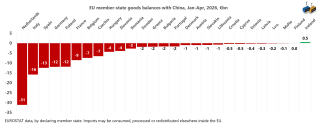
3. ASML net system sales to China dropped to 19% of total net system sales in first quarter, down significantly from 36% in the prior quarter. and of course this is related to sanctions as well but Netherlands saw biggest ever trade deficit with China in first 4 months of this year. thanks to ASML sales dropped

HLKifPHW8AAJ3cW.png
 

tokenanalyst

Lieutenant General
Registered Member
2025 was the peak year for foreign SME companies in mainland China. from this year onward all reputed SME companies will loose significant market share to domestic firms.

some few examples.

1. China imports of inspection equipment from USA/Singapore are down -24% in first Q1, 2026. this data is from semianalysis.

2. China import least number of Japanese tools this year so far. i think the biggest fall will be in Photoresist as Dinglong started to supply of high-end KrF/ArF wafer photoresist to leading Chinese chip manufacturers.

3. ASML net system sales to China dropped to 19% of total net system sales in first quarter, down significantly from 36% in the prior quarter. and of course this is related to sanctions as well but Netherlands saw biggest ever trade deficit with China in first 4 months of this year. thanks to ASML sales dropped

View attachment 176957
The fall from Netherlands is probably the most self inflicted one to be honest
 

tokenanalyst

Lieutenant General
Registered Member

Pan-Link's national headquarters and high-performance distributed storage technology R&D center have been established in Chengdu.​


According to Chengdu Release, Panlink Information Technology Co., Ltd. (hereinafter referred to as Panlink) recently officially settled its national headquarters and high-performance distributed storage technology R&D center in Chengdu Chenghua Economic and Technological Development Zone.

Panlink is a leading science and technology innovation enterprise in China's storage industry, and is also a national high-tech enterprise and a municipal-level specialized and innovative enterprise. Panlink's main products include all-flash distributed storage, massive data storage, intelligent computing all-in-one machines, and intelligent management platforms. Focusing on the two core scenarios of supercomputing and intelligent computing, it tailors professional full-stack solutions for users. Its products and solutions are widely used in key areas such as supercomputing, artificial intelligence, and big data, with clients including Shenzhen Supercomputing Center, Ningxia Mobile, and Zhongbei Communication. Simultaneously, the company is actively expanding into overseas markets, having completed an AI project delivery in Thailand, and successfully implemented several large-scale projects both domestically and internationally.

According to a news release from Chengdu, the Panlian project is located in the Jindi Weixin Innovation Base in Chenghua Economic and Technological Development Zone. The Panlian national headquarters office space has been renovated and is expected to be officially put into operation in mid-July this year.

According to official information from Panlink, while Panlink's business headquarters has been optimized, the functions of the national marketing center in Shenzhen have been fully retained and will continue to be deepened. The Chengdu and Shenzhen cities will work together regularly to open up channels for the exchange of computing power resources between the east and west, and empower the national market in both directions.

Please, Log in or Register to view URLs content!
 

tokenanalyst

Lieutenant General
Registered Member

Future Fab: From "experience" to "intelligence"​


Traditional wafer manufacturing yield prediction relies on engineers' experience, resulting in slow, reactive responses that cause costly production downtime. To overcome these limitations, a new intelligent yield prediction system (part of the YES end-to-end platform) leverages large language models and advanced algorithms to proactively forecast yields, quantify losses, pinpoint root causes, and guide recovery strategies.

Offers the following core advantages. Real-Time AI Prediction & Alerts that engineers can query yield status via natural language dialogue. The system instantly forecasts final yield loss and automatically triggers alerts when metrics exceed preset thresholds, enabling early intervention before defects escalate.
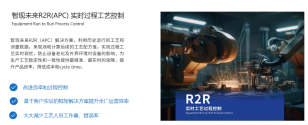
1782141124716.png
Automated Root Cause Analysis predictions are directly linked to multi-source data (process logs, FDC, historical tool performance). Using correlation analysis, the system identifies top root causes in ~24 minutes, slashing traditional analysis time from hours.
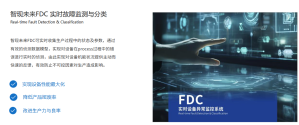
1782141082684.png
Closed-Loop Continuous Optimization of every resolved anomaly feeds back into the AI model, dynamically refining prediction algorithms and knowledge bases. This creates a self-improving cycle that shifts yield management from passive response to proactive defense.
1782141175509.png
In a real-world demonstration, engineers used natural language queries to trace a yield loss spike to insufficient CVD equipment cleaning, quickly confirming the root cause and initiating targeted monitoring. Rather than just outputting numbers, the system builds a "questionable, traceable, modifiable, and evolvable" intelligent workflow. It transforms subjective experience into quantifiable, data-driven decisions, significantly minimizing downtime, accelerating yield recovery, and maximizing manufacturing efficiency in semiconductor production.

futurefab.cn/h-col-124.html​
 

tokenanalyst

Lieutenant General
Registered Member

Huahong Grace Semiconductor's 40nm ultra-low power specialty process achieves stable mass production​


Hua Hong Semiconductor has achieved stable mass production of its proprietary 40nm ultra-low power feature process, a key technical upgrade that significantly reduces chip energy consumption and extends battery life for IoT and wearable devices. This new capability complements the company’s existing 55nm/40nm portfolio alongside mature technologies such as BCD, embedded memory, and MCUs, enabling tailored solutions for edge AI and consumer electronics. Operationally, Hua Hong is capitalizing on a successful ramp-up at its Wuxi 12-inch line, which contributed 62.7% of first-quarter 2026 revenue. By coordinating its 8-inch and 12-inch facilities with stringent cost controls, the company has sustained high utilization rates across both nodes, driving Q1 revenues to RMB 4.625 billion (an 18.22% year-on-year increase) alongside strong profit growth.

The milestone arrives as the mature feature process segment enters a recovery phase, propelled by AI spillover demand for power management chips, MCUs, and memory, as well as accelerating domestic substitution among Chinese fabless designers. Hua Hong’s integrated capabilities in power devices, storage, and analog technologies position it to absorb substantial incremental orders from this shift. Looking ahead, the company is expected to launch capacity integration projects later this year to further expand its 12-inch advanced mature process production. As the new low-power process scales alongside steadily increasing wafer output, Hua Hong is strategically positioned to capture growing demand in edge intelligence and industrial control markets, laying a solid foundation for sustained revenue and profitability expansion throughout the ongoing industry upcycle.

Please, Log in or Register to view URLs content!
 
Top