Chinese semiconductor thread II

tokenanalyst

Lieutenant General
Registered Member

Shanghai Institute of Optics and Fine Mechanics makes progress in vibration measurement using large-aperture Fizeau interferometers


Recently, the research team led by Professor Liu Shijie at the Optical Detection and Characterization Center of the High-Power Laser Components Technology and Engineering Department of the Shanghai Institute of Optics and Fine Mechanics, Chinese Academy of Sciences, has made progress in the research of vibration-resistant measurement technology for large-aperture, high-resolution interferometers. The relevant findings, titled " Three-step iteration-based vibration-resistant measurement technique for large-aperture high-resolution interferometers," have been published in *Optics and Lasers in Engineering *.

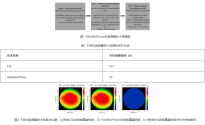
While the traditional three-step least squares iterative method ( TIA ) can achieve vibration compensation and wavefront recovery in interferometric measurements, it suffers from significant drawbacks such as high computational load and low processing efficiency when applied to large-aperture, high-resolution testing scenarios. To address this technical bottleneck, the research team proposed a three-step iterative vibration-damping phase recovery technique ( VibeResPhase ). This method innovatively separates vibration parameter identification and wavefront phase recovery into separate modules, significantly optimizing the computational logic while ensuring measurement accuracy.

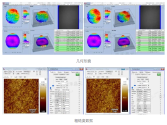
The research team conducted experimental verification on a Φ600mm Fizeau interferometer , demonstrating that the VibeResPhase method improves measurement efficiency by more than 8 times compared to the traditional TIA method . This technology balances measurement accuracy and computational speed, is suitable for large-aperture, high-resolution wavefront vibration measurement scenarios, and provides strong support for the precise measurement of wavefront errors of large-aperture optical components in complex environments.
1782573921595.png

Please, Log in or Register to view URLs content!
 

tokenanalyst

Lieutenant General
Registered Member

Qinghe Crystal's magnesium-doped lithium niobate thin films: facilitating independent control of core materials in quantum technology and opening up new pathways for the recycling of scarce resources.​


Qinghe Crystal (Qinghe Epistar) announced a major technological breakthrough in magnesium-doped lithium niobate thin films (MgO:TFLN), a core material for quantum photonic chips. By using self-developed, high-end bonding equipment, the company not only achieved premium wafer-level quality but also solved a critical industry bottleneck: the ability to recycle scarce lithium niobate wafers multiple times without losing performance.

The independently developed bonding process eliminates voids, interface damage, and stress, ensuring the high consistency required for quantum devices. Qinghe Crystal has successfully recycled these scarce wafers more than three times. Testing confirms that recycled wafers perform identically to virgin materials in electro-optic coefficients and optical loss. This "multiple lives for a single wafer" technology significantly lowers production costs, shortens processing cycles, and drastically reduces China's reliance on imported high-purity niobium resources. MgO:TFLN is known as the "cornerstone of quantum photonic chips" and is highly sought after for quantum communication, LiDAR, and next-generation high-speed optical modules (800G to 3.2T).
1782574631469.png1782574659450.png
As global demand for quantum tech and high-speed optical communications surges, the thin-film lithium niobate modulator market is projected to reach 3 billion yuan by 2031 (with a massive 271% CAGR from 2029-2031). By combining equipment self-sufficiency with material recycling, Qinghe Crystal is positioning itself to drive the mass production of these chips and secure China's self-reliance in core quantum technology materials.

Please, Log in or Register to view URLs content!
 

tokenanalyst

Lieutenant General
Registered Member

Chingwo Chip Wins 2026 Atomic-Level Manufacturing Innovation Award​


Qinghe Crystal (Qinghe Epistar) won the third prize in the Application Solutions Track of the 2026 Atomic-Level Manufacturing Innovation Competition. The award recognizes the company's independent breakthrough in atomic-level surface treatment technology, specifically highlighted by its newly developed "super-atomic beam TRIM equipment."

Key Technological Highlights of the TRIM Equipment:
  • Ultra-Precision Capabilities: Designed for atomic-level processing, the equipment performs surface polishing, film thickness trimming, and surface shape adjustment. It is crucial for working with superhard materials (like diamond), complex optics, and semiconductor thin films.​
  • Non-Destructive Processing: Unlike traditional charged single-ion beams, it uses a novel neutral superatomic beam. This eliminates electrostatic accumulation, deep lattice damage, and surface contamination.​
  • Zero-Defect Bonding Foundation: It achieves extreme flatness (uniformity reaching 1σ < 1nm), which maximizes the van der Waals contact area during semiconductor bonding, fundamentally preventing voids and cracks.​
  • Mass Production Ready: Supports 12-inch wafers, automated loading/unloading, and features high beam intensity (≥100μA) to meet the stability requirements of high-yield mass production.​
1782574886993.png
Evolved from Qinghe's deep expertise in semiconductor bonding, this equipment solves critical bottlenecks in atomic-level manufacturing. It is a landmark achievement for China's goal of technological self-reliance, providing essential "root technology" equipment for advanced packaging, integrated circuits, quantum computing, and ultra-precision optics.​

Please, Log in or Register to view URLs content!
 

sunnymaxi

Colonel
Registered Member

Chingwo Chip Wins 2026 Atomic-Level Manufacturing Innovation Award​


Qinghe Crystal (Qinghe Epistar) won the third prize in the Application Solutions Track of the 2026 Atomic-Level Manufacturing Innovation Competition. The award recognizes the company's independent breakthrough in atomic-level surface treatment technology, specifically highlighted by its newly developed "super-atomic beam TRIM equipment."

Key Technological Highlights of the TRIM Equipment:
  • Ultra-Precision Capabilities: Designed for atomic-level processing, the equipment performs surface polishing, film thickness trimming, and surface shape adjustment. It is crucial for working with superhard materials (like diamond), complex optics, and semiconductor thin films.​
  • Non-Destructive Processing: Unlike traditional charged single-ion beams, it uses a novel neutral superatomic beam. This eliminates electrostatic accumulation, deep lattice damage, and surface contamination.​
  • Zero-Defect Bonding Foundation: It achieves extreme flatness (uniformity reaching 1σ < 1nm), which maximizes the van der Waals contact area during semiconductor bonding, fundamentally preventing voids and cracks.​
  • Mass Production Ready: Supports 12-inch wafers, automated loading/unloading, and features high beam intensity (≥100μA) to meet the stability requirements of high-yield mass production.​
View attachment 177249
Evolved from Qinghe's deep expertise in semiconductor bonding, this equipment solves critical bottlenecks in atomic-level manufacturing. It is a landmark achievement for China's goal of technological self-reliance, providing essential "root technology" equipment for advanced packaging, integrated circuits, quantum computing, and ultra-precision optics.​

Please, Log in or Register to view URLs content!
Super-atomic Beam (SAB) TRIM and Ion Beam Trimming are critical in advanced logic chip manufacturing like 2nm/3nm nodes. As transistor structures like GAA shrink to atomic levels, SAB equipment is deployed to achieve sub-nanometer thickness homogeneity and planarize thin films to maximize manufacturing yields..
 

tokenanalyst

Lieutenant General
Registered Member
Super-atomic Beam (SAB) TRIM and Ion Beam Trimming are critical in advanced logic chip manufacturing like 2nm/3nm nodes. As transistor structures like GAA shrink to atomic levels, SAB equipment is deployed to achieve sub-nanometer thickness homogeneity and planarize thin films to maximize manufacturing yields..
Impressive tool.
 
Top