Chinese semiconductor thread II

tokenanalyst

Lieutenant General
Registered Member

The Institute of Microelectronics has made significant progress in 4H/3C-SiC single-crystal composite substrates and devices.​


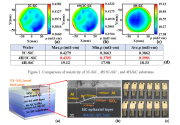
In a groundbreaking advancement in power electronics, researchers from the Institute of Microelectronics, Chinese Academy of Sciences, led by Dr. Liu Xinyu, in collaboration with institutions including the University of Hong Kong, Qinghe Epistar, Wuhan University, and the Institute of Physics, CAS, have successfully developed a large-size 4H/3C-SiC single-crystal composite substrate — a novel engineered platform that overcomes longstanding limitations of silicon carbide (SiC) in low-voltage (<600V) applications.
  • Problem Addressed: Traditional 4H-SiC substrates have high resistivity (15–20 mΩ·cm), causing excessive substrate resistance that limits device efficiency and current capability in low-voltage power devices. Substrate thinning, a current workaround, increases cost and brittleness.​
  • Innovative Solution: The team pioneered a heterogeneous integration of a high-quality 4H-SiC epilayer (for high breakdown field and crystallinity) bonded to a low-resistivity 3C-SiC substrate (resistivity <0.5 mΩ·cm, doping up to 10²⁰ cm⁻³).​
  • Record-Low Resistivity: The composite substrate achieved a record-low resistivity of 0.39 mΩ·cm45× lower than conventional 4H-SiC.​
  • Advanced Bonding Technology: Using hydrogen ion implantation, ion beam surface activation, and precise thermal processing, the team achieved:
    • 87% bonding yield
    • World’s lowest thermal boundary resistance (1±0.7/-0.6 m²·K/GW)​
    • Ultra-low interface potential barrier (<30.4 mV), enabling efficient electron tunneling​
  • High-Quality Surface: Post-bonding processes (annealing, CMP, atomic etching) produced a surface suitable for epitaxial growth.​

1768827251396.png

Performance:​

  • A 200V Schottky barrier diodefabricated on the composite substrate achieved:
    • Specific on-resistance of 0.50 mΩ·cm²47% lower than standard 4H-SiC devices​
    • Surge current capability of 312A, demonstrating superior electrothermal robustness​
  • Within the 100–600V range, the engineered substrate reduces on-resistance by 3–6× compared to conventional 4H-SiC, surpassing the theoretical performance limits of pure 4H-SiC devices.​
This innovation breaks the “dilemma” that has hindered SiC adoption in low-voltage markets (e.g., EV auxiliaries, consumer electronics, data centers), where silicon still dominates due to cost and efficiency. The 4H/3C-SiC composite enables high-performance, high-efficiency, and cost-effective SiC devices for the next generation of power electronics.
Please, Log in or Register to view URLs content!
 

tokenanalyst

Lieutenant General
Registered Member

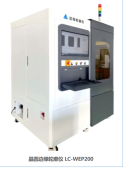
High-performance droplet-triggered laser shooting accuracy evaluation system for LPP-EUV light sources​

Abstract​

Extreme ultraviolet (EUV) light sources with a central wavelength of 13.5 nm have become a foundational technology for advanced semiconductor manufacturing. In laser-produced plasma EUV (LPP-EUV) light sources, achieving the precise spatial-temporal synchronization between tin droplets and laser pulses is of paramount importance. To address this need, we have developed a droplet-triggered laser shooting accuracy evaluation (DLSAE) system specifically designed for LPP-EUV applications. The DLSAE system generates synchronized, tunable delay trigger signals with sub-nanosecond precision for the narrow-pulse laser and the droplet imaging camera based on real-time droplet detection. By analyzing the positional fluctuations of droplets captured via high-speed imaging, the DLSAE system quantitatively assesses shooting accuracy of the droplet-triggered laser shooting system. Under experimental conditions involving droplets with a diameter of approximately 75 μm, a velocity of ~15 m/s, and a repetition rate of 25 kHz, through the DLSAE system, the shooting error of a droplet-triggered laser shooting control system is evaluated about 3.325 μm (3σ) in the target space, compared to 60.002 μm (3σ) in the non-target space—corresponding to an 18.05× improvement.​

Please, Log in or Register to view URLs content!
 

tokenanalyst

Lieutenant General
Registered Member

Multiscale measurement for infrared suppression ratio of SPFs-integrated EUV collectors by a weighted harmonic mean integral​

Abstract​

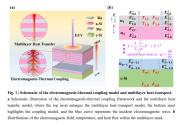
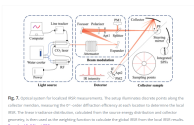
Infrared (IR) suppression is essential for extreme ultraviolet (EUV) lithography systems. This study establishes a method for predicting the global infrared suppression ratio (IRSR) of EUV collectors from local IRSR values, based on a weighted harmonic mean integral framework. To enable reliable local IRSR measurement, the challenge of spectral leakage inherent in finite-spot illumination on large-period gratings is analyzed and overcome by identifying optimal illumination conditions that balance spatial resolution and signal integrity. A dedicated optical system is implemented to execute this localized measurement strategy. The proposed method enables detailed assessment of IRSR performance and uniformity across the collector surface, offering practical insights for manufacturing tolerance specification and optimization of the collector-SPFs collaborative design.

1768827628841.png

Please, Log in or Register to view URLs content!
 

tokenanalyst

Lieutenant General
Registered Member

Semiconductor equipment manufacturer ASM reported better-than-expected order volumes in Q4 2025 due to a rebound in the Chinese market.​


Chip equipment manufacturer ASM International said its preliminary order volume for the fourth quarter of 2025 exceeded market expectations, driven by a rebound in orders from China.

The Dutch company said in a provisional statement that its quarterly order volume grew to approximately €800 million ($930 million), exceeding the €669 million forecast by analysts in a Visible Alpha survey.

ASM stated, "The strong order volume was primarily driven by a rebound in orders from China at the end of the quarter, as well as robust growth in the advanced logic/foundry business."

ASM's preliminary revenue was €698 million, higher than the €656 million forecast by the London Stock Exchange Group (LSEG).
In October 2025, ASM's third-quarter results were impacted by higher-than-expected order volumes from China (the world's largest buyer of chip manufacturing equipment)​
 

LanceD23

Junior Member
Registered Member

Innosilicon launches LPDDR6 IP and achieves commercial shipment.​


Chinese semiconductor company Innosilicon has become the first in China to commercially ship LPDDR6 interface IP, just months after the JEDEC standard was finalized. This breakthrough addresses growing demand for higher memory bandwidth in AI smartphones and PCs, where current LPDDR5X faces bottlenecks with large AI models.

The new IP boosts single-channel speeds to 14.4Gbps (50% faster than LPDDR5X) and widens data pathways from 16 to 24 bits, significantly improving bandwidth for AI tasks. Developed in collaboration with TSMC and Samsung for advanced 5nm/3nm processes, it overcomes challenges like signal crosstalk and thermal issues.

Innosilicon also offers a combined LPDDR5X/LPDDR6 solution, reducing chip development time by 30% and lowering transition risks. Its IP has already enabled mass production of over 10 billion chips, positioning China as a competitive player in global memory IP supply.

Please, Log in or Register to view URLs content!
just a controller , not the memory itself. Bummer.
 
Top