Chinese semiconductor thread II

huemens

Junior Member
Registered Member
So the different reports we have seen about H200 in the past couple of weeks are not really contradictory to each other. They can all be true.

1) There's still demand for H200 among Chinese companies.
2) But Chinese regulators don't want it flow in unrestricted, so they ask the companies to delay the orders while they evaluate a reasonable ratio of Nvidia to Domestic chips.
3) They will allow some imports after the evaluation. Possibly with conditions of buying certain amount of domestic chips.
 

tokenanalyst

Lieutenant General
Registered Member

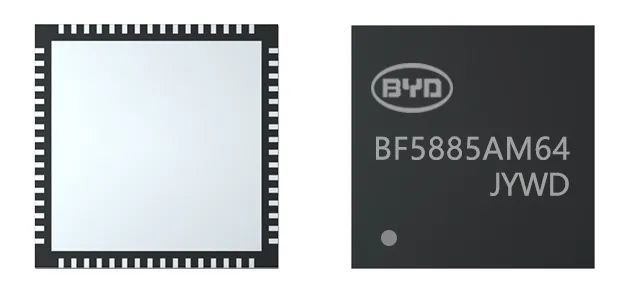
BYD Semiconductor launches a four-in-one lock control MCU with higher integration, higher configuration, and higher positioning.​

According to BYD, following the launch of China's first integrated touch and RFID smart lock main control MCU (BF5823AM48) in August 2020, BYD Semiconductor has recently successfully developed a "four-in-one" MCU with higher integration, higher configuration, and higher positioning—BF5885AM64.
103613721.jpg

This "four-in-one" MCU chip integrates and implements four major functions, including MCU main control, RFID smart card detection, Touch-Key touch buttons, and voice playback. Compared to its predecessor, the BF5885AM64 has improvements in parameters, performance, and application-side functions, and also adds voice playback functionality, meeting the needs of network interaction and background thread processing, targeting a higher-end customer group.

It is understood that the BF5031A0, a 120 multi-functional fingerprint module launched at the same time as the BF5885AM64, has 120*120 pixels and integrates BYD Semiconductor's 120*120 capacitive fingerprint sensor, fingerprint MCU, and fingerprint algorithm. It also features AES128 / SM4 security algorithm and embedded dual-mode algorithm, and is mainly used in the field of fingerprint door locks.

BYD stated that the BF5885AM64 has a Cortex-M0 core, a maximum operating frequency of 48MHz, and can operate stably in environments ranging from -45℃ to +125℃. Its I/O port electrostatic discharge test can pass ±8KV, and it has passed multiple rounds of rigorous reliability testing.​

Please, Log in or Register to view URLs content!
 

tokenanalyst

Lieutenant General
Registered Member

Ibtech Semiconductor successfully delivered its silicon bridge-based 2.5D/3D Chiplet and CPO products.​


Recently, Ebi Semiconductor announced a major breakthrough – it has become the first company to overcome the core technologies based on embedded silicon bridges, TMV and multi-layer high-density redistribution, and has independently developed the COORS series of advanced packaging solutions, successfully achieving the development and customer delivery of 2.5D/3D Chiplet and CPO products.
According to reports, compared to the mainstream CoWoS-S packaging solution overseas, EBO's COORS technology achieves short-distance, high-density interconnection using multiple embedded silicon bridges. It not only supports more than three times the mask size expansion and multi-chip heterogeneous integration, but also achieves comprehensive optimization in design flexibility, manufacturing cost control, and integration, precisely matching the packaging needs of high-computing-power and high-speed transmission chips such as AI, HPC, and xPO. The 2.5D Chiplet product delivered this time is a veritable "integration behemoth": with a package size exceeding 50x50mm, densely packed with over 160,000 micro-solder points, it successfully integrates more than 30 heterogeneous chips, covering advanced process SOCs and HBM chips; the CPO optoelectronic co-packaged product, with a compact 15x15mm size, achieves single-unit packaging of more than 8 optical and electrical chips, significantly improving interconnect density and transmission bandwidth, and refreshing the upper limit of system performance.

According to public information, EBO Semiconductor was founded in 2020 and is a high-tech enterprise specializing in advanced packaging of integrated circuits. Its core focus is on technologies such as 2.5D/3D Chiplet and CPO, providing one-stop packaging design, R&D, manufacturing and sales services for AI and high-computing power chips.

Please, Log in or Register to view URLs content!
 

tphuang

General
Staff member
Super Moderator
VIP Professional
Registered Member
So the different reports we have seen about H200 in the past couple of weeks are not really contradictory to each other. They can all be true.

1) There's still demand for H200 among Chinese companies.
2) But Chinese regulators don't want it flow in unrestricted, so they ask the companies to delay the orders while they evaluate a reasonable ratio of Nvidia to Domestic chips.
3) They will allow some imports after the evaluation. Possibly with conditions of buying certain amount of domestic chips.
Yes, that is the case. I would presume they place enough orders to offload Jensen's stash of 700k H200, but probably not too much more than that.

I had someone tell me today that a lot of data center right now is waiting for Ascend-950 which will be a real game changer in terms of inference cost efficiency and such.

The thing is that I hear AI labs in China don't want to use CANN for their training. That's why there is still plenty of H200 demand.
 

CMP

Captain
Registered Member
Yes, that is the case. I would presume they place enough orders to offload Jensen's stash of 700k H200, but probably not too much more than that.

I had someone tell me today that a lot of data center right now is waiting for Ascend-950 which will be a real game changer in terms of inference cost efficiency and such.

The thing is that I hear AI labs in China don't want to use CANN for their training. That's why there is still plenty of H200 demand.
Just a thought but if those non-collaborative AI labs are only provided with less than half the H200 supply as they need, the ones who are more open to domestic solutions may end up being able to take the lead in the market and market forces will naturally solve this problem by virtue of which labs will thrive and which will stagnate. A way to change the leaderboard for the domestic players in a way that favors users of domestic solutions.
 

tphuang

General
Staff member
Super Moderator
VIP Professional
Registered Member
Just a thought but if those non-collaborative AI labs are only provided with less than half the H200 supply as they need, the ones who are more open to CANN may end up being able to take the lead in the market and market forces will naturally solve this problem by virtue of which labs will thrive and which will stagnate.
well, that's the thing. Is it wise to slow down your cutting edge AI labs if AI inference is the majority of the demand and they have already done the work to make sure their models are compatible with domestic chips for inference?

That slows down a whole bunch of other industries.
 

CMP

Captain
Registered Member
well, that's the thing. Is it wise to slow down your cutting edge AI labs if AI inference is the majority of the demand and they have already done the work to make sure their models are compatible with domestic chips for inference?

That slows down a whole bunch of other industries.
That's a really good and important point. Given China's track record with being comfortable relying on US-controlled solutions for chip manufacturing, I suspect they are equally comfortable with the idea of allowing dependence on the H200 while slowly cultivating alternatives and weaning domestic champions off of it over the course of the next 10 years.
 

jx191

New Member
Registered Member
well, that's the thing. Is it wise to slow down your cutting edge AI labs if AI inference is the majority of the demand and they have already done the work to make sure their models are compatible with domestic chips for inference?

That slows down a whole bunch of other industries.
I think when you zoom out and look at the situation from a long term perspective, how many H200s get in and where they are used isn't going to be an ultimate game changer. The trend of moving towards domestic stuff can't be undone especially when you consider the domestic solutions are also improving and getting to a point where they will satisfy domestic demand to an appropriate standard.

That being said, @CMP does have a point, but I doubt the gov will allow the country to be dependent on H200s, not when you've got promising domestic alternatives that are up and coming.
 
Top