
Toujing Technology: Full order book, rising storage prices may drive manufacturers to continue expanding production.
Toujing Technology reported strong Q3 2025 financial results, with revenue rising 124.15% year-on-year to 2.266 billion yuan and net profit up 225.07% to 462 million yuan. This growth is attributed to successful mass production launches of advanced semiconductor equipment for cutting-edge process nodes, along with improved economies of scale and reduced operating expenses.
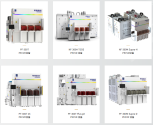
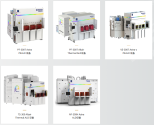
The company has a full order book, driven by rising demand in the memory market and technological advancements beyond Moore’s Law. Key products—such as PECVD Stack (ONO), ACHM, PECVD Bianca, ALD SiCO, and others based on new platforms (PF-300TPlus/M) and reaction chambers (pX, Supra-D)—have passed customer certification and entered mass production.
Chairman Lu Guangquan emphasized that the industry is entering a post-Moore’s Law era, with innovations like gate-all-around (GAA) transistors, backside power delivery, high-K metal gates, and 3D integration driving demand for advanced equipment. The rapid growth of data has accelerated adoption of high-bandwidth memory (HBM) and multi-layer 3D NAND flash, increasing the need for thin-film deposition and bonding technologies.
Toujing is deepening its expertise in thin-film deposition (PECVD, ALD, HDPCVD, etc.) and 3D integration equipment, including wafer-to-wafer and chip-to-wafer hybrid bonding. The company has received repeat orders for hybrid bonding tools and successfully shipped next-generation high-speed, high-precision systems; chip-to-wafer bonding verification is ongoing. It also completed development of laser lift-off technology after permanent bonding.
With existing industrial bases in Shenyang and Lingang (Shanghai) supporting over 700 units/year production capacity, Topwin is constructing a second plant in Shenyang to further expand output—ensuring it can meet rising demand.
The company has a full order book, driven by rising demand in the memory market and technological advancements beyond Moore’s Law. Key products—such as PECVD Stack (ONO), ACHM, PECVD Bianca, ALD SiCO, and others based on new platforms (PF-300TPlus/M) and reaction chambers (pX, Supra-D)—have passed customer certification and entered mass production.
Chairman Lu Guangquan emphasized that the industry is entering a post-Moore’s Law era, with innovations like gate-all-around (GAA) transistors, backside power delivery, high-K metal gates, and 3D integration driving demand for advanced equipment. The rapid growth of data has accelerated adoption of high-bandwidth memory (HBM) and multi-layer 3D NAND flash, increasing the need for thin-film deposition and bonding technologies.
Toujing is deepening its expertise in thin-film deposition (PECVD, ALD, HDPCVD, etc.) and 3D integration equipment, including wafer-to-wafer and chip-to-wafer hybrid bonding. The company has received repeat orders for hybrid bonding tools and successfully shipped next-generation high-speed, high-precision systems; chip-to-wafer bonding verification is ongoing. It also completed development of laser lift-off technology after permanent bonding.
With existing industrial bases in Shenyang and Lingang (Shanghai) supporting over 700 units/year production capacity, Topwin is constructing a second plant in Shenyang to further expand output—ensuring it can meet rising demand.


