
China's Space Program Thread II

taxiya

Brigadier
Registered Member
This is interesting.

Isn't there supposed to be a ~100K limit on how many LEO satellites can fit in the orbitals?
well, it is both true and false. In theory it is infinite but in practice finite, it all depends on how daring or how accurate one claim one can operate. It is like cars crossing an intersection without slowing down, they can be safe so long as all cars maintain a constant speed and timely synced, in theory the gap only need to be one car lengh, but practically it depends who is driving.

Now it is like the wild west in US, one lays claim in order to have a chance, whoever being sciencitifically responsible/conservative will be the looser. A sad reality. If China doesn't make the first demand, US will. Even if China can not implement it eventually getting it in the administration queue ahead of US will delay or prevent US to get it. That is exactly what US did by SpaceX. I objected starlink and still not enthusiastic about it (acknowledging its niche usefullness though), but I wholeheartly support China doing the same and even more than US doing.
 
Last edited:

bsdnf

Senior Member
Registered Member
The Lihong-1 spacecraft, developed by CAS Space Technology, successfully completed its suborbital flight test at the Jiuquan Satellite Launch Center.

The mission reached a maximum altitude of approximately 120 kilometers, with the spacecraft flying close to the edge of space, briefly breaking through the atmosphere to enter space, but unlike a satellite, it did not orbit the Earth.

The mission carried a recoverable scientific experiment payload for microgravity laser additive manufacturing, as well as experimental supplies such as space-induced mutation rose seeds.
 

DanWangJZ

New Member
Registered Member
The Lihong-1 spacecraft, developed by CAS Space Technology, successfully completed its suborbital flight test at the Jiuquan Satellite Launch Center.

The mission reached a maximum altitude of approximately 120 kilometers, with the spacecraft flying close to the edge of space, briefly breaking through the atmosphere to enter space, but unlike a satellite, it did not orbit the Earth.

The mission carried a recoverable scientific experiment payload for microgravity laser additive manufacturing, as well as experimental supplies such as space-induced mutation rose seeds.

What is the primary mission of Lihong-1?
 

Asug

Junior Member
Registered Member
Is anything known about the return of Shenzhou-20? And in general, what is the warranty period for the flight of Shenzhou as part of the orbital station? It's been almost 9 months already.
 

taxiya

Brigadier
Registered Member
Is anything known about the return of Shenzhou-20? And in general, what is the warranty period for the flight of Shenzhou as part of the orbital station? It's been almost 9 months already.
Before April which is the usual 1st crew launch of the year. The hardware which should last for years. The only figure that I have heard regarding length of time of the craft is 57 days independent flight (limited by food, water and fuel) and 180 days docked to the station which is due to the health concern of crew rather than hardware.
 

TheRathalos

New Member
Registered Member
Please, Log in or Register to view URLs content!

The 18th group of Guowang/Satnet satellites got launched today. 9 more sats this time around.
And a launch of Yaogan-50-1 from Taiyuan by CZ-6A Y27 at 14:16 UTC yesterday, the launch was interestingly in a medium inclination retrograde orbit at 139° (41° the other way around), since it's a Yaogan (Military EO) this may suggest it's a SAR satellite, since such orbit have previously been used for some niche radar observation benefits in some rare case (
Please, Log in or Register to view URLs content!
,
Please, Log in or Register to view URLs content!
), the retrograde orbit also meant the NOTAM were widely mistaken for missile tests :p. The satellite was built by SAST and according to the numbering more of the same type are expected.
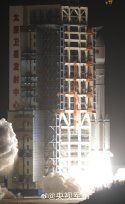
CZ6AY27.jpg
Please, Log in or Register to view URLs content!


On January 6, as the roar of the rocket engine subsided, the Conventional High-Thrust Liquid Rocket Engine Test Center [Unit 501 of AALPT 165th] successfully completed the first ground ignition test after New Year's Day. The engine's triple ignition test run was a complete success, with all performance parameters meeting design targets. This successful first test of the year marks a significant phased breakthrough in the development of this engine, establishing a critical technical foundation for subsequent flight tests and model finalization.
Interesting announcement, as far as I can tell the High-thrust and high-pressure staged combustion cycle conventional engine of 9 engines in 8 years was already
Please, Log in or Register to view URLs content!
 
Top