well, it is both true and false. In theory it is infinite but in practice finite, it all depends on how daring or how accurate one claim one can operate. It is like cars crossing an intersection without slowing down, they can be safe so long as all cars maintain a constant speed and timely synced, in theory the gap only need to be one car lengh, but practically it depends who is driving.This is interesting.
Isn't there supposed to be a ~100K limit on how many LEO satellites can fit in the orbitals?
Now it is like the wild west in US, one lays claim in order to have a chance, whoever being sciencitifically responsible/conservative will be the looser. A sad reality. If China doesn't make the first demand, US will. Even if China can not implement it eventually getting it in the administration queue ahead of US will delay or prevent US to get it. That is exactly what US did by SpaceX. I objected starlink and still not enthusiastic about it (acknowledging its niche usefullness though), but I wholeheartly support China doing the same and even more than US doing.
Last edited:


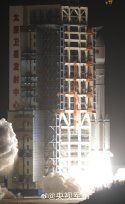
 . The satellite was built by SAST and according to the numbering more of the same type are expected.