Chinese semiconductor thread II

tphuang

General
Staff member
Super Moderator
VIP Professional
Registered Member
Please, Log in or Register to view URLs content!


Vanchip 2025 report
I was among the first in China to develop L-PAMiD and it has developed 2nd-gen Phase 7LE Plus module and has started delivery of Phase 8L. Its RF PA module income grew 13.8% YoY to 1.892B RMB

Has developed products for Wifi 6/6E and Wifi-7 covering 2.4GHz to 6GHz band.
 

tphuang

General
Staff member
Super Moderator
VIP Professional
Registered Member
Please, Log in or Register to view URLs content!

OnMicro reporting on 2025. Its chips now support Apple, Google, Xiaomi and Samsung. It is also working on OPPO and Vivo. Now it's showcasing various high performance, lower power bluetooth SoC for IoT, wearables and finding applications. Uses Cortex-M4 core.
 

tokenanalyst

Lieutenant General
Registered Member
Please, Log in or Register to view URLs content!
Well, There goes the last group of naive liberals who still had some faith on the US and want to keep being relying on US tools like normal. Is absolutely incredible how think tank stooges rhetoric and US politicians actions have killed the reputation of probably their best ally inside China: The Liberals.

In other news both Piotech and AMEC reported double digit growth

Topjing Technology achieved double-digit growth in both revenue and profit in 2025, and returned to profitability in the first quarter of 2026.

Recently, Topway Technology, a semiconductor equipment company listed on the Science and Technology Innovation Board, released its 2025 annual report and 2026 first-quarter report. The report shows that the company achieved significant growth in both revenue and profit throughout the year, and successfully turned a profit in the first quarter of 2026, demonstrating strong growth momentum.

According to the announcement, in 2025, Tuojing Technology achieved operating revenue of 6.519 billion yuan, a year-on-year increase of 58.87%; net profit attributable to shareholders of the listed company was 927 million yuan, a year-on-year increase of 34.67%. In the first quarter of 2026, the company continued its high growth momentum, achieving operating revenue of 1.112 billion yuan, a year-on-year increase of 56.97%; net profit attributable to shareholders of the listed company was 571 million yuan, compared with a loss of 147 million yuan in the same period of the previous year, successfully turning a loss into a profit.

In its announcement, Topwin Technology stated that the significant increase in revenue was mainly due to the batch verification of equipment used in advanced process technologies by customers, leading to a further expansion of mass production scale and a substantial increase in sales revenue. In addition, the expansion of revenue, improved gross margin, decreased expense ratio, and increased gains or losses from changes in the fair value of external investments all contributed to the excellent profit performance.
Publicly available information shows that Topview Technology is a leading domestic supplier of high-end semiconductor equipment, specializing in the R&D, production, and sales of thin-film deposition equipment and advanced packaging equipment. It is the only company in China to have achieved mass production of high-end equipment such as PECVD and ALD. Its products are widely used in the manufacturing of 14nm logic chips and 128-layer 3D NAND.


Advanced Micro Devices (AMEC) reported outstanding first-quarter results, with net profit nearly doubling.

On the evening of April 27, AMEC released its financial report for the first quarter of 2026. The report shows that on the basis of high growth in 2025, the company had a strong start to 2026, with both operating revenue and net profit achieving significant growth in the first quarter, of which net profit attributable to the parent company surged by nearly two times year-on-year.

According to disclosures, in the first quarter of 2026, AMEC achieved operating revenue of RMB 2.915 billion, a 34.13% increase compared to RMB 2.173 billion in the same period of the previous year. Net profit attributable to shareholders of the listed company was RMB 930 million, a staggering 197.20% increase compared to RMB 313 million in the same period of the previous year. Net profit attributable to shareholders after deducting non-recurring gains and losses was RMB 478 million, a year-on-year increase of 60.09%.

AMEC stated that the revenue growth in the first quarter was mainly due to a significant increase in new shipments of high-end products, especially for key etching processes in the manufacturing of advanced logic and memory devices. Mass production has been achieved for key mid-segment etching processes in advanced logic devices and ultra-high aspect ratio etching processes in advanced memory devices. Several conductor and dielectric thin-film equipment developed by the company, such as LPCVD and ALD, have successfully entered the market, with the coverage of thin-film equipment continuously increasing, new shipments maintaining rapid growth, and they are being continuously applied to iterative products by customers.

As of the end of the first quarter, AMEC had more than 8,300 reaction stations in full-scale production on more than 180 customer chip and LED production lines at home and abroad.​

Please, Log in or Register to view URLs content!
 

tokenanalyst

Lieutenant General
Registered Member

Kema Technology's 2025 annual report reveals revenue of 1.073 billion yuan!​


Kema Technology reported a robust financial performance in 2025, achieving an annual revenue of 1.073 billion yuan, marking a year-on-year increase of 25.19%. The semiconductor sector remains the undisputed core of its business, contributing 887 million yuan or 82.66% of total sales, driven by surging demand for domestic equipment localization and capacity expansion within China's growing semiconductor industry. While net profit attributable to the parent company saw a slight decline of 7.04%, this was primarily due to non-recurring adjustments related to its recent acquisition; excluding these items, the core business still delivered a strong net profit of 288 million yuan, reflecting genuine operational strength despite short-term accounting fluctuations.

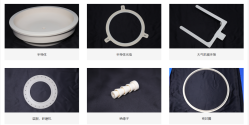
The company's growth in the semiconductor segment is fueled by significant advancements in both structural components and integrated modular products. Sales for structural components surged by 37.75%, supported by full order books from downstream customers requiring high-purity ceramic materials. Additionally, revenue from functional-structural integration products rose by 11.19% as Kema successfully scaled its mass production of advanced ceramic heaters for critical processes like CVD, PECVD, and laser annealing in wafer fabs. Concurrently, key products such as electrostatic chucks and ultra-high purity silicon carbide kits are moving from verification to small-scale mass production, diversifying the company's portfolio beyond traditional single-function parts toward complex, high-value solutions that address specific needs of major equipment manufacturers.
1777414301579.png
Beyond revenue generation, Kema Technology made substantial strides in operational expansion and technological innovation during 2025. The company increased its R&D investment by nearly 49% to over 98 million yuan, accelerating the development of new products including multi-zone heating electrostatic chucks and advanced silicon carbide components for various deposition equipment. Production capabilities were bolstered through the partial operation of a new high-standard facility in Suzhou, which improved efficiency in ceramic heater manufacturing and structural component finishing by approximately 30%. Looking ahead to 2026, Kema aims to achieve full consolidation with its acquired subsidiary, scale up production for high-power etching chucks with over 144 heating zones, and deepen market penetration among domestic wafer foundries, solidifying its position as a leader in the domestic substitution of advanced ceramic components.

Please, Log in or Register to view URLs content!
 

tokenanalyst

Lieutenant General
Registered Member

With a total investment of 200 million yuan, the Hebei silicon carbide semiconductor equipment project is progressing at full speed.​


The Hebei Jingchi Semiconductor Materials and Equipment R&D and Production Project, located in the Zhengding Area of China's Pilot Free Trade Zone, is currently advancing at a rapid pace with a total investment of 200 million yuan. Construction efforts are accelerating across two production workshops and one comprehensive building. As of April 28, 2026, the project has made significant ground; the most advanced No. 2 workshop is actively undergoing formwork setup on its first floor, scheduled for completion by month's end, while work simultaneously continues on the No. 1 workshop and the general facility. The entire complex is targeted to be finished by September of the same year, at which point it will transition into full production.

Once operational, this facility will become a self-sufficient hub for research, development, and manufacturing of specialized equipment critical to the semiconductor supply chain. Specifically, it will focus on producing machinery for silicon carbide (SiC) crystal growth and diamond crystal growth, alongside related materials. The project is projected to generate an estimated annual revenue of 220 million yuan upon launch. Silicon carbide represents a cornerstone of third-generation semiconductors, offering superior properties for high-temperature, high-frequency, and radiation-resistant applications that are essential for the burgeoning new energy and AI computing sectors. Simultaneously, the project addresses diamond technology, which serves as a leading candidate for fourth-generation semiconductors due to its exceptional thermal conductivity and bandgap, making it ideal for next-generation low-loss electronic devices.​

Please, Log in or Register to view URLs content!
 

tokenanalyst

Lieutenant General
Registered Member
New high throughput method for wafer thickness determination down to 1nm using hyperspectral imaging. Current methods rely on Ellipsometry who is not ideal for large sample size.​

High-throughput full-field thickness mapping of semiconductor wafers via hyperspectral imaging with a field-modulated diffuse scattering correction model​

Abstract​

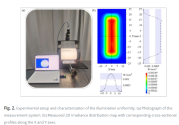
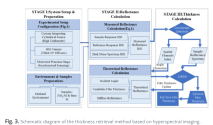
Thin-film thickness is a key parameter governing optical, mechanical, and electronic properties. Due to the limitations of discrete sampling, traditional point-scanning methods fail to meet the requirements for real-time characterization of full-size spatial uniformity in mass industrial production. In this paper, we propose a high-throughput, full-field online thickness monitoring method based on hyperspectral imaging (HSI). A high-uniformity linear illumination system was designed, tailored to the imaging characteristics of the hyperspectral camera, to achieve stable detection in a large field of view. We found that in large-field detection, the measured reflectance spectrum exhibits a "spectral drift" phenomenon at the interference minima. This distortion is primarily caused by substrate-induced diffuse scattering, as the dielectric thin film is highly transparent and its surface scattering is negligible. To overcome this physical bottleneck, we investigated the diffuse reflection mechanism specifically at the film-substrate interface and established a physical model coupling specular reflection and field-modulated diffuse scattering. By introducing an effective interface roughness coefficient, the background noise caused by substrate scattering was successfully decoupled. Combined with the least-squares nonlinear fitting algorithm (LSNFA), the system achieves accurate extraction of film thickness by introducing an effective roughness parameter for spectral baseline correction. Experimental results show that the HSI system can complete the full-size thickness mapping of a 4-inch wafer (containing more than 120,000 sampling points) within 60 seconds, with an absolute error of less than 1 nm compared with standard ellipsometry. This work resolves the signal shift problem in HSI-based film thickness measurement and provides a precise metrology solution with both physical depth and detection efficiency for large-area film uniformity characterization in industrial environments.
1777415566897.png1777415540774.png

Please, Log in or Register to view URLs content!
 

tokenanalyst

Lieutenant General
Registered Member
Not enough people realize this.

Even if China has EUV, that doesn't mean they are fully self sufficient, there's a whole supply chain that needs coverage.
Depend on what you are refiring. Process node? Processing tools? Metrology tools?

I do think there has been completely independent pilot lines (making chips) for immersion since 2020 and EUV since 2023.

Immersion lithography has already been adopted by mayor fabs in memory and logic. EUV is probably still in the pilot phase, but recent patents in EUV pellicles are saying they are getting close to some level of production, I don't think ASML level but a least to meet some domestic demand. In term of processing equipment and metrology, domestic companies can cover almost everything down to even 7nm and domestic tools are getting better because they are being used more than in the past and the improvement cycle clearly has been shortened.​
 
Top