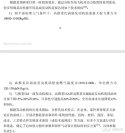
PRC VCE and low bypass engines (fighters, tactical jets, UAVs, others)

latenlazy

Brigadier
Lining up with this table means it also lines up with TIT being <2000K ie 1800-1900K. I know you/some people hate focusing on TIT but this would mean that some technologies in WS-19 could be relatively conservative versus other engines, and even you can’t deny the benefits Higher TIT brings to an engine.
Nah, there's other likelier interpretations. The table likely outlines parameters at sea level and M0 while the "1950-2100K" mentioned just before the table is the actual design point achieved at higher speeds due to ram rise. Maybe @latenlazy can weigh in on this?
I’ve talked about this before. If your compression efficiency is higher you don’t need as much TIT to reach the same thrust per area.
 

Nx4eu

Junior Member
Registered Member
I’ve talked about this before. If your compression efficiency is higher you don’t need as much TIT to reach the same thrust per area.
The chart lists the adiabatic efficiency of the compressor as 86%. How much higher is this compared to other jet engines?
 

latenlazy

Brigadier
The chart lists the adiabatic efficiency of the compressor as 86%. How much higher is this compared to other jet engines?
Compressor ratio is what you should be paying attention to. That’s the amount of mechanical potential energy imparted into the airstream.
 

Nx4eu

Junior Member
Registered Member
Compressor ratio is what you should be paying attention to. That’s the amount of mechanical potential energy imparted into the airstream.
Higher compressor ratio doesn't help with specific thrust though. I'm now starting to understand what F119Doctor was getting at. And I do also see what you're saying. But pairing the relatively low TIT with a higher bypass ratio indicates to me that the WS-19, while a very good damn engine in terms of max thrust, T/W, fuel efficiency, and lifespan. Is not optimized for super cruise performance.
 
Last edited:

latenlazy

Brigadier
Higher compressor ratio doesn't help with specific thrust though. I'm now starting to understand what F119Doctor was getting at. And I do also see what you're saying. But pairing the relatively low TIT with a higher bypass ratio indicates to me that the WS-19, while a very good damn engine in terms of max thrust, T/W, fuel efficiency, and lifespan. Is not optimized for super cruise performance.
Higher compression ratio *does* help with specific thrust, both because you are imparting more potential energy into your core stream and because higher air compression also means higher oxygen concentration, aka more efficient burn. Higher bypass ratio does not definitively mean poorer supercruise performance, because while higher bypass ratio can hurt your specific thrust, you can also compensate with higher compression ratio in your core stream. Your specific thrust is defined by the net energy imparted into your core stream and you can impart that net energy either through mechanical work (compression) or thermal work (combustion).

If you go back to the alleged spec sheet for the WS-19 you will find that it actually has very good specific thrust despite higher bypass ratio. This is almost certainly because of its very high overall compression ratio. The compression ratio is actually the primary driver of engine performance. Good compression ratio generates the margins for every other performance parameter in an engine.
 

ZeEa5KPul

Brigadier
Registered Member
Alright. First and foremost, engine stronk. I don't know why we need to down this rabbit hole off a snippet of some results from a test whose parameters and purpose we don't understand. This test data doesn't indicate anything about the TIT or intended operating parameters of the engine. These random blurbs often do more harm than good.

By every indication, the WS-19 and 15 are best-in-class engines with bonkers performance numbers and have as a requirement supercruise for their respective platforms.
Your specific thrust is defined by the net energy imparted into your core stream and you can impart that net energy either through mechanical work (compression) or thermal work (combustion).
This is incorrect. Compressing air takes work, the energy for turning the compressors comes from the turbine, i.e., the air stream. It cannot raise the energy (enthalpy) of the air stream. The only place in a jet engine where the energy increases is the heat addition in the combustor.

Furthermore, since this is adiabatic compression (the heat in the gas stream due to the work the compressor does on it doesn't have time to bleed out into the environment), the temperature of the gas entering the combustion chamber is higher when the OPR is higher. Ultimately, you can only heat the gas up to the point of material failure. Higher temperature combustor inlet gas means you have a lower heat addition budget and the way to raise it is through higher TIT.
 

Nx4eu

Junior Member
Registered Member
If you go back to the alleged spec sheet for the WS-19 you will find that it actually has very good specific thrust despite higher bypass ratio. This is almost certainly because of its very high overall compression ratio. The compression ratio is actually the primary driver of engine performance. Good compression ratio generates the margins for every other performance parameter in an engine.
I'm not seeing where you're getting the very good specific thrust. If anything the specific thrust is quite low based off of publicly available numbers. 70,000N/100kg/s is 700N/kg/s dry specific thrust, it's 26% lower than F119 estimated specific thrust of 947N/kg/s, or even under the EJ200 which is 770N/kg/s. I'm using those two engines because they have a ballpark similar TIT, yet have a much lower bypass ratio. The Higher compression ratio does not compensate.
 

latenlazy

Brigadier
This is incorrect. Compressing air takes work, the energy for turning the compressors comes from the turbine, i.e., the air stream. It cannot raise the energy (enthalpy) of the air stream. The only place in a jet engine where the energy increases is the heat addition in the combustor.
Compressing air is doing work to generate potential energy for the core stream. The core stream starts as static air at the inlet with *no* energy imparted to it. The turbine drives the compressor yes, but the compressor also drives the turbine. That’s why it’s called a *cycle*. Outside of combustion the turbine isn’t recovering any energy that isn’t being pushed first by the compressor, but even the combustion isn’t happening without the compressor compressing air to ignite first. So it is in fact the compressor driving the turbine cycle not the other way around. This is also why you need an auxiliary engine starter to start the turbine cycle. The turbine isn’t starting itself because you need to run the compressor first to drive the turbine.

Furthermore, since this is adiabatic compression (the heat in the gas stream due to the work the compressor does on it doesn't have time to bleed out into the environment), the temperature of the gas entering the combustion chamber is higher when the OPR is higher. Ultimately, you can only heat the gas up to the point of material failure. Higher temperature combustor inlet gas means you have a lower heat addition budget and the way to raise it is through higher TIT.
No, higher inlet gas temp into the combustor means you have more added heat to combustion. Higher added heat means you need less fuel to get to the same amount of stoichiometric combustion. Higher starting heat is more stoichiometrically efficient. There is no hard upper limit constraining energy extraction from combustion outside the stoichiometric limit of the fuel to oxygen chemical interaction. Yes you are pushing your material’s heat tolerance limits with higher inlet gas from the compressor, which can be a soft limit to the heat budget, *but you’re doing that regardless if you’re increasing TIT*. The kind of TIT increase you’re referring to is from higher fuel mix to burn hotter, but pushing higher fuel mix to burn hotter is less efficient than higher inlet gas temp to burn a lower fuel mix more efficiently! And either way, if your core stream has more mechanical energy imparted to it from the compressor you need less fuel burn for the same net core stream energy and thus gas velocity.
 
Last edited:

latenlazy

Brigadier
I'm not seeing where you're getting the very good specific thrust. If anything the specific thrust is quite low based off of publicly available numbers. 70,000N/100kg/s is 700N/kg/s dry specific thrust, it's 26% lower than F119 estimated specific thrust of 947N/kg/s, or even under the EJ200 which is 770N/kg/s. I'm using those two engines because they have a ballpark similar TIT, yet have a much lower bypass ratio. The Higher compression ratio does not compensate.
Alleged specific thrust figures for the WS-19 are from the attached snippet below. Forgot it was in an auxiliary leak and not the spec sheet itself. Your calculation is probably off because 1) not all inlet air is going to be used for thrust since also bleed air that intake mass flow figures have to account for 2) We don’t know what mass flow is at the intermediate thrust setting.

IMG_1778.jpeg
 
Last edited:

gwel

New Member
Registered Member
I feel I need to preface this post with stating that while I have an engineering background, I am merely an interested amateur when it comes to jet engines. I am by no means an expert in the field.

I’ve talked about this before. If your compression efficiency is higher you don’t need as much TIT to reach the same thrust per area.

From what I gather the compressor efficiency of early 4th gen engines like the F-100 and AL-31 is in the area of 82-83%.
Later generation 4th gen engines like the EJ200, F414 and 5th gen engines like the f119 and f135 seems to be in the area of 86-89%.
The theoretical maximum of compressor efficiency seems to be 90-92%, so there isn't all that much performance left on the table.

4th and 5th gen engines achieve this efficiency with 6-10 stages and overall pressure ratios of 25:1 to 30:1
Achieving 87.4% with 2 stages and 5:1 PR is impressive.
Using less stages obviously has advantages in engine size and weight, but it requires each stage to do more work, which usually drops efficiency.

The challenge here seems to be mostly shaping and stall margin for rapid load changes, manufacturing and materials are not really all that challenging compared to the hot turbine part.
Given the robust digital engineering capabilities china has been building, I assume their computational fluid dynamics simulation tools are quite excellent.
I would not think china behind in compressor technology, they have had everything they need to make it happen for a sufficient amount of time.

Higher compression ratio *does* help with specific thrust, both because you are imparting more potential energy into your core stream and because higher air compression also means higher oxygen concentration, aka more efficient burn. Higher bypass ratio does not definitively mean poorer supercruise performance, because while higher bypass ratio can hurt your specific thrust, you can also compensate with higher compression ratio in your core stream. Your specific thrust is defined by the net energy imparted into your core stream and you can impart that net energy either through mechanical work (compression) or thermal work (combustion).

If you go back to the alleged spec sheet for the WS-19 you will find that it actually has very good specific thrust despite higher bypass ratio. This is almost certainly because of its very high overall compression ratio. The compression ratio is actually the primary driver of engine performance. Good compression ratio generates the margins for every other performance parameter in an engine.

Sorry but this seems like total nonsense to me. Compression ratio is not something you struggle to achieve, it is a design point you choose.
The challenge and the technical sophistication is in the size of the package you require to achieve your chosen OPR, i.e. how many stages you require, and how efficiently you do it, and how big and heavy that total compressor is. Those are interesting metrics, but the ORP alone is basically meaningless because it is a strategically picked design point.

Military fighter jet engines have ratios of 25-30:1, while civilian ones have 60:1.
That does not mean that civilian ones have advanced technology making them 2x better.
The reason civilian ones can have such high ratios is due to their lower operating speed and lower inlet air speed, thus you can design the compressor with higher ratios for higher fuel efficiency.
You can easily brute force this with more stages if you lack the sophistication to make it happen with effective stages delivering high work per stage.
If this was the main thrust driver, the minor weight penalty of extra compressor stages would easily be tolerable and still lead to favorable TWR outcomes.

Maybe you mean compressor efficiency, which is something much harder to achieve than the ratio, but even that argument does not hold up.

When I look at generational leaps in compressor efficiency, they seem to contribute roughly 1/3rd the thrust which the generational leap in turbine inlet temperature contributes.
This intuitively makes sense to me given how close compressor efficiency is near the theoretical maximum, while turbine inlet temperatures seem significantly below the theoretical maximum of about 2000°C, the peak temperature achievable with the fuel.
There is simply a lot more headroom for carving out performance in the TIT area, while compressor efficiency is in diminishing returns phase.

Since no engine can withstand that temperature, the combustion gas is diluted with excess air to cool it down. This excess air has to go through the compressor, which eats a lot of mechanical energy the turbine has to extract.
If we could raise the allowable TIT to 2000°C, we would need zero excess air for cooling, thus raising TIT is a massive thrust increase because it also cuts down on the energy we need to dump into the compressor to get that cooling air into the engine in the first place.
Forcing that air through the engine core without combusting it is a high parasitic load compared to the thrust it delivers. If we instead combusted this cooling air as well, or pushed it with a fan around the engine, the efficiency would go up dramatically.

I'm not seeing where you're getting the very good specific thrust. If anything the specific thrust is quite low based off of publicly available numbers. 70,000N/100kg/s is 700N/kg/s dry specific thrust, it's 26% lower than F119 estimated specific thrust of 947N/kg/s, or even under the EJ200 which is 770N/kg/s. I'm using those two engines because they have a ballpark similar TIT, yet have a much lower bypass ratio. The Higher compression ratio does not compensate.

Specific thrust is not a performance result, it is a design choice you pick for the speed regime you want your plane to operate in.
We had Mach 3 planes in the 1950's, they had terrible thrust to weight ratios and terrible fuel economy but high specific thrust for the high speed regime they were designed to perform in.
It is not a metric to judge the sophistication of the engine technology, but merely the design speed of the plane the engine was build for.

No, higher inlet gas temp into the combustor means you have more added heat to combustion. Higher added heat means you need less fuel to get to the same amount of stoichiometric combustion. Higher starting heat is more stoichiometrically efficient. There is no hard upper limit constraining energy extraction from combustion outside the stoichiometric limit of the fuel to oxygen chemical interaction. Yes you are pushing your material’s heat tolerance limits with higher inlet gas from the compressor *but you’re doing that regardless if you’re increasing TIT*. The kind of TIT increase you’re referring to is from higher fuel mix to burn hotter, but pushing higher fuel mix to burn hotter is less efficient than higher inlet gas temp to burn a lower fuel mix more efficiently! And either way, if your core stream has more mechanical energy imparted to it from the compressor you need less fuel burn for the same core stream energy and thus gas velocity.

On the contrary, the opposite is the case. The compressor outlet temperature is always higher than we want, it reduces performance significantly.
The limiting factor is the turbine inlet temperature, so you can only raise the temperature until you hit that.
The hotter your compressor outlet temperature is, the less fuel you can inject into it to generate work.
For this reason high efficiency industrial gas turbines, which do not have the same size and weight constraints of a plane engine, use intercoolers to cool the air after compression to increase efficiency.
The compressor does not do useful work by heating the air, on the contrary, it prevents useful work from being done.

I do not want to seem offensive but you seem to have a fundamental misunderstanding when it comes to the thermodynamic fundamentals.

 
Top