China's Space Program Thread II

gpt

Junior Member
Registered Member
Maybe I missed these when they were first posted, but this is the first time I've seen confirmation the crash stage + lander architecture was intended for lander reuse in combination with a earth-moon shuttle.
In this recent paper
Please, Log in or Register to view URLs content!
, in the key technologies section, the first thing they talk about is the need for more capable reusable cislunar cargo spacecrafts. Interestingly they've also identified cryo management/zero-boiloff(ZBO) and refueling as an area that requires urgent breakthroughs. Actually there seems to be putting a lot of effort into this recently.

I suspect we'll see more of spacecraft proposals in the future, taking advantage of new rocket capabilities but also exploring new technologies like
Please, Log in or Register to view URLs content!
and
Please, Log in or Register to view URLs content!
that reduce propellent usage for LEO-LLO transfers.

So, it seems like they are pushing back lunar habitation by a good 10 years? I thought we were expecting crewed habitations as soon as 2035.
Please, Log in or Register to view URLs content!
does not seem to be capable enough yet to support extended lunar surface/subterranean habitation although they are making good progress in this area. Beihang university conducted many multi-month and year-long experiments using four-level bioregenerative system (plants, animals, microorganisms, and humans). There are other concerns too like lunar dust, temp, radiation, in-situ etc. There's a lot of literature on this and they are clearly thinking deeply about this problem:


As expected, survival training to mimic lunar lava tube operations, led by veteran taikonaut Ye Guangfu, part of ILRS vision for underground lunar habitats where lava tubes provide natural shielding against radiation.
Please, Log in or Register to view URLs content!
 

jnd85

Junior Member
Registered Member
[Updated: Xinhua is reporting the inauguration of the CAS School of Space Exploration as having just taken place, despite the school's website
Please, Log in or Register to view URLs content!
that it was established on October 25th 2018. I considered deleting my original post, but I will leave it just to highlight the discrepancy. If anyone can explain or if I have made a factual error, please correct me. I did mistranslate the school's name in my earlier post.]

Original post:

CAS officially inaugurated the
Please, Log in or Register to view URLs content!
on January 27th


The school will focus on interstellar propulsion, deep-space communication and navigation, and space science, among other areas.

Kind of an interesting tie-in with my previous post about using the Nantianmen universe as a cultural driver. Can you imagine how a young person would feel knowing they graduated from a school with a name like that? I bet a lot of kids would love to be a part of that.

From Xinhua: "The next 10 to 20 years represent a window of opportunity for my country's interplanetary space exploration to achieve leapfrog development. Original innovation in basic research and technological breakthroughs will reshape the landscape of deep space exploration, determine the nation's core competitiveness, and hopefully allow the dream of spaceflight to blossom in the far reaches of space".

I do like that officials are crediting Qian Xuesen as inspiration, I always found him to be a fascinating man.
 
Last edited:

taxiya

Brigadier
Registered Member
So, it seems like they are pushing back lunar habitation by a good 10 years? I thought we were expecting crewed habitations as soon as 2035.
You mistook China's 2035ish objective which is to establish surface station that operate autonomously without crew but can be occupied by crew for short period, up to 15 days to be precise. This short period only need one module slightly larger than a lander. We have seen proposal of mobile laboratory in that size range. What you saw in that picture near 2045 mark is made of many large modules the size of Tiangong station which is for habitation in months or even up to a year.

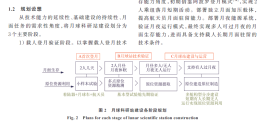
Here is a paper on the subject dated 2023.


1769559423528.png

In the diagram below:
A is the first crew landing before 2030.
B is lunar station technical demonstration for 2 crew staying over lunar day (14 earth days). In lunar night the station is unattended in hibernation. Namely short term crew attendance by 2035.
C is the final stage of full sized production version with multiple modules, and crews will stay over lunar night, e.g. long term occupation.

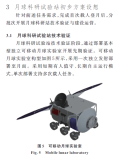
1769559397207.png


This is what is to be put on the lunar surface by 2035. Only slightly larger than a lander and probably can be launched by CZ-10 because it does not go back up to LLO, so more mass can be put on surface.

1769559800110.png

Lastly and equally important, a delay of few years like 3 or 5 is understandable, but a full decade? For NASA I won't be shocked, but by CNSA? There must be a misunderstanding. ;)
 
Last edited:

siegecrossbow

Field Marshall
Staff member
Super Moderator
You mistook China's 2035ish objective which is to establish surface station that operate autonomously without crew but can be occupied by crew for short period, up to 15 days to be precise. This short period only need one module slightly larger than a lander. We have seen proposal of mobile laboratory in that size range. What you saw in that picture near 2045 mark is made of many large modules the size of Tiangong station which is for habitation in months or even up to a year.

Here is a paper on the subject dated 2023.


View attachment 168749

In the diagram below:
A is the first crew landing before 2030.
B is lunar station technical demonstration for 2 crew staying over lunar day (14 earth days). In lunar night the station is unattended in hibernation. Namely short term crew attendance by 2035.
C is the final stage of full sized production version with multiple modules, and crews will stay over lunar night, e.g. long term occupation.

View attachment 168748


This is what is to be put on the lunar surface by 2035. Only slightly larger than a lander and probably can be launched by CZ-10 because it does not go back up to LLO, so more mass can be put on surface.

View attachment 168750

Lastly and equally important, a delay of few years like 3 or 5 is understandable, but a full decade? For NASA I won't be shocked, but by CNSA? There must be a misunderstanding. ;)

When they go, they will be there to stay!!!
 

jnd85

Junior Member
Registered Member
[Updated: Xinhua is reporting the inauguration of the CAS School of Space Exploration as having just taken place, despite the school's website
Please, Log in or Register to view URLs content!
that it was established on October 25th 2018. I considered deleting my original post, but I will leave it just to highlight the discrepancy. If anyone can explain or if I have made a factual error, please correct me. I did mistranslate the school's name in my earlier post.]

Original post:

CAS officially inaugurated the
Please, Log in or Register to view URLs content!
on January 27th


The school will focus on interstellar propulsion, deep-space communication and navigation, and space science, among other areas.

Kind of an interesting tie-in with my previous post about using the Nantianmen universe as a cultural driver. Can you imagine how a young person would feel knowing they graduated from a school with a name like that? I bet a lot of kids would love to be a part of that.

From Xinhua: "The next 10 to 20 years represent a window of opportunity for my country's interplanetary space exploration to achieve leapfrog development. Original innovation in basic research and technological breakthroughs will reshape the landscape of deep space exploration, determine the nation's core competitiveness, and hopefully allow the dream of spaceflight to blossom in the far reaches of space".

I do like that officials are crediting Qian Xuesen as inspiration, I always found him to be a fascinating man.
Sorry to quote my own post, but I cleared up my own mystery. Despite press coverage describing the "establishment" of the UCAS School of Space Exploration, the January 27th ceremony can be better understood as renaming the previous School of Aeronautics and Astronautics, not standing up an all-new organization. That explains why the school's website simply copy-pasted over the prior school's "About Us" page in a way that still showed October 25th 2018 as the founding date.

Really, I should have just checked the
Please, Log in or Register to view URLs content!
where it is more clear:
“中国科学院大学星际航行学院是中国科学院大学二级学院,前身为2018年10月25日成立的航空宇航学院,2025年11月经校长办公会决定更名,2026年1月27日在中国科学院与“两弹一星”纪念馆正式揭牌。”
"The School of Space Exploration of the University of Chinese Academy of Sciences is a secondary school of the University of Chinese Academy of Sciences. Formerly known as the School of Aeronautics and Astronautics, which was established on October 25, 2018, it was renamed in November 2025 by the President's Office Meeting and was officially unveiled on January 27, 2026 at the Chinese Academy of Sciences and the "Two Bombs, One Satellite" Memorial Hall."

I have seen a lot of pretty funny Chinese memes making fun of the name over the past day, but I still think even a rebranding is significant as it shows a much more ambitious mission than the previous name would suggest. Incidentally, here is some more footage of the ceremony for those who are interested:

 
Top