
You are using an out of date browser. It may not display this or other websites correctly.
You should upgrade or use an alternative browser.
You should upgrade or use an alternative browser.
Chinese semiconductor thread II
- Thread starter vincent
- Start date
Huada Jiutian and Hygon Information Industry Co., Ltd. have reached a strategic cooperation to expand the collaborative application of EDA and computing power.
On December 18th, during the HAIC 2025 conference, Huada Jiutian and Hygon Information signed a cooperation agreement. The two parties will explore the collaborative application of EDA technology and domestic computing power platforms. According to the agreement, Huada Jiutian will leverage its deep expertise in EDA and Hygon's DCU technology advantages to explore feasible paths in product adaptation, solution integration, and joint R&D, effectively promoting collaborative implementation. The collaborative adaptation of EDA tools and domestic computing power platforms is a crucial link in improving chip R&D efficiency and perfecting industry chain collaboration. With the "15th Five-Year Plan" about to begin, this cooperation is expected to promote the linkage between computing infrastructure and upstream design tools.
Shengxin Semiconductor's first 12-inch silicon epitaxial product rolls off the production line.
According to news from Nanjing Jiangning Economic and Technological Development Zone, Nanjing Shengxin Semiconductor Materials Co., Ltd., a subsidiary of CETC Semiconductor Materials Co., Ltd., recently rolled off its first 12-inch silicon epitaxial product. This marks a key technological breakthrough for the company in the field of large-size semiconductor epitaxial materials, signifying that CETC Semiconductor Materials Co., Ltd. has achieved a complete industrial chain layout for silicon epitaxial technology and products, and has officially entered a new stage of supplying "large-size, full-series, and high-quality" epitaxial materials.
Since its inception, Nanjing Shengxin Semiconductor Materials Co., Ltd. has focused on first-generation semiconductor silicon epitaxial materials and third-generation compound epitaxial materials, continuously advancing the research and industrialization of large-size silicon epitaxial materials. It has already achieved large-scale industrialization of 8-inch silicon epitaxial materials and successfully mass-produced 6-8 inch silicon carbide epitaxial wafers and 6-8 inch gallium nitride silicon-based epitaxial wafers, among other third-generation semiconductor products. The successful production of 12-inch silicon epitaxial materials marks a significant future upgrade project.
As part of Nanjing's efforts to build a "chip city" and the "first tier" of the third-generation semiconductor industry in Jiangning Development Zone, Shengxin Semiconductor will focus on upgrading the industrial chain and expanding new materials, deepening its third-generation semiconductor layout, accelerating technology research and development and industrial application, and accelerating the independent control and industrialization of core semiconductor materials in my country.
China has developed many prototypes over the years. In 2016, they developed a prototype of a 90nm lithography machine. In 2023 they developed a prototype of a 28nm lithography machine. Now they have supposedly developed a prototype of an EUV lithography machine. The problem is that we have never heard proof that any of these prototypes ever made it to the mass production for commercial use stage. The only machines in use for mass production are ASML, and to a lesser extent, Nikon and Canon. At this point, I'd be more impressed with a confirmed report of any Chinese front end lithography machine of any node size in use for mass production on a commercial line, than another prototype of even the most advanced capability.
NY times was reporting that SMIC's de-americanised fab in Beijing has gone beyond pilot production, presumably using Chinese DUV machines.
Previously, it was never worth it for Chinese fabs to develop and work through the bugs for Chinese lithography machines, because you could just buy ASML.
Even today, it looks like Chinese companies have stockpiles of DUV lithography machines that will last for years.
So there's still time for the initial bugs to be worked out, before Chinese DUV machines are mass-produced
Woah, is this the same ex. ASML Lin Nan that was highlighted in the Reuter's article?

It's very interesting that this may patents are coming out right now on different EUV components (or at least can be applied to EUV machine). It seems like they are still making some critical breakthroughs in it. There is possibly improvements being made on subsystem level to address whatever issues they are uncovering during testing.
I don't know if the prototype only moved in at start of this year, but it likely had gone through some testing already prior to entering in a lab to be tested as part of a full process.
Before we move on, I just want to say that this feels like a real a turning point in the whole EUV situation. Before, very little attention was paid to the details of China's EUV progress, but now as things continue accelerating, it really feels like China has turned a corner in regards to their domestic technological development. The next couple years will be very interesting.
Even the smallest amount of outdated news sends shockwaves through western media, they need to buckle up their seatbelts lol.
Even the smallest amount of outdated news sends shockwaves through western media, they need to buckle up their seatbelts lol.
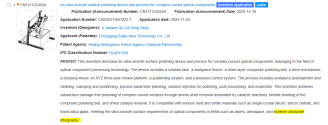
See the problem is they wrote "extreme ultraviolet lithography" without "EUV" in brackets, which immediately cut number of westerners who understand what it is by 75%

A document drafted in 2023 probably means that it's reporting/analyzing 2020-2022 news. 3-5 years is an eternity in this space. It's completely out of date.
That writeup is still many times more constructive and useful than the Reuters article, however.
That depend on the light source. But ASML pilot tools where in the range of 50-100 WPH. My guess in that range.
The H100 cost structure is $25K selling price compared to $3K paid to TSMC.
So if Nvidia (or Huawei) have to use a Chinese EUV machine which results in a 4x "worse" product than the ASML equivalent (so a H100 now costs $12K), it is still a 100% profit margin which is very good.
It's just not the extraordinary 800% profit margin that Nvidia currently has with the H100.
Presumably the other high-end Nvidia chips have a similar cost structure, given Nvidia has a defacto monopoly.
Last edited: