Chinese semiconductor thread II

tokenanalyst

Lieutenant General
Registered Member

Yingde Gases' Shaoxing High-Purity Electronic Specialty Gas Project Officially Commences Construction.​


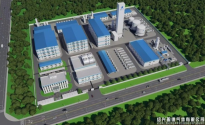
Yingde Gases officially commenced construction of its high-purity electronic specialty gas project in the Shangyu Economic and Technological Development Zone, Shaoxing City, Zhejiang Province. The two-phase project aims to build a comprehensive industrial gas supply system covering production, transportation, and application for electronics, high-end manufacturing, and fine chemicals.
1765556606825.png

  • Phase I will establish a high-purity nitrogen plant and an integrated pipeline network, ensuring stable, reliable access to basic gases.
  • Phase II will expand with air distribution systems and diversified specialty gas plants, meeting growing demands for higher purity and variety of gases.
The project strengthens the development zone’s industrial ecosystem by addressing critical raw material shortages, reducing procurement costs and logistics losses, and supporting production expansion and innovation. Leveraging Yingde Gases’ green, low-carbon technologies, it will also promote energy efficiency, lower emissions, and advance sustainable industrial growth—marking a key step in regional industrial upgrading and environmental protection.

Please, Log in or Register to view URLs content!
 

tokenanalyst

Lieutenant General
Registered Member

The Huangshi Hushi Electronics high-density interconnect board project, with a total investment of 3.6 billion yuan, has commenced construction.​


The Huangshi Hushi Electronics High-Density Interconnect Board (HDIB) project, with a total investment of 3.6 billion yuan, has officially begun construction. The first phase investing 1.8 billion yuan will build a 65,000-square-meter factory on existing land and establish HDIB production lines, aiming for trial production by the third quarter of 2026. At full capacity, it will produce 800,000 square meters of HDIBs annually, targeting key markets like AI servers, data centers, autonomous driving, and communication equipment.

This strategic move reflects Hushi Electronics' response to rising demand in high-end circuit boards driven by AI and advanced computing. The new HDIBs offer superior performance, heat dissipation, and reliability through enhanced layer density and signal integrity. With major global tech clients, the project will strengthen Huangshi’s supply capabilities in AI-focused PCBs, boost local industry upgrading, expand product value chains, and deepen the "PCB, screen, chip, optical terminal" ecosystem enhancing regional competitiveness in optoelectronic information technology.

Please, Log in or Register to view URLs content!
 

tphuang

General
Staff member
Super Moderator
VIP Professional
Registered Member
Please, Log in or Register to view URLs content!

Please, Log in or Register to view URLs content!

Please, Log in or Register to view URLs content!

Very interesting these guys. 灵睿智芯 (RISC-V Computing?) just formed in January of this year with this RISC-V core design called P100.

I have to say it looks very impressive. In fact, higher performing than T-Head's C930.

SpecInt2K6 score of 20/GHz

20-stage out-of-order superscalar pipeline.
Instruction fetch, 8 decode, 8 dispatch and 10 issue

Supports SMT4!!!!!! (so that means 4 cores per physical core iirc).

Supports RVA23 and RVV1.0 vector support

Looks like they might have a lower end core E100 also under development.
 

tokenanalyst

Lieutenant General
Registered Member

Polytelluoxane as the ideal formulation for EUV photoresist​

Abstract​

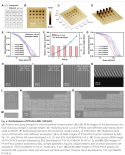
Extreme ultraviolet (EUV) lithography has become the essence of advanced semiconductor manufacturing processes. While enabling smaller feature sizes, EUV lithography imposes increasingly stringent requirements on the comprehensive performance and stochastic defect suppression of photoresist. The widely recognized strategy to minimize these defects is a material that integrates high EUV absorption and energy utilization into a homogeneous system based on molecular building blocks—the ideal formulation for EUV photoresist. However, achieving these integrated characteristics within a single molecule has remained an unresolved challenge. Here, we address all these requirements by polytelluoxane using an organic telluride monomer polymerized via Te─O bonds. This polymeric photoresist, operating through a main chain scission mechanism, demonstrates high-performance positive-tone lithography. Attributed to this ideal formulation, our photoresist achieves a comprehensive 18-nm line width at a dose of 13.1 mJ/cm2 with a line edge roughness of 1.97 nm. We believe that this strategy establishes a framework for the design of next-generation EUV photoresists.​

1765572881700.png1765572972421.png

Please, Log in or Register to view URLs content!
 

tphuang

General
Staff member
Super Moderator
VIP Professional
Registered Member
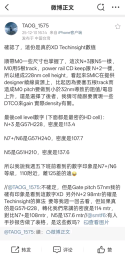
so basically, he is just talking about different method of calculating transistor density here. It seems like the critical feature numbers are more important. They seem to have made good progress in metal pitch and Cell height, but need to do another shrink to get to N5 level. They basically reduced both contact pitch and metal pitch by 10% which led to 10% reduction in cell height and 20%+ jump in transistor density. That's not bad. And this is also the more likely improvement we get vs the idea of 98 to 145 directly. That always seemed unlikely.

If we remember from N+2, originally it came out with following feature sizes with 9000S in 2023.
CPP: 63nm, fin pitch: 33nm, metal pitch: 42nm
And then with some process improvement and stability for N+2, it settled at the following feature size with 9020 in 2024.
CPP: 63nm, fin pitch: 31nm, metal pitch: 40nm
 
Top