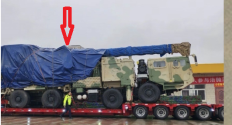
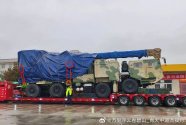
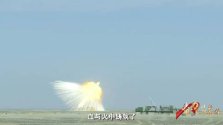
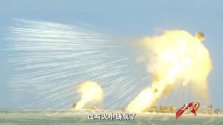
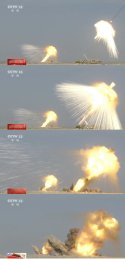
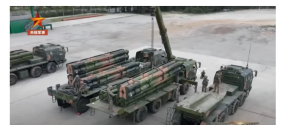
The development of “Long-Range Rocket Artillery Brigade 2.0” has made another issue increasingly obvious: once the main ammunition types of long-range containerized rocket artillery exceed a range of 300 kilometers, their combat radius and operating model become increasingly different from those of traditional artillery weapons. From personnel education and management to unit training and force construction, “long-range rocket artillery troops” are becoming a new service arm that is distinct both from traditional army artillery and from Rocket Force missile-launch brigades. Considering that the military and defense industry are both actively studying and validating ultra-long-range strike weapons with even greater ranges than long-range containerized rocket artillery and with different launch principles, this contradiction will only become more prominent.
Therefore, the author believes that consideration should even be given to establishing an “Army Long-Range Firepower Command” similar to the Air Force Airborne Corps or the Navy Marine Corps Command. Together with the theater command armies, it would exercise dual leadership over multiple long-range rocket artillery brigades, taking specific responsibility for their administrative management, service-arm development, and training. It could even lead certain academic research and discussions. For a new-type combat force whose equipment still leaves enormous room for imagination, such an arrangement would both guide the needs of its future development and better reflect its status as something close to “Supreme Command reserve artillery.”
When imagining such a command, at least at the corps level, the author did indeed think of the Special Troops Columns of the Northeast Field Army and East China Field Army during the War of Liberation. The “Special Troops Columns” that helped forge the glorious victories of the three major campaigns hold an important place in the history of the people’s artillery and armored forces. At that time, compared with infantry, artillery could be called a “special arm.” Today, compared with traditional artillery, long-range rocket artillery can likewise be called “special.” Before the final chapter of the War of Liberation sounds, will we see a new-era “Special Troops Column”?