Quantum computing thread

tphuang

General
Staff member
Super Moderator
VIP Professional
Registered Member
Please, Log in or Register to view URLs content!

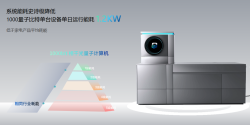
QBoson's self developed 1000 Qubits Photonic QC has been delivered to 北京电子城 and has validation by Nanjing University and 南京邮电大学. It looks like this has been delivered. Its 1000-qubit coherent optical quantum computer boasts four major technological advantages: 1000 dedicated computing qubits, up to 499,500 qubit interconnections, int8 coupling precision, and an embedded chaotic steady-state optimization algorithm
 

sunnymaxi

Colonel
Registered Member

Chinese scientists build first quantum network to hunt for dark matter​


A team of Chinese scientists has created the world's first quantum sensor network designed to detect dark matter, connecting laboratories over 300 kilometers apart in the eastern Chinese cities of Hefei and Hangzhou.

Published in Nature on Thursday, the research achieved unprecedented sensitivity in searching for signals of axions -- a candidate of hypothetical particles that might comprise the universe's "missing mass." Comprising 26.8 percent of the cosmos, dark matter remains invisible, interacting only through gravity.

When Earth crosses these invisible boundaries, axions might briefly tug on atomic nuclei, generating signals fleeting as "a snowflake landing in a crowded square."

To capture these whispers, the scientists from the University of Science and Technology of China deployed five synchronized sensors across both cities. This distributed approach filters local interference by requiring signals to appear simultaneously at multiple sites.

Additionally, new quantum amplification techniques boost weak signals one-hundred-fold, while extended coherence times widen detection windows to minutes, according to the study.

Though no definitive dark matter encounter was recorded during two months of observation, the team established the strictest constraints yet on axion-nucleon coupling across an axion mass range, surpassing astronomical observations by up to 40 times in part of that certain range.

Researchers aim to expand this "quantum net" globally and into space, potentially revolutionizing how humanity explores the universe's hidden architecture, according to Peng Xinhua, co-corresponding author of the study.

Please, Log in or Register to view URLs content!
 

tokenanalyst

Lieutenant General
Registered Member

A research team from Peking University has built the first large-scale quantum communication chip network.​


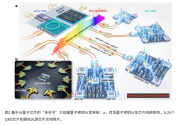
In February 2026, a research team led by Professors Wang Jianwei and Gong Qihuang from Peking University’s School of Physics, in collaboration with Researcher Chang Lin from the School of Electronic Engineering, made a landmark breakthrough by building the world’s first large-scale quantum key distribution (QKD) network based on integrated photonics chips the "Weiming Quantum Chip Network." Published in Nature, the study presents a fully integrated system featuring high-performance QKD chips and an optical microcavity frequency comb light source. This innovative chip-based architecture enables parallel communication among 20 users over distances up to 370 kilometers without requiring quantum repeaters, achieving a networking capability of 3,700 kilometer-user pairs setting new international standards. The system leverages indium phosphide and silicon nitride material platforms, demonstrating high yield, scalability, and low-cost potential at the wafer level, paving the way for practical, large-scale quantum secure communication.
1771536341432.png
The breakthrough centers on a dual-field QKD (TF-QKD) protocol implemented through integrated photonics, which overcomes critical challenges in long-distance quantum communication. By using wavelength division multiplexing (WDM), the team enabled simultaneous multi-user transmission via shared fiber links. At the server node, a silicon nitride microcavity generates an ultra-stable, low-noise frequency comb locked to sub-Hertz linewidths—eliminating the need for complex external lasers or electronic phase control systems. Each of the 20 user nodes employs an indium phosphide quantum dot chip that integrates laser, modulator, attenuator, and encoding/decoding components into a single wafer-fabricated device. These chips are injection-locked to the central comb source, ensuring precise phase coherence essential for secure single-photon interference. Performance characterization confirmed exceptional consistency: 97.5% yield across hundreds of devices, ultra-low phase noise, and high modulation efficiency demonstrating a viable path toward mass production.

Experimentally validated over long fiber channels (up to 490 km), the network achieved stable phase tracking despite environmental fluctuations, maintained low bit error rates at distances of 204 km and 370 km, and surpassed the theoretical repeaterless limit by 251.4%, marking a major leap in quantum communication performance. The system effectively mitigated crosstalk and Raman noise through optimized filtering, ensuring secure key generation even under challenging conditions. Four anonymous reviewers of Nature hailed it as a “major breakthrough,” emphasizing its scalability and transformative impact on the field. This work not only represents the first chip-based quantum network published in top-tier journals since QKD chips were proposed in 2004 but also lays the foundation for future ultra-large-scale, reconfigurable quantum networks through advanced heterogeneous integration—positioning China at the forefront of next-generation secure communication technologies.

Please, Log in or Register to view URLs content!
 

tokenanalyst

Lieutenant General
Registered Member

Superconducting quantum computing company LogicalBit completes pre-A+ and pre-A++ rounds of financing worth hundreds of millions of yuan.​

LogicalBits, a pioneering superconducting quantum computing firm founded in 2022 with core talent from Zhejiang University's research laboratory, has successfully closed its pre-A+ and pre-A++ financing rounds totaling hundreds of millions of yuan. This significant capital injection marks the company's first expansion beyond its home province of Zhejiang, attracting key investors such as Shenzhen Capital Group, Matrix Partners China, and Haiwang Capital alongside existing shareholders like Zhejiang Provincial Innovation Investment Group. The raised funds will be strategically allocated to accelerate research and development on error-correcting superconducting quantum chips and to construct a comprehensive quantum cloud platform, aiming to bridge the gap between advanced hardware capabilities and practical industrial application.

LogicalBits has already established itself as a leader in China's quantum sector by breaking world records for globally entangled qubits multiple times and launching a series of high-performance chips, including the "Tianmu-2" which boasts over 100 qubits with exceptional gate accuracy exceeding 99.5%. Operating on a "chip plus complete machine plus cloud service" model, the company achieved tens of millions in revenue last year despite having only around 20 employees, primarily serving research institutions and universities. Looking ahead, the firm plans to focus on dedicated quantum computing applications during the NISQ stage over the next three to five years, targeting commercial breakthroughs in critical fields such as materials science and pharmaceutical discovery.

Please, Log in or Register to view URLs content!
 

tokenanalyst

Lieutenant General
Registered Member

Bose Quantum Completes RMB 1 Billion Series B Financing​

Beijing Bose Quantum Technology Co., Ltd. successfully completed its Series B financing round, raising RMB 1 billion to accelerate its leadership in China's emerging quantum computing sector. The funding was jointly led by major institutional investors including Beijing Financial Holdings and ICBC Capital, with additional backing from CMB International, Shenzhen Investment Holdings, and over ten existing shareholders. This significant capital injection underscores market confidence in the company's unique positioning as the only practical quantum computing firm in China that simultaneously develops both "general-purpose" and "dedicated" quantum systems—a rare dual-strategy even on a global scale.

The raised funds will be strategically allocated across four key pillars to drive industrialization and technological supremacy: technological breakthroughs, chip manufacturing processes, mass production capabilities, and ecosystem expansion. Specifically, Bose Quantum aims to develop fault-tolerant general-purpose computers while scaling dedicated units through an independent pilot production line for quantum chips. The capital will also facilitate the operation of China's first large-scale dedicated quantum computer manufacturing plant, marking a critical shift from laboratory prototypes to commercial mass production, alongside expanding applications that fuse quantum computing with AI and "AI for Science."
1775055038914.png

Bose Quantum has already demonstrated rapid progress in its product development pipeline, launching multiple iterations of scalable dedicated computers within five years that grew from 100 to over 1,000 qubits. Recently unveiled at the 2026 Zhongguancun Forum is the "Yuliang·Shanhai 1000," the first scalable dedicated quantum computer in China to break through the kilobit scale. In parallel, its general-purpose optical quantum chip has achieved breakthroughs in high-fidelity logic gates and complex algorithms for neural networks and molecular simulation, establishing a complete technical roadmap for future advancements.
1775055008021.png
With deliveries exceeding those of international peers, Bose Quantum has fully mastered the entire chain of independent capabilities—from system integration to computing power delivery—already supplying key clients like China Mobile, Electronic City, and the National Supercomputing Center in Chengdu. The launch of its new "Great Wall of Quantum" series further solidifies its status as an industrial leader capable of flexibly matching customer needs across different application scenarios. By combining full-stack hardware control with a robust manufacturing base, Bose Quantum is firmly establishing itself as a strategic anchor for China's competition in the global quantum computing landscape.​

Please, Log in or Register to view URLs content!
 

tokenanalyst

Lieutenant General
Registered Member

Shanghai Institute of Microsystem and Information Technology successfully achieved a high-sensitivity diamond quantum magnetometer with sub-10 pT level sensitivity.​


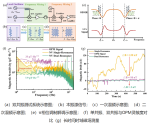
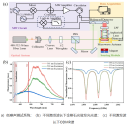
This research significantly improved the testing capabilities of diamond quantum sensors in low-frequency environments by synergistically optimizing the optical excitation path and system noise suppression, achieving a breakthrough in sub-10 pT sensitivity. This technology demonstrates great promise for applications in biomedical imaging, geophysical exploration, and precision industrial monitoring. Future efforts will focus on further miniaturization and integration of the sensing system, driving quantum precision measurement technology from the laboratory to practical applications in complex industrial scenarios.

1775531823754.png1775531864284.png

Please, Log in or Register to view URLs content!
 

tokenanalyst

Lieutenant General
Registered Member

China's first dual-core quantum computer has been unveiled.​


China has officially unveiled its first dual-core atomic quantum computer, a significant milestone achieved through collaboration between the Chinese Academy of Sciences, Wuhan University, Huazhong University of Science and Technology, and the Wuhan Institute of Quantum Technology. Named "Hanyuan-2," this processor represents a major architectural shift from its predecessor, which utilized a single-core system with 100 qubits. The new device abandons traditional silicon chips in favor of a precision optical system that controls 200 atoms to perform computations. These 200 qubits are organized into two distinct arrays functioning as a dual-core system: one dedicated to computation and the other to real-time error correction, effectively doubling computational efficiency while maintaining stability.


The technological evolution from "Hanyuan-1" to "Hanyuan-2" marks a rapid transition from laboratory principles to engineering and productization stages. While Hanyuan-1 has already been deployed on the China Mobile cloud platform for use in power, biomedicine, finance, and overseas markets, Hanyuan-2 is currently undergoing R&D iteration with an expected delivery within eight months. Zhongke Kuyuan Technology (Wuhan), a member of the development team, indicated plans to launch "Hanyuan 3" featuring 1,000 qubits next year. This neutral atom-based technology is considered highly scalable and commercially viable, distinguishing it from other major quantum computing routes such as superconductivity, ion traps, and optical computing that are dominated by US-listed companies like Rigetti Computing and IonQ.

Industry analysts and financial institutions view the launch of Hanyuan-2 as a critical indicator that quantum technology is entering its first commercialization cycle under national strategic guidance, specifically outlined in the "15th Five-Year Plan." The plan explicitly categorizes developments into fault-tolerant general-purpose computers and scalable dedicated quantum computers, highlighting scalability as the core characteristic for future growth. Major tech giants like Nvidia are also signaling strong optimism for this sector through recent investments across multiple quantum computing routes, suggesting a potential future integration of quantum processors with existing GPU ecosystems to create new computing paradigms.

Looking ahead, experts emphasize that while general-purpose fault-tolerant computers remain the long-term goal, immediate commercial focus should be placed on dedicated quantum computers addressing specific industry challenges. The emerging "quantum-classical" integrated computing architecture is seen as a key paradigm for future infrastructure deployment. In the short to medium term, investment and application efforts will prioritize hardware and algorithm suppliers demonstrating successful implementations in high-value sectors such as biopharmaceuticals, financial risk control, and new materials research. This trajectory underscores a shift from theoretical breakthroughs to practical, large-scale industrial applications driven by both national strategy and global market demand.


Please, Log in or Register to view URLs content!
 

tphuang

General
Staff member
Super Moderator
VIP Professional
Registered Member

QBoson announces new generation specialized QC 驭量·山海1000 uses QLI parallel QC architecture & general purpose photonic quantum chip. For deployment into data centers for commercial cloud services. Supports precision mode, standard mode & overclock mode. System boasts operational availability of no less than 16 hrs/day for 44 days. Used by biomed sector for mRNA vaccines, BCI sector for brain science, new materials, controlled nuclear fusion and such. Also used in Quantum-Supercomputing AI integrated computing platform.
 
Top