PLA Navy news, pics and videos

plawolf

Lieutenant General
The new container missile ship remind me of the idea a decade ago doing the same thing using containers on trains.
If so the point is to creat a hidden ,spread out, fast reacting missile stockpile that can lunch within minutes of the order given,
giving PLA an attack option that can achieve total tactical surprise against Taiwan , sure the rest of the fleet and the army mobilization can't be a total surprise,the leave to big of a trail to not to be noticed. But having a surprise first strike option will alow PLA to hit's target that wasn't possible before , let see if how many of these ship will be fitted , I suspect it will be in the hundreds

Have you looked at a map? The PLARF can strike at anything on Taiwan from literally their bases. These ships are not remotely needed for just Taiwan.
 

pkj

Junior Member
Registered Member
Another interesting design choice is that they opted to have the VLS in single stack containers with self erector mechanisms, as opposed to say, 4-5 times as many VLS cells in fixed virtual configuration in the same container footprint but with a triple vertical stack of containers as camouflage.

In the triple stack case, all they will need is the roof lifting mechanism (which they need anyways for the current single stack design) so the design would be far simpler and cheaper, you will have 4-5 times the VLS density; and it would look far more like a normal container ship. Indeed, if you wanted to do a sneak alpha strike, the triple stack container would have been a far superior option to maximise damage potential per ship while also maximising the disguise.

The main drawback of the triple stack design is that the weight of a triple stack plus all the missiles would require specialist cranes as opposed to basically any container rated crane for the single stack design. So we can glean a decent amount of what the designers value by the design choice taken.

Yup. There are so many "configuration" related possibilities and thus questions.

For example, why is the AESA is so low and so near the bridge? Where are the SatComm? Why is the 366 parallel to the AESA and not in-line for better OTH coverage. Which containers ere are the command/power/integration modules?

I stole & modified CG's picture just to make the point that with almost-endless configurations, surely the PLAN would want to create default/standard logistical configurations.

Similar to the rail-gun program, the fact that we are seeing (or allowed to see) these picutures now, likely mean that PLAN is nearing the beginng of such a phase rather than the end.

Ship-Picture2.png


Bottomeline, can't wait to see more pictures with different configurations in the near future; to the point where the MODs might even create a whole new thread for this :)
 
Last edited:

Temstar

Brigadier
Registered Member
The anti-air and ASW missions are separate, so there's no need to put everything on the same ship.

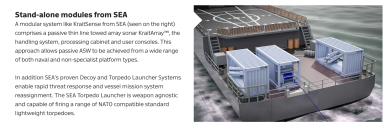
For ASW, that could be a single self-contained container trailing a Towed Array or Variable Depth Sonar, as long as it has clear space behind.

EDIT. When a 100-TEU containership only costs $1 Million, a TAS or VDS is probably more expensive than this.
So you can justify a single 100-TEU containership whose only job is to deploy this TAS or VDS.
Come to think of it, even smaller fishing boats can probably deploy a TAS or VDS
You wouldn't need many container for ASW, it's an idea that's been considered before:
1766886904475.png
Don't know about those torpedo launchers though, seems to me like regular VLS containers but loaded with rocket assisted torpedo might be better for this use case.
 

ACuriousPLAFan

Brigadier
Registered Member
Have you looked at a map? The PLARF can strike at anything on Taiwan from literally their bases. These ships are not remotely needed for just Taiwan.

I'd say that should the 122mm and 300mm MLRS of the PLAGF be containerized for ship-based launches, then it'd certainly be a considerable plus for fire volume and coverage against enemy-held land positions.

The obvious downsides would be shorter strike ranges compared to PLARF missiles (which would necessitate getting closer to the enemy shorelines/beachheads) and requiring the carrier ship to be pointed at the direction of the intended targets to be effective. Despite this, provided that the MLRS uses guided rockets, then it shouldn't be a major problem for the latter.

For Taiwan's case, apart from granting an greater volume of offshore-based firing solutions for the heavily-populated western side of the island (in addition to shore-based firing solutions against targets on Taiwan that is withing PHL-16's strike ranges from the mainland), it also opens up the less sparsely-populated eastern side of the island where it would be challenging for the 300mm and 370mm MLRS from the PHL-16 to cover effectively from the mainland side.

In such scenarios, strategic ROC military sides located on that side of the island, such as the Hualien and Taitung air bases would become open for sustained bombardments to hinder any meaningful repair efforts after initial strikes by the PLARF, PLAAF and PLAN.

Beyond Taiwan, there's also the Ryukyu Islands. The entire island chain is located beyond the reach of even the 340mm PHL-16 MLRS, with the closest inhabited island (Yonaguni) being at least 380 kilometers away from the mainland. Across the entire PLAGF's land-based arsenal, only the 750mm TBMs from the same PHL-16 can reach those islands from the mainland. Hence, should there is a need for Operation AR to include the liberation of the Ryukyu Islands, then such systems certainly are way more useful than otherwise.

Essentially speaking, this idea sounds roughly similar to the LCT(R) from the WW2.

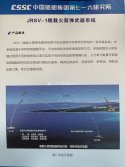
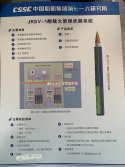
But of course, this isn't exactly a novel idea - The 716th Institute is working on/has worked on one such example (albiet with a much larger diameter and strike ranges):

0067mLCigy1i8o4hkh41wj32c0340npd.jpg 0067mLCigy1i8o4hmng3hj32c0340qv5.jpg
 
Last edited:

iewgnem

Captain
Registered Member
Another interesting design choice is that they opted to have the VLS in single stack containers with self erector mechanisms, as opposed to say, 4-5 times as many VLS cells in fixed virtual configuration in the same container footprint but with a triple vertical stack of containers as camouflage.

In the triple stack case, all they will need is the roof lifting mechanism (which they need anyways for the current single stack design) so the design would be far simpler and cheaper, you will have 4-5 times the VLS density; and it would look far more like a normal container ship. Indeed, if you wanted to do a sneak alpha strike, the triple stack container would have been a far superior option to maximise damage potential per ship while also maximising the disguise.

The main drawback of the triple stack design is that the weight of a triple stack plus all the missiles would require specialist cranes as opposed to basically any container rated crane for the single stack design. So we can glean a decent amount of what the designers value by the design choice taken.
I mean, the demonstration ship is only around ~125 TEU and it can already carry 60 cells on just the top layer. A 4,000 TEU ship, which is small by COSCO fleet standards, can carry 1,000 cells on top deck. The largest 16k to 25k ships can carry 2,000-3,000 cells.

To put things into context the entire US navy only have ~9,000 VLS cells. So VLS density or maximizing damage potential of a single ship is very much a non-issue, and certainly not worth sacrificing universal loading capability.

Infact, if you do the numbers, it's actually rather amazing, or horrifying depending on which side you're on, that with this system and Chinese industrial scale, if China so choose and stockpile, it can through container terminals, put to sea 3-4x more firepower than the entire US navy in time measured in literal hours.

It gets even funnier if you consider the number of AD missiles and number of CIWS you can place on a 20,000 TEU ship, and how many missiles it'll take to just achieve sacturation against it. Incorporating and networking just one such ship in a fleet with 052D or 055 could basically achieve effectively infinite AD magazine depth.
 

AndrewS

Brigadier
Registered Member
I'd say that should the 122mm and 300mm MLRS of the PLAGF be containerized for ship-based launches, then it'd certainly be a considerable plus for fire volume and coverage against enemy-held land positions.

The obvious downsides would be shorter strike ranges compared to PLARF missiles (which would necessitate getting closer to the enemy shorelines/beachheads) and requiring the carrier ship to be pointed at the direction of the intended targets to be effective. Despite this, provided that the MLRS uses guided rockets, then it shouldn't be a major problem for the latter.

For Taiwan's case, apart from granting an greater volume of offshore-based firing solutions for the heavily-populated western side of the island (in addition to shore-based firing solutions against targets on Taiwan that is withing PHL-16's strike ranges from the mainland), it also opens up the less sparsely-populated eastern side of the island where it would be challenging for the 300mm and 370mm MLRS from the PHL-16 to cover effectively from the mainland side.

In such scenarios, strategic ROC military sides located on that side of the island, such as the Hualien and Taitung air bases would become open for sustained bombardments to hinder any meaningful repair efforts after initial strikes by the PLARF, PLAAF and PLAN.

Beyond Taiwan, there's also the Ryukyu Islands. The entire island chain is located beyond the reach of even the 340mm PHL-16 MLRS, with the closest inhabited island (Yonaguni) being at least 380 kilometers away from the mainland. Across the entire PLAGF's land-based arsenal, only the 750mm TBMs from the same PHL-16 can reach those islands from the mainland. Hence, should there is a need for Operation AR to include the liberation of the Ryukyu Islands, then such systems certainly are way more useful than otherwise.

Essentially speaking, this idea sounds roughly similar to the LCT(R) from the WW2.

But of course, this isn't exactly a novel idea - The 716th Institute is working on/has worked on one such example (albiet with a much larger diameter and strike ranges):

View attachment 167023 View attachment 167024

Remember that in the Ukraine war, Russian long-range strike is now primarily performed by the Geran, with saturation salvoes comprising over 600 missiles.

We see containers with 5 Shaheed/Geran in a pod.

They have a range of 2000km+, so they can launch safely beyond the range of opposing fighter aircraft.

So if you take 3 containerships, that is 900 Shaheed/Gerans which can reach targets in the Second Island Chain like Guam.

After a few such salvoes (combined with other toys of missiles), I don't expect any aircraft or air defences to be left on Guam.

---

The Russians currently produce 5000 Geran-type missiles per month. Scale that to Chinese levels, and we're looking at over 50K missiles per month.

The US version is being listed as costing $35K, so that is very low cost. I reckon the Chinese cost would be <$25 million for 900 missiles.
 
Last edited:

AndrewS

Brigadier
Registered Member
I mean, the demonstration ship is only around ~125 TEU and it can already carry 60 cells on just the top layer. A 4,000 TEU ship, which is small by COSCO fleet standards, can carry 1,000 cells on top deck. The largest 16k to 25k ships can carry 2,000-3,000 cells.

To put things into context the entire US navy only have ~9,000 VLS cells. So VLS density or maximizing damage potential of a single ship is very much a non-issue, and certainly not worth sacrificing universal loading capability.

Infact, if you do the numbers, it's actually rather amazing, or horrifying depending on which side you're on, that with this system and Chinese industrial scale, if China so choose and stockpile, it can through container terminals, put to sea 3-4x more firepower than the entire US navy in time measured in literal hours.

It gets even funnier if you consider the number of AD missiles and number of CIWS you can place on a 20,000 TEU ship, and how many missiles it'll take to just achieve sacturation against it. Incorporating and networking just one such ship in a fleet with 052D or 055 could basically achieve effectively infinite AD magazine depth.

Concentrating so much capability into a single hull is risky. Even more so, given that this is a commercial-grade hull.

It would be better to distribute such capability, given that a 100-TEU containership only costs $1 Million and there should be hundreds available.
 

plawolf

Lieutenant General
I mean, the demonstration ship is only around ~125 TEU and it can already carry 60 cells on just the top layer. A 4,000 TEU ship, which is small by COSCO fleet standards, can carry 1,000 cells on top deck. The largest 16k to 25k ships can carry 2,000-3,000 cells.

To put things into context the entire US navy only have ~9,000 VLS cells. So VLS density or maximizing damage potential of a single ship is very much a non-issue, and certainly not worth sacrificing universal loading capability.

Infact, if you do the numbers, it's actually rather amazing, or horrifying depending on which side you're on, that with this system and Chinese industrial scale, if China so choose and stockpile, it can through container terminals, put to sea 3-4x more firepower than the entire US navy in time measured in literal hours.

It gets even funnier if you consider the number of AD missiles and number of CIWS you can place on a 20,000 TEU ship, and how many missiles it'll take to just achieve sacturation against it. Incorporating and networking just one such ship in a fleet with 052D or 055 could basically achieve effectively infinite AD magazine depth.

Indeed all true, and that is the point I was making, that the designers of this system values mass rollout capability far above the sneaky attack potential.

If you wanted to do a sneak attack, triple stacked maximum VLS per deck space is the way to go since that’s basically a suicide mission, so you want minimum number of ships and maximum damage potential per ship. There would also be basically zero pre-warning with the triple stack design as it will be easy to miss some container lids sliding off but giant VLS tubes erecting themselves will be pretty hard to miss.

The sheer scale of the potential sustainable volume of fire from such ships is pretty mind boggling. And that’s before you factor in the inevitability of using these to launch long range attack drones on a truly industrial scale.

That kind of firepower is comically overkill for Taiwan.
 
Last edited:
Top