New Energy Vehicles (NEVs) in China

Nevermore

Junior Member
Registered Member
DiLink and DiPilot are different things.

The core of DiLink-150 is BYD-9000 SoC which uses LPDDR5X DRAMs and 165k DMIPS computations & ~20TOPS of NPU.
In order to add Lidar, you will like need DiPilot-300, which comes with ADAS chips and allows supporting City NOA. Without it, you get DiPilot-100, which comes with Highway NOA and 100 TOPS computation.

View attachment 172869
Of course I know what you mean—you’re referring to how installing the intelligent driving hardware package upgrades both the infotainment system’s chip and the dedicated computing chip for intelligent driving. What I’m saying is that the infotainment system’s chip, along with the memory and storage space provided by BYD, is too small, which makes the system prone to becoming obsolete. As I mentioned earlier, even with the intelligent driving package installed, the infotainment system’s specs are only 8+64GB.

The autonomous driving system features 4 GB of RAM, 4 GB of virtual RAM, and 64 GB of storage. The infotainment system, on the other hand, has 8 GB of RAM and 64 GB of storage; this configuration simply doesn’t leave enough room for OTA updates.


1775225873684.png

Here’s a video showing the RAM and storage capacity of the Song Ultra EV’s infotainment system (Note: in Chinese):
Please, Log in or Register to view URLs content!
 
Last edited:

tphuang

General
Staff member
Super Moderator
VIP Professional
Registered Member
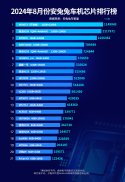
So, if you take a look here at the top cockpit SoC as of late 2024. BYD-9000, which is based on MT8673 had the highest score based on Antutu rating/rankings, above SD-8295, which is what other top EVs use these days. This is the primary SoC being used on 2026 BYD models. The lower end models probably use DiLink-100, which is a little better than SD-8155, another commonly used Auto SoC.

I've being driving my Tesla for almost 4 years and have never cared about how much DRAMs it has.
 

Attachments

  • AntutuSoc_Ranking_Aug2024.jpg
    AntutuSoc_Ranking_Aug2024.jpg
    255.3 KB · Views: 7

tphuang

General
Staff member
Super Moderator
VIP Professional
Registered Member
Of course I know what you mean—you’re referring to how installing the intelligent driving hardware package upgrades both the infotainment system’s chip and the dedicated computing chip for intelligent driving. What I’m saying is that the infotainment system’s chip, along with the memory and storage space provided by BYD, is too small, which makes the system prone to becoming obsolete. As I mentioned earlier, even with the intelligent driving package installed, the infotainment system’s specs are only 8+64GB.


View attachment 172870
Again, intelligent driving package and infotainment are separate systems. They are not related. They have separate boards.

I don't know which model you are buying, but BYD Song Ultra EV uses DiLink-150, which is the 12 GB DRAM & 128 GB storage.

If you are looking into a cheaper BYD model and don't want to buy it, don't buy it. Why do I care? What do anyone on this forum need to care? Go buy your dream vehicle. When I bought my Tesla model Y, I never cared about how much DRAM the infotainment system had.
 

Nevermore

Junior Member
Registered Member
Again, intelligent driving package and infotainment are separate systems. They are not related. They have separate boards.

I don't know which model you are buying, but BYD Song Ultra EV uses DiLink-150, which is the 12 GB DRAM & 128 GB storage.

If you are looking into a cheaper BYD model and don't want to buy it, don't buy it. Why do I care? What do anyone on this forum need to care? Go buy your dream vehicle. When I bought my Tesla model Y, I never cared about how much DRAM the infotainment system had.
I’m just sticking to the facts. You should take another look at my previous replies. In my opinion, BYD’s current offerings—whether the basic DiLink-100 or the upgraded DiLink-150—leave far too little room for future upgrades and user customization. If you continue to discuss which cars or configurations people might choose when buying a vehicle, or how much other forum users care about this issue, I will no longer respond to these topics.
 

PopularScience

Senior Member
Registered Member
I’m just sticking to the facts. You should take another look at my previous replies. In my opinion, BYD’s current offerings—whether the basic DiLink-100 or the upgraded DiLink-150—leave far too little room for future upgrades and user customization. If you continue to discuss which cars or configurations people might choose when buying a vehicle, or how much other forum users care about this issue, I will no longer respond to these topics.

I don't understand why need a powerful cpu on the dashboard.
 

Nevermore

Junior Member
Registered Member
I don't understand why need a powerful cpu on the dashboard.
In the future, in-car infotainment systems are likely to take over some of the functions currently performed by smartphones. Just as early mobile phones were primarily used for texting and making calls, smartphones in the current era have come to support a wide range of functions, including internet browsing, entertainment, basic office tasks, navigation, and photography. If in-car systems are designed with performance headroom for the future, they will be able to receive more OTA updates or have additional in-car software features added. Unlike smartphones, which people typically replace every two years, electric vehicles are expensive, and most people cannot afford to replace their cars every two or three years.
 

Michael90

Senior Member
Registered Member
As the OP points out, the slump in BYD’s sales isn't just because of the competition. It is more about how they have cluttered their own lineup to the point that it is now backfiring. With so many overlapping models, customers are getting confused and demand is being spread too thin, which ultimately dilutes the impact of their flagship cars. It has also become a massive burden for dealers who have to manage excessive inventory and explain minor differences that don't really matter to the average buyer.

The real issue is that BYD is essentially tripping over its own feet by making things unnecessarily complicated. To turn this around, they need to trim the fat and focus on their core models. Clearing out that noise is the only way to help customers make faster decisions and give the sales network the breathing room it needs to perform.
Honestly, I have said this before . I just don’t understand who their market strategist or advisers are. Why on earth would you have so many similar models cannibalize each other ? They keep coming out with similar models every few months . Even a fool can see that this would confuse customers and even fans .
reason very few can really name BYD flagship models, it’s just so confusing . Xiaomi by contrast has understood this fact very well. I myself know all their models since they make sure they maintain a sense of exclusivity by not making too many models that will compete with each other and confuse customers/dilute the allure/exclusivity of their brand. Reason as I’ve said before , I’m more optimistic about Xiaomi (which is crazy as thy are barely 2 years into this industry) than even BYD to be honest . I think Xiaomi will only keep growing this coming years, for BYD they will still be a major player given their advantages , technology and scale but I’m not sure they will dominate the market like I thought just a few years ago . They are making too many amateur mistakes in my opinion , I don’t know if they will keep up with this duplication of models or change course with time .
 

SanWenYu

Major
Registered Member
In the future, in-car infotainment systems are likely to take over some of the functions currently performed by smartphones. Just as early mobile phones were primarily used for texting and making calls, smartphones in the current era have come to support a wide range of functions, including internet browsing, entertainment, basic office tasks, navigation, and photography. If in-car systems are designed with performance headroom for the future, they will be able to receive more OTA updates or have additional in-car software features added. Unlike smartphones, which people typically replace every two years, electric vehicles are expensive, and most people cannot afford to replace their cars every two or three years.
Until at least L4 auto driving is widely spread, comparing car infotainment systems to smart phones doesn't make sense. While the car is in motion, the driver must focus on driving all the time as required by law. Even if the in-car system has, say, MS Office or Adobe Photoshop installed, the driver must not use it.

The car makers can and will keep OTA updates tightly controlled to avoid the bloats happening on smart phones.
 

TOKYO DRIFT ABC

Junior Member
Registered Member
Honestly, I have said this before . I just don’t understand who their market strategist or advisers are. Why on earth would you have so many similar models cannibalize each other ? They keep coming out with similar models every few months . Even a fool can see that this would confuse customers and even fans .
reason very few can really name BYD flagship models, it’s just so confusing . Xiaomi by contrast has understood this fact very well. I myself know all their models since they make sure they maintain a sense of exclusivity by not making too many models that will compete with each other and confuse customers/dilute the allure/exclusivity of their brand. Reason as I’ve said before , I’m more optimistic about Xiaomi (which is crazy as thy are barely 2 years into this industry) than even BYD to be honest . I think Xiaomi will only keep growing this coming years, for BYD they will still be a major player given their advantages , technology and scale but I’m not sure they will dominate the market like I thought just a few years ago . They are making too many amateur mistakes in my opinion , I don’t know if they will keep up with this duplication of models or change course with time .
China’s auto market is huge, but the EV side is still evolving and demand hasn’t really settled yet. It’s not entirely clear which price points, sizes, or specs will end up dominating.
In that kind of situation, it actually makes more sense to put out a wider range of models and see what sticks, rather than trying to narrow things down too early. From that perspective, BYD’s large lineup isn’t just bad strategy, it’s also a way of adapting to a market that’s still taking shape.
That said, there are limits to this approach. When there are too many models, it gets harder for customers to tell them apart, which makes buying decisions more confusing. It also puts more pressure on dealers and inventory. So as the market matures, they’ll probably have to start streamlining the lineup at some point.
 

Nevermore

Junior Member
Registered Member
Until at least L4 auto driving is widely spread, comparing car infotainment systems to smart phones doesn't make sense. While the car is in motion, the driver must focus on driving all the time as required by law. Even if the in-car system has, say, MS Office or Adobe Photoshop installed, the driver must not use it.

The car makers can and will keep OTA updates tightly controlled to avoid the bloats happening on smart phones.
Over the past three or four years, many Chinese consumers assumed that the smartphone-chip-powered infotainment systems in their new cars would last for a decade and receive numerous OTA updates. However, after just two or three years, most of these systems have become unable to update to the latest versions of the operating system, display, smart navigation, and other infotainment features. Furthermore, the bloated system resources prevent users from installing new software.

Additionally, regarding in-car entertainment features, let’s set aside vehicles equipped with dedicated entertainment touchscreens for now. For vehicles with only a single central display, entertainment apps should remain accessible even when the vehicle is parked. We cannot simply dismiss the potential for in-car entertainment and feature expansion by merely stating that drivers should not be distracted while driving.
 
Top