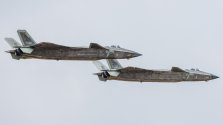
I had the same thoughts, and its not that I disagree. The real question is the magnitude of the difference. Is it worth sacrificing a few of the oldest and weakest airframes of the far-and-away superior generation of fighters (that are still useful in peer conflicts and likely dominant in all other conflicts) to be full-time trainers? And how many airframes?
There are now 100-120 J-20s being produced every year, which implies 120-150 pilots need to be trained.
It's worth taking the very oldest airframes (even if it is just 10 airframes), and use them as full-time training aircraft, which will accelerate the combat introduction of those 100-120 new J-20s every year.
I don't know if we'll ever get enough details to make that decision, but that's fine since its not our decision to make. But this is a good opportunity to get insight into PLA's thoughts on J-20. If we do see some combat-capable J-20s be relegated to full training even while total J-20 family numbers are 300-400 while F-35 is >1000, that suggests they feel confident enough in reducing some overall fleet capability today to train for greater capability a little later.
Let's say they only take 10 old airframes out of service and it accelerates training/proficiency by just 1 month.
That means 10 new airframes become combat ready 1 month earlier.
So you can see it results in an increase in J-20 capability very quickly.
Plus we're now at the point where China has run out of obsolete aircraft for retirement and replacement by stealth fighters.
Future fighter retirements/replacements will have to come from the 4th gen fighter fleet, which still do have usefulness.
---
Looking at the F-35, it's 80 hours of flight time for the training course over 9 months.
If you have 150 pilots per year, that implies a requirement for 16000 training hours on J-20s.
If only ten J-20s are dedicated to training, that works out as about 5 hours (4 sorties?) daily flight time per J-20, which is really pushing those airframes.