Chinese semiconductor thread II

Michael90

Senior Member
Registered Member
$110 billion dollars revenue in 2027 in crazy ; it's nuts to capital spending.i would prefer them to reinvest it into new ddrm tech and get domestic euv lithography machines for next gen tech does anyone know how many new fabs will they construct
It’s crazy but not that crazy. AI is revolutionizing the world’s old industry as we knew it. So new emerging industries/companies are going to rise while the old ones who are often too big and find it difficult to adapt will die out or become increasingly less influential. Just like the internet era led to the rise of new companies and the relegation of the old dominant ones . So the next coming years will be interesting to watch who adapts and who doesn’t . Look at how SK Hynix has overtaken even Samsung in just a few years . I think there will probably be more such surprises in future
So I expect more from China than just one CXMT like company who will be growing very fast .
 

tokenanalyst

Lieutenant General
Registered Member

JCET Group plans to invest 7.8 billion yuan to build a high-end advanced packaging and testing factory in Lingang, Shanghai.​


JCET Group announced it will invest 7.8 billion yuan to build a high‑end advanced packaging and testing factory in Shanghai’s Lingang New Area, establishing a holding subsidiary with an expected registered capital of 4 billion. This project follows the company’s strategic goal of strengthening advanced packaging capacity and integrating AI into its operations.

The project will be built in two phases: Phase I, which includes construction, decoration, and initial equipment investment and is set to finish by the second half of 2028, and Phase II, focused on expanding equipment to increase production capacity. The initiative aligns with JCET’s 2026 fixed‑asset investment target of about 10 billion yuan, emphasizing continued R&D spending and capacity growth in key sectors such as computing and automotive electronics.
Please, Log in or Register to view URLs content!
 

tokenanalyst

Lieutenant General
Registered Member

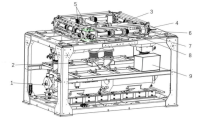
The 12-inch wafer reconfiguration production line equipment of the subsidiary of Chipscreen Semiconductor has been officially moved in.​


Chipscreen Semiconductor successfully completed the installation of core equipment for its wafer reconfiguration mass production line, marking the start of the final commissioning and preparation phase for the line's construction.

180347121.jpg


According to the established plan, the mass production line will be officially operational in July this year and will begin small-scale trial production . At that time, the company will have independent production capabilities for wafer reconfiguration, laying a solid foundation for subsequent large-scale delivery.

Xinping Semiconductor will continue to promote the localization and efficient collaboration of key links in the industrial chain, and contribute to the high-quality development of the semiconductor industry.

Please, Log in or Register to view URLs content!
 

tokenanalyst

Lieutenant General
Registered Member

Huahai Qingke: Adjusts private placement to raise no more than 3.795 billion yuan for projects such as integrated circuit equipment R&D and manufacturing.​

On June 22, Huahai Qingke announced its 2026 private placement of A-shares to specific targets (second revised draft). The offering will be made to no more than 35 specific targets that meet the conditions stipulated by the China Securities Regulatory Commission (CSRC). The number of shares to be issued will not exceed 49.4731 million (inclusive), and the total amount of funds raised will not exceed RMB 3.795 billion (inclusive). After deducting issuance expenses, the funds will be invested in the following projects: Shanghai Integrated Circuit Equipment R&D and Manufacturing Base Project (RMB 1.342 billion to be used), Wafer Regeneration Expansion Project (RMB 445 million), and High-end Semiconductor Equipment R&D Project (RMB 2.008 billion).

The issuance plan has been reviewed and approved by the company's board of directors and shareholders' meeting, and has obtained approval from the state-owned assets supervision authority. It is still subject to review and approval by the Shanghai Stock Exchange and registration by the China Securities Regulatory Commission.​

1782314922409.png

Please, Log in or Register to view URLs content!
 

tokenanalyst

Lieutenant General
Registered Member

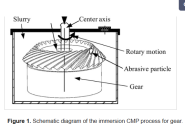
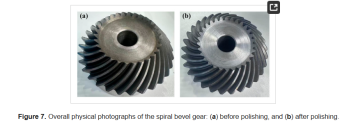
Optimization of the Immersion Chemical-Mechanical Polishing Process for Gear​

Abstract​

To address surface quality defects caused by traditional mechanical polishing of gears, such as machining scratches and large surface waviness, this study proposes a novel immersed chemical-mechanical polishing (CMP) process for gear finishing. Numerical simulations were conducted in FLUENT to analyze the gear surface stress distribution and polishing fluid flow trajectories under different process conditions. The Euler–Euler method and RNG k–ε turbulence model were used to optimize process parameters and clarify the formation mechanism of ultra-smooth tooth surfaces. Experimental results for spiral bevel gears show that the proposed immersed CMP process effectively improves surface quality. The tooth profile roughness was reduced from Ra 1.531 μm to 0.509 μm, and surface scratches were significantly alleviated. These results confirm the feasibility and effectiveness of the proposed process. This study provides a reliable approach for efficient and precision polishing of complex-structured gears and extends the application of CMP technology to non-planar mechanical components.​

1782332481735.png1782332499819.png

Please, Log in or Register to view URLs content!
 

tokenanalyst

Lieutenant General
Registered Member

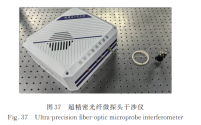
Ultra-Precision Embedded Fiber-Optic Microprobe Interferometry and Instrumentation​

Abstract​


Achieving accurate and high-speed measurement of dynamic motion remains a major technical challenge for both scientific research and industrial applications. Ultra-precision laser interferometry, which utilizes the optical wavelength as an intrinsic metric, is established as the most precise method for displacement measurement. It plays a pivotal role in diverse applications such as the online monitoring of complex surfaces in high-end equipment manufacturing, mirror displacement detection in gravitational wave observation, geophysical measurement in fundamental research, and nanometer-scale stage positioning in precision lithography. However, traditional ultra-precision laser interferometers rely on complex bulk-optic mirror configurations, leading to a bulky overall structure that fails to meet the growing demand for measurement in limited spaces. To overcome these limitations, the fiber-optic microprobe interferometer (FMI) has emerged as a highly promising solution, offering unparalleled flexibility and an ultra-compact structure.

Despite these significant advantages, this technology still faces three core challenges: 1) signal undetectability, stemming from the lack of a comprehensive optical-field propagation model for fiber-optic microprobes; 2) measurement inaccuracy, caused by the severe degradation or loss of frequency lock in laser frequency stabilization during dynamic modulation; 3) precision limitations, resulting from the failure of error compensation mechanisms when complex nonlinear characteristics deviate from standard elliptical trajectories. Consequently, a systematic review of the solutions to these bottlenecks, along with a summary of the current research status of fiber-optic microprobe interferometry, will provide crucial theoretical and technical references for researchers in the field of laser metrology.​
1782338098934.png


Please, Log in or Register to view URLs content!
 
Top