Chinese semiconductor thread II

tokenanalyst

Lieutenant General
Registered Member

Shanghai Super Silicon has begun mass production and delivery of 12-inch square silicon wafers to customers.​

Shanghai Super Silicon announced that it officially began mass production and delivery of square silicon wafers to a major customer in May. These wafers are used in the next-generation CoPoS advanced packaging process platform for AI HPC chips. Public information shows that Shanghai Super Silicon was established in 2008 and is mainly engaged in the research, development, production, and sales of 200mm and 300mm integrated circuit silicon wafers, advanced equipment, and advanced materials. Its products include polished wafers, epitaxial wafers, SOI wafers, and advanced packaging specialty silicon wafers.
Please, Log in or Register to view URLs content!
 

tokenanalyst

Lieutenant General
Registered Member

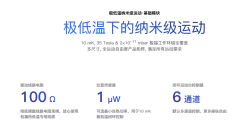
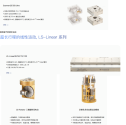
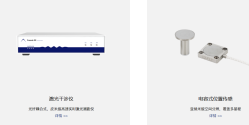
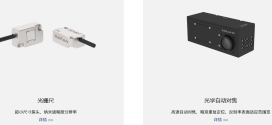
Hengyunchang: The fourth-generation plasma RF power supply system Cedar series is in the verification stage.​


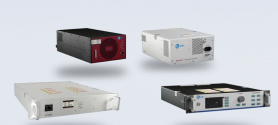
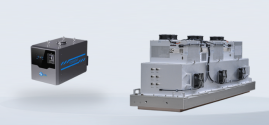
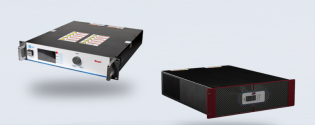
The fourth-generation Cedar series plasma RF power supply system is currently in the verification stage. It integrates the RF power supply and matching unit into a single platform, features fast/big data acquisition capabilities, and supports more advanced manufacturing processes. Hengyunchang products are widely used in semiconductor fabrication (thin film deposition, etching, ion implantation, etc.) and industrial sectors (photovoltaics, display panels, precision optics). The company operates on a highly customized model, co-developing prototypes with downstream equipment manufacturers based on specific technical requirements.

1782231698562.png1782231721884.png
1782231738911.png

Hengyunchang maintains a stable supplier network with dynamic management and strategic safety stocks for key materials. Since 2021, the company has progressively localized upstream components (capacitors, MCUs, SiC MOS, LDMOS, ADCs, FPGAs, etc.) and has finalized a complete localization plan currently undergoing verification. Operating at near-maximum utilization (98.51% in 2025) for three consecutive years, the company is scaling production through multiple initiatives: ramping up its Shenyang subsidiary from trial to formal production, expanding facilities in Shenzhen, and building a new intelligent production base dedicated to core semiconductor and vacuum equipment components.

Hengyunchang is advancing its next-gen Cedar product line, deepening component localization for supply chain resilience, and aggressively expanding production capacity to meet sustained high demand across semiconductor and industrial markets.

Please, Log in or Register to view URLs content!
 

Sixth Sense

New Member
Registered Member
I'm not sure why that matters, Reuters is trying to somehow redirect everything back to AI when the entire purpose of LineShine is scientific research. Typically for these type of workload you'd want to optimise for the maximum fp32 or even fp64 performance which is why LineShine's architecture is CPU only, on the other hand AI training uses sparse datasets hence needs to optimise for maximum low precision performance which is why training clusters use mostly GPU accelerators but as a tradeoff suffers when it comes to higher precision performance.

They are literally trying to compare apples to oranges here. If they want to be objective when comparing systems they should compare it to Huawei's training clusters not HPC supercomputers.
They definitely weren't trying to be objective lol, the talking head they interviewed is yet another Washington-based fellow at a foreign policy think tank with an undergrad in politics (
Please, Log in or Register to view URLs content!
).

For those interested in some technical specs,
Please, Log in or Register to view URLs content!
was the paper that a few people found in April which outlined some theoretical performance numbers for the LX2:
The LineShine supercomputer, developed by the National Supercomputing Center in Shenzhen (NSCC-SZ), is an exascale system consisting of 20,480 computing nodes, denoted the full machine. Each node is equipped with two ARMv9-based LX2 processors. Each LX2 integrates two compute dies (304 cores total) and eight on-package HBM stacks (32 GB, 4 TB/s aggregate bandwidth). Each compute die contains 152 cores and 128 GB of off-package DDR memory organized into four NUMA domains. A dedicated SDMA engine handles data movement between DDR and HBM. The LX2 supports FP64/FP32/FP16/INT8 via SME and SVE units, delivering up to 60.3/120.6 TFLOPS in FP64/FP32. Nodes are interconnected via the LingQi high-speed network with a dual-plane multi-rail fat-tree topology, offering 1.6 Tb/s bandwidth per node.
 

sunnymaxi

Colonel
Registered Member
CXMT will generate nearly $55 Billion in revenue this year and doubling the revenue again in 2027 with 12 percent global DRAM share in 2027.

Image


In addition to printing record-level earnings, we believe company is gaining ground from the capacity perspective. By the end of 2026, we expect CXMT to reach roughly 350 kwspm, which is only modestly below Micron’s estimated ~385 kwspm. This would position CXMT close to becoming the industry’s third-largest memory supplier, if ranked only by wafer capacity.

Next year, with the initial ramp of Shanghai Phase 1 and the full ramp of Hefei and Beijing, CXMT capacity could reach the 420kwspm range if capacity in year-end, representing ~17% of global DRAM capacity, up from ~13% in 2025. In terms of bit shipments, CXMT’s share of global bit shipment is expected to rise from 9% to 12% in 2027. We believe the company will reach 500kwspm of wafer capacity by the end of 2028

we expect CXMT’s HBM wafer capacity to accelerate materially in 2027 and 2028 with its HBM technology improvement, supported by continued growth in China’s domestic compute market. We estimate CXMT’s HBM wafer capacity will reach 55kwspm and 100kwspm in 2027 and 2028, respectively. This would increase the company’s share of global HBM wafer supply from 1% in 2025 to 12% in 2028.

Please, Log in or Register to view URLs content!
 

tphuang

General
Staff member
Super Moderator
VIP Professional
Registered Member
CXMT will generate nearly $55 Billion in revenue this year and doubling the revenue again in 2027 with 12 percent global DRAM share in 2027.

Image


In addition to printing record-level earnings, we believe company is gaining ground from the capacity perspective. By the end of 2026, we expect CXMT to reach roughly 350 kwspm, which is only modestly below Micron’s estimated ~385 kwspm. This would position CXMT close to becoming the industry’s third-largest memory supplier, if ranked only by wafer capacity.

Next year, with the initial ramp of Shanghai Phase 1 and the full ramp of Hefei and Beijing, CXMT capacity could reach the 420kwspm range if capacity in year-end, representing ~17% of global DRAM capacity, up from ~13% in 2025. In terms of bit shipments, CXMT’s share of global bit shipment is expected to rise from 9% to 12% in 2027. We believe the company will reach 500kwspm of wafer capacity by the end of 2028

we expect CXMT’s HBM wafer capacity to accelerate materially in 2027 and 2028 with its HBM technology improvement, supported by continued growth in China’s domestic compute market. We estimate CXMT’s HBM wafer capacity will reach 55kwspm and 100kwspm in 2027 and 2028, respectively. This would increase the company’s share of global HBM wafer supply from 1% in 2025 to 12% in 2028.

Please, Log in or Register to view URLs content!

I did my own analysis on this today. Had $14-20B as the conservative to optimistic range for their revenue in Q3, so it more or less matches what they have. Although in my case, I had higher ASP and lower big shipment on my conservative estimate.

Their project capacity estimation is quite conservative for CXMT
 

meez

New Member
Registered Member
$110 billion dollars revenue in 2027 in crazy ; it's nuts to capital spending.i would prefer them to reinvest it into new ddrm tech and get domestic euv lithography machines for next gen tech does anyone know how many new fabs will they construct
 
Top