Chinese semiconductor thread II

tokenanalyst

Lieutenant General
Registered Member
There are thousands of I-line, KrF, ArF, ArFi scanners across China in multiple fabs.
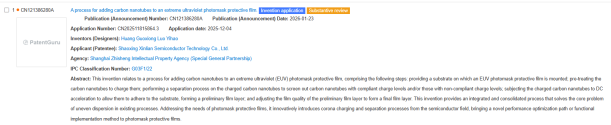
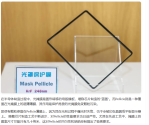
Why companies are going to put the money and effort to develop EUV mask fabrication technology unless someone is told them to and is financing these efforts? There are developments that are unknown to the public. They are seeing the writing in the wall.
 

tokenanalyst

Lieutenant General
Registered Member

Torrance: Plans to raise 1.156 billion yuan in its initial public offering to increase investment in the manufacturing and R&D of precision components for semiconductor equipment.​


The company intend to raise RMB 1.156 billion for the Torrens Precision Components Manufacturing and R&D Base project, as well as to supplement working capital.

Of the funds raised in this offering, 879.5448 million yuan will be invested in the intelligent manufacturing project for precision components, 76.6157 million yuan in the R&D center construction project, and 200 million yuan will be used to supplement working capital. The company stated that the projects funded by this offering align with relevant national industrial policies and the company's development strategy, closely focusing on the company's core business and helping to consolidate and enhance its position in the semiconductor industry.The company's market position in the precision components industry. Simultaneously, through the implementation of the fundraising projects, the company will further increase its R&D investment in new technologies and products, expand its production lines, enhance its innovation capabilities, and strengthen its core competitiveness.

According to its prospectus, Torrens has focused on the R&D, production, and sales of metal components for core semiconductor equipment such as thin-film deposition and etching equipment since its inception. From its founding, the company established a strategic goal of growing alongside domestic semiconductor equipment manufacturers and has built solid strategic partnerships with several leading domestic semiconductor companies.

1781886222295.png

Please, Log in or Register to view URLs content!
 

tokenanalyst

Lieutenant General
Registered Member

Lens Technology's TGV glass substrate pilot line has been fully operational, deeply integrating with overseas customers to develop HBM advanced packaging.​


Lens Technology a leading manufacturer of precision consumer electronics, fully disclosed the latest R&D and industrialization progress of its TGV glass substrate on the investor interaction platform. The company officially entered the semiconductor advanced packaging core material track by leveraging its years of advantages in ultra-thin glass precision processing, targeting the long-term incremental market of AI computing power HBM and 2.5D/3D chip packaging.

The company revealed that it has now built an independent pilot production line for dedicated TGV glass substrates, and has independently overcome two core technologies: laser stealth drilling and high-precision chemical etching. It has solved common industry challenges such as micron-level through-hole processing of brittle glass and substrate warpage control. The roundness and thermal stability of the through-holes have reached the verification standards of similar overseas products. At the same time, as the main drafting unit of the group standard "Technical Specification for 3D Packaging Glass Through-Hole (TGV) Process", it has a complete independent process patent system.

In terms of application scenarios, the TGV glass substrate developed this time is mainly suitable for AI server GPUs in HBM high-bandwidth memory stacking, Chiplet heterogeneous integration, and high-end computing power interposers. Compared with traditional organic ABF substrates and silicon interposers, glass substrates have advantages such as low thermal expansion coefficient, ultra-low high-frequency signal loss, and the ability to be made into large-size substrates.​


Please, Log in or Register to view URLs content!
 

tokenanalyst

Lieutenant General
Registered Member

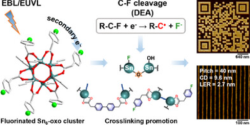
Electron-Induced C─F Bond Activation in Sn6-oxo Cluster Resist for Enhanced Sensitivity and Sub-10-nm Patterning.​

ABSTRACT​


Metal-oxo cluster (MOC) resists are promising candidates for extreme ultraviolet lithography (EUVL), but optimizing the resolution, line-edge roughness (LER), and sensitivity (RLS) trade-off remains challenging. Leveraging dissociative electron attachment (DEA) to activate C─F bonds provides a controllable handle to improve this RLS trade-off, yet remains underexplored. Here, we report a room-temperature, scalable synthesis of a tunable series of Sn-oxo clusters and demonstrate hundred-gram-scale, single-batch production. The fluorinated FPAA demonstrates enhanced sensitivity without compromising resolution or LER. Under electron beam lithography (EBL), FPAA achieves a critical dimension (CD) of 9.1 nm and an LER of 2.2 nm, and enables high-fidelity complex patterning. Additionally, FPAA exhibits robust performance under deep ultraviolet (DUV) lithography and EUVL, achieving a CD of 20.9 nm under EUVL. FPAA also shows exceptional plasma resistance, achieving a high estimated Si:resist etch selectivity of >50:1. Mechanistic analyses indicate that irradiation-generated low-energy secondary electrons (LESEs) promote electron-induced C─F activation, consistent with a DEA-mediated pathway. Concurrently, organic ligand bridging and Sn─O─Sn network densification occur, forming a crosslinked network that drives the solubility switch. This work elucidates the lithographic mechanisms of Sn-oxo clusters and provides design principles for MOC resists, supporting progress toward sub-10-nm lithographic resolution.​

1781887405373.png

Please, Log in or Register to view URLs content!
 

Topazchen

Junior Member
Registered Member
They're psychologically prepping their audience and the rhetoric for when China's first EUV fabbed chip debuts and gets a teardown. "Stolen ASML machine" is much more palatable than "China broke through the monopoly."
My hypothesis is that this is an attempt to malign and attempt to exert greater political control over non-American parts of the AI supply chain.
 

iewgnem

Captain
Registered Member
My hypothesis is that this is an attempt to malign and attempt to exert greater political control over non-American parts of the AI supply chain.
You talk as though Trump need an excuse.
This is basically the strongest evidence so far of Chinese EUV proto has started trial production, the timing also lines up considering the light source, optics, etc were all solved around 2 years ago.

I will say it's funny watching Americans treating EUV like an immutable holy relic even when ASML themselves don't treat it as such. The psychological collapse as Chinese EUV starts to ramp over the coming years will be biblical, and I'm ready for it.
 

tokenanalyst

Lieutenant General
Registered Member

Chip-on Micro-equipment Wins Awards from Multiple Clients, Continuously Supporting Industry Development!​

Chip-on Microelectronics has been committed to providing global customers with high-performance, high-reliability, and domestically produced core lithography solutions. Its business covers integrated circuit front-end processing, advanced integrated circuit packaging, compound semiconductor devices, and display panel manufacturing. Main products include advanced packaging lithography machines, compound semiconductor lithography machines, laser annealing equipment, overlay measurement equipment, defect detection equipment, wafer bonding equipment, and temperature control equipment. The company's R&D team encompasses optics, optoelectronics, mechanics, control, software, and semiconductor processes, possessing numerous core patented technologies and achieving independent R&D and breakthroughs in key technologies such as projection lenses, precision motion stages, and exposure systems.

Recently, Chip-on Microelectronics has received honors from several customers: Tongfu Microelectronics Co., Ltd.'s "Riding the Wave Award", Shenghejing Micro Semiconductor Co., Ltd.'s " 2025 Technical Support Award " and Shanghai Ebu Semiconductor Co., Ltd.'s "2025 Excellent Supplier " Award .

Please, Log in or Register to view URLs content!
 

tokenanalyst

Lieutenant General
Registered Member

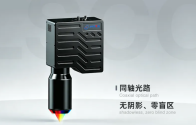
Jingce Electronics' LSCC Coaxial Series 3D Spectroscopic Confocal Linear Scan Sensor Makes its Stunning Debut​


Jingce Electronics has successfully launched the LSCC Coaxial Series 3D Spectroscopic Confocal Linear Scan Sensor, marking a significant breakthrough in China's high-end manufacturing sector. This product addresses critical limitations in industrial inspection, specifically regarding high-precision measuring of three-dimensional dimensions and microscopic morphology under challenging conditions (such as deep holes, reflective surfaces, or transparent materials).

The sensor overcomes issues with shadows, blind spots, and viewing angle constraints found in traditional "oblique-axis" sensors and breaks the overseas monopoly on high-end coaxial spectral sensors, enabling domestic independent control and integration into enterprise production lines.

The sensor utilizes an integrated "opto-mechanical-electronic-computer-software" platform supported by the Ministry of Science and Technology's "Intelligent Sensor" key project. Its specific capabilities include:​
  1. Coaxial Optical Path:
    • Eliminates shadows and blind spots entirely because light emits and receives along the same axis.​
    • Achieves full coverage (up to 99.5% data integrity) for complex structures like TGV glass through-holes, gold wire matrices, and high aspect ratio micro-apertures.​
  2. Spectral Confocal Principle:
    • Uses white light with wavelength decoding rather than intensity analysis.​
    • Provides measurements unaffected by material color, surface roughness, or reflection intensity.​
    • Compatible with curved surfaces (±45°) and various complex materials.​
  3. Ultra-High Precision:
    • Achieves 50nm Z-axis repeatability and 1.23μm X-axis resolution.​
    • Captures micron-level defects without edge accuracy attenuation, suitable for semiconductors, ICs, wafers, Micro-LEDs, and precision gears.​
  4. High-Speed Mass Production Adaptability:
    • Supports scanning speeds up to 10,000 lines/second (stable at 4,000 lines/second).​
    • Acquires up to 3,648 measurement points per line with a large field of view, ensuring efficient inspection of large workpieces.​
1781909504709.png

Jingyi Micro (a subsidiary) is expanding its portfolio beyond this new series:​
  • LSCC Series: New coaxial sensors for complex, shadow-free scenarios.​
  • LSCF Series: Existing off-axis 3D spectral confocal sensors for wide-field and general submicron scanning. Together, these two lines cover diverse industry needs including panels, 3C electronics, semiconductors, and new energy sectors, forming a complete ecosystem from lab R&D to mass production inspection.​
1781909752684.png1781909804055.png

1781909842135.png

Please, Log in or Register to view URLs content!
 
Top