Chinese semiconductor thread II

huemens

Junior Member
Registered Member

US takes step to halt Nvidia AI chip shipments to Chinese firms outside China​

Please, Log in or Register to view URLs content!
May 31 (Reuters) - The U.S. ‌Department of Commerce on Sunday moved to close a potential loophole that may have led companies to export the world's most advanced chips - like Nvidia's most sophisticated Blackwell processors - to subsidiaries of Chinese companies located outside China.
The new guidance was posted on the ⁠Commerce Department's website on Sunday after a paper about the loophole circulated in Washington, according to people familiar with the matter. The paper, a copy of which was seen by Reuters, says "the floodgates have quietly opened." Dated Friday, the paper does not list any author.
It is unclear how many of the chips have been exported in the year that the Trump administration left the door open. One chip industry source with deep supply-chain knowledge estimated it was in the hundreds of thousands.
The ⁠new guidance does not change anything for Nvidia, a company official said, adding that it could not ship the chips because the Commerce Department had clearly imposed a license requirement on Nvidia in a letter.
Former State Department official Chris McGuire, an expert on technology and national security, said in a social media post on Sunday that the loophole allowed the overseas subsidiaries of Chinese companies to buy Nvidia Blackwell chips without a license. "This is a ⁠HUGE problem," he said.
"Chinese companies have been buying these chips, very likely at scale," McGuire said.
McGuire said the guidance closes the loophole, but leaves another open. That loophole drops the requirement that Taiwan-based TSMC and other foundries do extra due diligence to ensure the high-end AI chips ⁠they are making are not for Chinese front companies. He said that issue was not fixed by the guidance.
A spokesman for TSMC declined comment.
 

tokenanalyst

Lieutenant General
Registered Member

Chengdu: Promoting the enhancement of supporting capabilities in integrated circuits, new displays, and aerospace.​


Chengdu released the "Opinions on Accelerating the Construction of a National Advanced Manufacturing Base". The opinion points out that by 2030, Chengdu will have basically established itself as a national advanced manufacturing base. Chengdu's manufacturing sector will significantly enhance its ability to serve national strategies, accelerate the construction of the National New Industrialization Demonstration Zone, and significantly strengthen its supporting functions for the construction of the national strategic hinterland and its capacity to carry national strategic scientific and technological strength, further enhancing the development level of the Chengdu-Chongqing economic circle. Its ability to support urban development will also significantly improve, with the operating income of industrial enterprises above designated size exceeding 2 trillion yuan, and the proportion of industrial added value in the regional GDP steadily increasing. Its ability to lead industrial innovation will significantly improve, with the R&D expenditure intensity of industrial enterprises above designated size exceeding 2%, and breakthroughs achieved in a number of key core technologies. Its ability to compete globally will significantly improve, with the electronic information and equipment manufacturing industries leaping towards world-class advanced manufacturing clusters, creating a number of distinctive industrial landmarks, and cultivating a number of world-class enterprises.

By 2035, the industrial added value will reach the trillion-yuan level, a modern industrial system with advanced manufacturing as its backbone will mature, a national advanced manufacturing base will be fully established, and efforts will be made to build a world-class advanced manufacturing city.​

1. Building a Modern Industrial System
  • Consolidate Strengths: Strengthen trillion-yuan-level electronic information and equipment manufacturing, alongside hundred-billion-yuan sectors like pharmaceuticals, green food, and new materials.
  • Emerging & Future Industries: Cultivate new pillars in AI, integrated circuits, aerospace, low-altitude economy, and biomedicine. Proactively plan for future tracks like quantum technology, brain-computer interfaces, nuclear fusion, and flying cars.

2. Upgrading Parks, Clusters, and Supply Chains
  • Distinctive Parks: Develop highly specialized industrial parks (e.g., Chengdu High-tech Zone) with professional operational models and full-scale enterprise integration.
  • World-Class Clusters: Push electronic information and equipment manufacturing toward global leadership while enhancing the security and resilience of critical industrial and supply chains.

3. Driving Innovation & Commercialization
  • Core Tech Breakthroughs: Adopt an "industry poses questions, science answers" model to solve bottlenecks in advanced materials, key equipment, and industrial software.
  • Sci-Tech Finance & Transformation: Build high-level tech transfer platforms and leverage state/market funds to support early-stage, long-term "hard-tech" investments.

4. Cultivating Enterprises and Iconic Products
  • Tiered Enterprise Growth: Support a full spectrum of businesses, from "chain-leading" giants to specialized "little giant" SMEs and unicorns.
  • Iconic Products: Develop flagship products like future chips, high-end screens, smart cars, and innovative drugs.
  • Market Expansion: Tap into new demands (pet, emotional, and silver economies) and expand global trade via the Belt and Road Initiative.

5. The "AI + Manufacturing" & Green Shift
  • AI Integration: Accelerate the use of intelligent chips, industry big models, and smart agents across design, production, and supply chains to build intelligent factories.
  • Green Manufacturing: Establish full-cycle green systems, promote carbon footprint labeling, and strive to build (near) zero-carbon industrial parks to meet carbon peak targets.

6. Regional Synergy & Spatial Planning
  • Chengdu-Chongqing Integration: Deepen dual-core collaboration in auto manufacturing, biomedicine, and low-altitude economy corridors.
  • Intra-City Coordination: Optimize the division of labor across five development zones, central urban districts, and new county towns to ensure complementary growth.

7. Optimizing the Business Environment
  • Enterprise Services: Maintain a "responsive when needed, non-intrusive when not" service model with direct, rapid access to preferential policies.
  • Resource Allocation: Guarantee manufacturing investment, increase industrial land allocation, and implement specialized talent programs to attract high-level experts.
  • Leadership: Establish a municipal-led promotion mechanism with cross-departmental synergy to ensure policy execution.

Chengdu is pivoting heavily toward high-tech, AI-driven, and green manufacturing. By combining aggressive R&D, targeted financial support, and deep regional integration within the Chengdu-Chongqing economic circle, the city aims to secure a commanding position in China's national strategic hinterland and the global advanced manufacturing landscape.

Please, Log in or Register to view URLs content!
 

tokenanalyst

Lieutenant General
Registered Member

Construction of the Yiwu Pan-Semiconductor Industrial Park project has achieved a significant breakthrough!​


The first building of the Yiwu Pan-Semiconductor Industrial Park was successfully topped out, marking a significant milestone in this major project under Zhejiang Province's "Thousand Projects, Trillion Yuan" initiative. Developed by Yiwu Industrial Investment Group's subsidiary, Gongtou Company, the park is located in Futian Street, Yiwu City, covering 230.68 mu with a total investment of 2.102 billion yuan and a construction area of 477,000 square meters. The facility will feature standardized intelligent factories, comprehensive office buildings, and supporting service facilities, serving as a core benchmark project for Yiwu's high-end manufacturing and emerging industry development.

The park is designed to become a crucial platform for Yiwu's semiconductor industry, focusing on semiconductor materials, equipment manufacturing, wafer production, packaging and testing, and modular production to create a comprehensive, vertically integrated industry cluster. Once operational, the project will address shortcomings in Yiwu's high-end semiconductor sector, improve the emerging industry layout, accelerate the construction of a modern industrial system, and inject new momentum into the city's manufacturing transformation and high-quality development.

Since construction began, Yiwu Industrial Investment Group has maintained strict standards for safety, quality, and efficiency while proactively addressing challenges in structural work, material supply, and equipment deployment. With the office building now topped out and first-phase construction progressing steadily, the project is expected to complete all final acceptance work by the end of June 2027. The group will continue to strengthen resource coordination and accelerate construction to ensure timely completion, aiming to establish Yiwu as a regional semiconductor industry hub and empower the city's industrial economy toward greater quality and efficiency.​

Please, Log in or Register to view URLs content!
 

tokenanalyst

Lieutenant General
Registered Member

With over 1,000 units shipped to date, CAS 4.0 Microelectronics showcases its complete RF testing matrix at the conference.​


During the recent 10th Integrated Semiconductor Conference and Exhibition in Shanghai (held May 27–29), CAS 4.0 made a significant appearance, showcasing its fully independent RF testing capabilities. The event highlighted China's progress from materials to end-user applications, with CAS 4.0 standing out as a leader in domestic chip packaging and testing equipment.

The company has shipped over 1,000 units of its equipment to date, exporting them internationally. This success is credited with breaking foreign monopolies in the RF test equipment sector and promoting domestic substitution in China. Founded in 2018 in Chengdu, CAS 4.0 has raised over 100 million RMB, holds more than 40 patents, and is recognized as a National High-tech Enterprise and a potential unicorn company. Its focus covers communications, IoT, and automotive electronics.

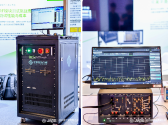
The exhibition highlighted the "CAS 4.0" product matrix, which supports the entire process from R&D to mass production:
  1. VF5000 Series RF Chip ATE Tester:
    • The flagship product featuring a modular PXIe architecture.​
    • Supports up to 48 parallel RF port tests.​
    • Integrates self-developed vector transceivers and multi-port VNA.​
    • Includes SmartRF Studio software for one-stop testing of S-parameters, nonlinearity, and EVM.​
  2. N2609M 6-Port Vector Network Analyzer (VNA):
    • The first domestic PXI six-port product in this category.​
    • Frequency range: 10MHz to 9GHz; Dynamic range: 132dB.​
    • Capable of board cascading expansion up to 48 ports for improved mass production efficiency.​
  3. T2008M Vector Transceiver:
    • Covers 400MHz to 8GHz with a high instantaneous analysis bandwidth (960MHz).​
    • Supports advanced standards including Wi-Fi 7 and 5G NR.​
  4. S3020M Signal Generator & A3044M Signal Analyzer:
    • The S3020M offers stable excitation from 100kHz to 20GHz.​
    • The A3044M (showcased offline) targets next-generation needs with coverage up to 44GHz.​
1780324357603.png

The CAS 4.0 booth attracted significant attention from RF chip designers, packagers, and communication module companies. Discussions focused on practical challenges like high reliability and throughput in mass production. Looking ahead to the 2026 Microelectronics Conference, CAS 4.0 aims to further demonstrate its end-to-end solutions and continue driving the high-quality development of domestically produced RF test equipment alongside industry partners.

Please, Log in or Register to view URLs content!
 

tokenanalyst

Lieutenant General
Registered Member

Spatiotemporal pulse-shaping effects on 4-μm laser-driven Sn microdroplet plasmas for extreme ultraviolet emission​

Abstract​

Drive lasers near the 4-μm wavelength offer a fundamental thermodynamic advantage for extreme ultraviolet (EUV) lithography by optimally balancing laser absorption and in-band EUV opacity. Using radiation-hydrodynamics simulations, we investigate spatiotemporal pulse-shaping effects on 4-μm-driven Sn microdroplet plasmas under an industrially relevant overfill geometry. An energy-conserved full-factorial strategy evaluates the independent influences of pulse duration, temporal envelope, and transverse spatial profile. Results reveal that temporal and spatial shaping govern distinct physical processes. Temporally, box-shaped profiles establish a quasi-steady-state hydrodynamic regime that sustains optimal ionization, preventing the severe over-ionization of high-peak Gaussian pulses and the under-heating of extended low-power pulses. Spatially, although transverse intensity variations negligibly impact macroscopic energy absorption, angular emission analyses demonstrate that flat-top beams uniformly ablate the target periphery. This suppresses the optically thick peripheral plasma shroud inherent to Gaussian beams, thereby minimizing angle-dependent self-absorption and enhancing isotropic EUV photon escape. Ultimately, combining a 15-ns box-shaped temporal envelope with a spatial flat-top profile achieves a maximum conversion efficiency of 3.35%. Thus, optimizing EUV emission requires utilizing temporal shaping to sustain intrinsic emissivity and spatial flattening to minimize radiation transport losses.

Please, Log in or Register to view URLs content!
 

tokenanalyst

Lieutenant General
Registered Member

Heyan Technology's Three Core Equipment Units Lead Domestic Substitution​


Driven by the explosive growth of AI computing power and rapid semiconductor technology iteration, advanced packaging technologies such as HBM, CoWoS, and 3D stacking have become critical battlegrounds in the global chip industry. This shift has profoundly reshaped equipment requirements, exposing limitations in traditional grinding and dicing systems when handling ultra-thin wafers, ultra-high cleanliness standards, and high-precision cutting demands. At the recent CIMC Conference in Shanghai, Heyan Technology's Technical Director Wang Xiaoliang highlighted how these evolving process standards necessitate systemic innovation, as conventional linear cutting methods and lower cleanliness thresholds can no longer support the physical fragility and precision demands of next-generation chip manufacturing.

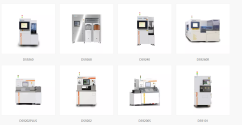
In response to these industry-wide challenges, Heyan Technology has achieved full-chain independent control from complete equipment to core components and launched three breakthrough products targeting advanced packaging pain points. The DS9268 fully automatic high-cleanliness edge trimmer addresses edge chipping and stress concentration in ultra-thin wafers by converting curved wafer edges into vertical profiles, meeting Class 10/100 cleanliness standards required for 3D packaging and breaking the long-standing monopoly in this niche. The upgraded DS9261 grinding and scrubbing system offers full-process compatibility across traditional and 2.5D advanced packaging, integrating multi-functional cleaning and adapting to complex processes like hybrid bonding and warped wafer handling. Meanwhile, the world-first RMT-3320Re-Mounter consolidates dual molding operations onto a single platform, eliminating risky wafer transfers for brittle ultra-thin chips and significantly boosting yield and production efficiency.

These innovations have translated into tangible market breakthroughs. The DS9268, now in final joint verification with leading domestic memory manufacturers, matches international precision while offering superior customization flexibility and cost advantages. The DS9261 has already achieved large-scale deployment at major semiconductor firms, solving warped-wafer processing challenges that overseas competitors struggle to address. Complementing these flagships, Heyan's self-developed jig product line ensures end-to-end process stability and compatibility, while its broader portfolio—spanning six core equipment categories from dicing and grinding to laser and film-handling systems covers 6- to 12-inch wafers across semi-automatic to fully automatic configurations, delivering true one-stop domestic solutions for advanced packaging.
1780325497914.png
Looking ahead, Heyan Technology is strategically positioning itself at the forefront of domestic substitution in high-end packaging equipment. Showcasing its comprehensive lineup at the Microchip Semiconductor Exhibition, the company is actively engaging with industry partners to accelerate adoption of its integrated solutions. With a clear R&D roadmap focused on high-purity thinning, laser stealth cutting, and laser dicing technologies, Heyan aims to close remaining gaps in grinding, polishing, and cutting processes while benchmarking against global leaders. By leveraging full-chain innovation, performance-competitive products, and deep process expertise, the company is poised to drive the high-quality development of China's advanced packaging industry and establish a new benchmark for independent, high-end semiconductor equipment manufacturing.​

Please, Log in or Register to view URLs content!
 

tokenanalyst

Lieutenant General
Registered Member

Fuchuang Precision plans to acquire a 65% stake in Shanghai Riyang for 189 million yuan, entering the semiconductor vacuum valve market.​

On the evening of May 26, Shenyang Fuchuang Precision Equipment Co., Ltd., a company listed on the Science and Technology Innovation Board, issued an announcement stating that it plans to acquire 65% equity of Riyang Electronic Technology (Shanghai) Co., Ltd. held by HIGHLIGHT TECH INTERNATIONAL CORP., a BVI company under Riyang Technology Co., Ltd., through a cash transaction.

The announcement shows that the total transaction price is RMB 189 million (actual price: RMB 188.5 million), and the overall valuation of the target company is RMB 290 million. The funds will come from the company's own funds and/or bank loans. Upon completion of the transaction, Shanghai Riyang will become a subsidiary of Fuchuang Precision and will be included in its consolidated financial statements. This transaction does not constitute a related-party transaction or a major asset restructuring.

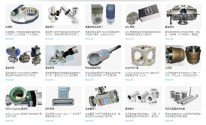
Founded in 2001, Shanghai Riyang is located in the core area of Shanghai Baoshan High-tech Park. Its main business is the research, development, production, sales, and maintenance services of vacuum chambers, vacuum valves, vacuum components, and exhaust gas treatment equipment. Its products are used in semiconductors, solar photovoltaics, optoelectronic panels, and scientific research. As of the audit benchmark date of December 31, 2025, Shanghai Riyang's audited net assets were RMB 129 million; its revenue in 2024 and 2025 was RMB 177 million and RMB 178 million, respectively, with net profits of RMB 12.3347 million and RMB 12.2035 million, respectively.

1780325784565.png

Please, Log in or Register to view URLs content!
 

tokenanalyst

Lieutenant General
Registered Member

Hengkun New Materials plans to invest 50 million yuan to establish a joint venture to develop semiconductor SOD materials.​


Xiamen Hengkun New Material Technology Co., Ltd. issued an announcement on the evening of May 29, stating that it plans to jointly invest with multiple parties to establish a joint venture to develop the semiconductor spin-coated functional materials (SOD) business.

The announcement shows that the joint venture is tentatively named Xiamen Honggen New Materials Technology Co., Ltd., with a registered capital of 100 million yuan. The details of each party's investment are as follows: Hengkun New Materials will invest 50 million yuan of its own funds, holding 50% of the shares; Hengshen Holding Group Co., Ltd. will invest 30 million yuan, holding 30% of the shares; Kang Wenbing will invest 10 million yuan, holding 10% of the shares; Wang Gang will invest 5 million yuan, holding 5% of the shares; and Xiamen Qimingxin Investment Partnership (Limited Partnership) will invest 5 million yuan, holding 5% of the shares.

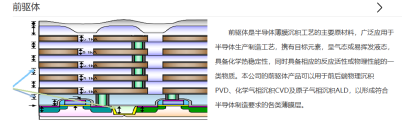
The joint venture's main business is the research, development, production and sales of semiconductor spin-coated functional materials (SOD, spin-coated dielectric layer materials) and related materials.
1780326821459.png
This transaction constitutes a related-party transaction: the joint venture partner, Qiming Core, is an enterprise where Yi Zemeng, son of Yi Rongkun, the controlling shareholder, actual controller, chairman, and general manager of Hengkun New Materials, serves as the executive partner. This matter was approved at the fifth meeting of the fifth board of directors on May 29th and is still subject to shareholder approval; it does not constitute a major asset restructuring.

Hengkun New Materials stated that the investment funds are from its own funds, and the joint venture will be included in the consolidated financial statements after the investment, which will not have a significant adverse impact on the company's daily operations and financial condition.

Please, Log in or Register to view URLs content!
 
Top