Chinese semiconductor thread II

tokenanalyst

Lieutenant General
Registered Member

Juxin Semiconductor, a domestic manufacturer of CMP polishing materials, has completed its Pre-A+ round of financing.​


Recently, Guangdong Juxin Semiconductor Materials Co., Ltd. (hereinafter referred to as " Juxin Semiconductor "), the only domestic semiconductor material company to achieve the localization of nano-cerium oxide CMP polishing slurry , completed its Pre-A+ round of financing , jointly invested by Xiongshi Asset Management, Jiayu Venture Capital , and Hongtu Broadcasting. The company's products have entered the supply chains of leading customers such as Huawei and Japan's JSR , with cumulative shipments reaching tons, and have been exported to the Japanese and South Korean markets.
Guangdong Juxin Semiconductor Materials Co., Ltd. , established in May 2023 and located in Hengqin, Zhuhai, is a new materials enterprise focusing on the research and development and production of nano-cerium oxide CMP polishing slurry, a key material for semiconductors.

Juxin Semiconductor is a new materials company that independently researches, develops, produces, sells, and serves nano-sized cerium oxide particles and cerium-based CMP polishing slurries for third-generation semiconductors and advanced processes. It has always regarded R&D and innovation as the core driving force and primary productivity of the company's development, and is committed to cultivating the field of nano-cerium dioxide CMP polishing materials, which have an urgent need for localization of 28nm, 14nm and more advanced processes.
1782749035684.png

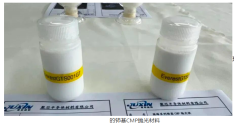
Juxin R&D and Production of Cerium-based CMP Polishing Materials Nano-cerium dioxide CMP polishing slurry is widely used in semiconductor chip manufacturing and 3D packaging processes, and is one of the seven major semiconductor chip manufacturing processes.

Juxin Semiconductor is the second company in the world and the first in China to master the key technologies for the research and industrialization of nano-cerium dioxide CMP abrasive particles . It has broken the long-term technological blockade and market monopoly of overseas companies in this field and built a complete industrial chain of independent and controllable preparation system from high-purity raw material purification to precision abrasive particle manufacturing and high-performance CMP polishing slurry production, laying a solid foundation for the independent and secure development of China's semiconductor materials industry.​

Please, Log in or Register to view URLs content!
 

tokenanalyst

Lieutenant General
Registered Member

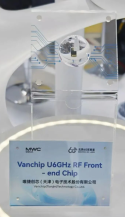
Vanchip Unveils U6G FEM Module (VC7514-11) to Lead China's 6G RF Industrialization

On June 24, 2026, at the Mobile World Congress (MWC26) in Shanghai—themed "Collaborative Intelligence for Innovation"—Vanchip Technology showcased its landmark VC7514-11, a new-generation integrated FEM module specifically designed for China's domestic 6GHz licensed spectrum.​

Key Highlights of the VC7514-11:

  • Dual-Band Full Coverage: Strictly adhering to 3GPP next-generation standards, it covers both n102 (5925–6425 MHz) and n104 (6425–7125 MHz) bands. This single-chip solution simplifies hardware for mixed high- and low-band networking needs.​
  • Performance Metrics:
    • Maximum single-channel output power: 29dBm.​
    • Bandwidth support: Up to 100MHz, suitable for 5G-A high-speed transmission and 6G integrated sensing.​
  • Energy Efficiency (Solving the 6G Bottleneck):Designed with a 5V APT architecture, it achieves industry-leading efficiency:
    • PAE >20% in n104 band.​
    • PAE >19% in n102 band.​
    • Peak operating current controlled within 800mA, significantly reducing heat and extending battery life for IoT and mobile devices.​
  • Miniaturization & Integration:
    • Ultra-thin package: 3×5mm with a thickness of only 0.674mm.​
    • Features an integrated EMI self-shielding structure, eliminating the need for external shielding covers and saving PCB space for thinner devices.​
    • Offers pin compatibility across generations to speed up production cycles.​
1782750906984.png

The 6GHz band was officially approved by China's Ministry of Industry and Information Technology (MIIT) in June 2026 as the core spectrum for evolving from 5G-A to 6G trial frequencies. Beyond smartphones, this module supports diverse scenarios including:​
  • 5G Fixed Wireless Access (FWA).​
  • Industrial smart gateways and low-altitude IoT terminals.​
  • Vehicle-to-Everything (V2X) communication.​
  • AI edge devices, robotics, and satellite communications.​
The launch of the VC7514-11 represents a critical step in Vanchip's strategy to dominate the RF front-end supply chain for 6G. By providing reliable chip support tailored to China's specific spectrum plan (domestic n102/n104), Vanchip aims to reduce iteration costs for terminal manufacturers and accelerate the large-scale deployment of domestic 6G networks across China.

Please, Log in or Register to view URLs content!
 

sunnymaxi

Colonel
Registered Member

Domestically produced high-end semiconductor testing equipment released LUXET VERITAS micro-microscope and laser-induced resistance change combined microscope.​


June 29 – According to a post on the official WeChat account of USTC Silicon Valley yesterday, Anhui Lingguang Infrared Technology Co., Ltd. recently released the LUXET VERITAS micro-microscope and laser-induced resistance change (EMMI+OBIRCH) combined microscope, filling a gap in the domestic market.

IT Home has learned that the LUXET VERITAS 2-in-1 microscope deeply integrates two mainstream failure analysis functions: EMMI low-light detection and OBIRCH laser-induced resistance change. It is a highly integrated device with two functions in one, comprehensively covering the testing needs of the entire semiconductor chain .

dbd74316-a9e7-43a9-a9fb-ad924829a43b.jpg

In terms of core hardware and performance parameters, the equipment is equipped with a deep-cooled near-infrared camera and a large-aperture self-developed 1.35x objective lens. The EMMI module can accurately locate nanoampere-level weak leakage currents and efficiently identify typical failure problems such as PN junction breakdown, latch-up effect, gate oxide leakage, and polysilicon defects. The OBIRCH module adopts a 1300nm standard laser band and 500mW rated power, which can achieve pA-level ultra-high precision current amplification measurement and accurately detect hidden defects such as abnormal resistance values of metal lines, vias, and contact holes.

Please, Log in or Register to view URLs content!
 

tphuang

General
Staff member
Super Moderator
VIP Professional
Registered Member
Please, Log in or Register to view URLs content!

HG Tech & PCB player
Please, Log in or Register to view URLs content!
signed JV on optical PCB and ceramic substrate manufacturer to supply these bottleneck components for 800G/1.6T modules. Bomin has been pushing into ceramic substrates, increasingly important for CPO and high power last packaging. Locking in 3 year supply contract suggests aggressive capacity planning for next-gen products like 1.6T and beyond.
 

tokenanalyst

Lieutenant General
Registered Member

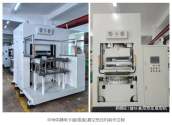
Semiconductor electrostatic chuck (suction cup) vacuum hot press manufacturing process​


Electrostatic chucks (ESCs), also known as electrostatic suction cups, are critical ultra-clean wafer carriers used in modern semiconductor manufacturing. Designed for vacuum and plasma environments, they utilize electrostatic adsorption to clamp ultra-thin wafers evenly and smoothly, offering advantages such as controllable temperature, uniform force, and the elimination of scratches or edge rejection effects on large-area wafers. As core components in high-end equipment like etching machines, ion implanters, and deposition systems (CVD/PVD), ESCs are typically constructed by co-firing multiple layers of green ceramic sheets—commonly alumina or aluminum nitride—with printed conductive electrodes at high temperatures. Their ability to provide rapid heating, regulate plasma states via radio frequency power, and maintain low particle counts makes them indispensable in the booming global semiconductor and optics industries.

To meet the fierce technological competition in this sector, companies like Xintaiming have developed advanced manufacturing solutions, specifically focusing on precision press-fitting technology for ESCs. Their vacuum hot press equipment integrates heating, pressure holding, vacuuming, and cooling systems to achieve material forming and bonding through the synergistic action of high temperature, high pressure, and a vacuum environment. The machine features a servo closed-loop control system that ensures intelligence, stability, and energy efficiency while allowing for real-time data monitoring and export. With precise control over pressure and stroke via servo actuators, the equipment guarantees high uniformity, responsiveness, and positioning accuracy, resulting in high production efficiency and yield rates.​

1782773417770.png

The technical specifications of these vacuum hot presses are designed to meet the stringent requirements of advanced semiconductor processes, including those below 5nm. Key components include a corrosion-resistant stainless steel or titanium alloy vacuum chamber capable of reaching ultimate vacuums of 10−310−3 to 10−510−5 Pa, and an independent heating system with multi-zone PID control that maintains temperature uniformity within ±1–2°C. The pressure system, driven by servo electric cylinders, offers a range of 1–500T with a position repeatability accuracy of ±0.01mm and flatness within ±0.02mm. The control system, powered by an industrial PC and PLC, supports multi-segment process programming, storing over 100 recipes, and includes interfaces for robotic automation, ensuring full-process digital monitoring and traceability.

The manufacturing process using these machines follows a precise flow: raw high-purity ceramic powders are prepared and molded, then subjected to vacuum pressing to remove gas and reduce bubble defects. High pressure and temperature are applied to densify the particles, followed by controlled cooling to ensure uniform density before final sintering and machining. This method offers significant advantages, including a yield rate exceeding 99% due to oxidation-free processing, a 60% reduction in energy consumption compared to traditional equipment, and a 25% shorter process cycle. By achieving performance comparable to imported machinery while reducing costs by over 30%, this domestic technology represents a significant breakthrough in the localization of high-precision semiconductor manufacturing equipment.

Please, Log in or Register to view URLs content!
 
Last edited:

tokenanalyst

Lieutenant General
Registered Member

Production line precision upgraded again! Zhongli Nano Ceramics adds nano sintering equipment, improving processing tolerance to ±0.005mm.​


Recently, Dongguan Zhongli Nanoceramics Technology Co., Ltd. completed a new round of equipment upgrades for its precision ceramics production line, officially introducing a new generation of integrated nano-level high-temperature sintering and precision grinding and polishing equipment. This comprehensively improves the forming accuracy and structural stability of nano-alumina ceramics, zirconia ceramics, and ZTA wear-resistant ceramic parts. As a professional manufacturer of customized nano-specialty ceramics in Dongguan, this production line upgrade has improved the controllable dimensional tolerance of the company's precision ceramic parts to ±0.005mm, fully meeting the ultra-high precision assembly requirements of high-end scenarios such as automated equipment, lithium battery equipment, and precision instruments, and significantly adapting to the high-end industrial precision ceramics supporting market.

Traditional industrial ceramic processing commonly suffers from problems such as coarse sintered grains, uneven shrinkage, and large wear deviations, easily leading to unstable tolerances, assembly problems, and inconsistent service life in batches of special ceramic parts. Zhongli Nano Ceramics' upgraded nano-sintering process leverages the high surface activity and short diffusion path of nanoparticles to precisely optimize the sintering temperature curve, effectively suppressing abnormal grain growth. This results in a denser and more uniform microstructure in nano-ceramic products, significantly reducing sintering deformation and shrinkage errors. Compared to traditional processing methods, the new precision ceramic products exhibit significantly improved batch consistency, with a batch yield rate consistently above 99%, maintaining a high standard among precision ceramic manufacturers in Dongguan.

1782775058069.png


Zhongli Nanoceramics consistently adheres to "high precision, high wear resistance, and high stability" as the core production standards for its industrial nanoceramic products. This production line upgrade not only solidifies the company's processing advantages in the field of precision industrial ceramics but also further enhances its customized delivery capabilities for high-end ceramic components in industries such as new energy, automation, chemicals, and mining. It can provide a wide range of industrial enterprises with more stable, durable, and higher-precision one-stop customized nanoceramic solutions.

Please, Log in or Register to view URLs content!
 
Top