
You are using an out of date browser. It may not display this or other websites correctly.
You should upgrade or use an alternative browser.
You should upgrade or use an alternative browser.
Chinese semiconductor thread II
- Thread starter vincent
- Start date

More domestic companies developing domestic lithography machine maintenance tools.
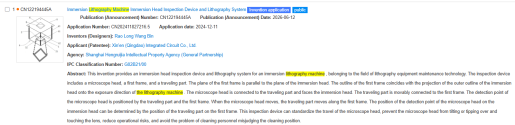
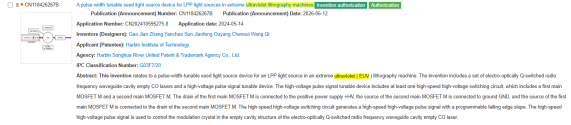

this is another interesting thing to watch. Photoresist and what happens to it this year.
there is at least rumor of Japan cutting off high end photoresist export to China. Although I can't verify this on the customs website, so I'm not sure how the people that posted it identified it (since the general photoresist code is no longer available and the parent category shows no discernible drop).
It would be pretty disappointing if they back out of the escalation and have not yet put the pieces together to fill the missing gaps in photoresist supply chain.
this is another interesting thing to watch. Photoresist and what happens to it this year.
there is at least rumor of Japan cutting off high end photoresist export to China. Although I can't verify this on the customs website, so I'm not sure how the people that posted it identified it (since the general photoresist code is no longer available and the parent category shows no discernible drop).
There are multiple companies already supplying photoresist from ArF immersion. ArF dry, KrF, Iline, PCB, Ebeam. They are already fighting each other to fill the gaps. The pressure of being cut off will likely accelerate the adoption by fabs of domestic resist chemicals.It would be pretty disappointing if they back out of the escalation and have not yet put the pieces together to fill the missing gaps in photoresist supply chain.
But I have my doubts because Japanese companies are adverse to ceding market share they probably put pressure to the government to avoid losing market share. Either way Chinese companies need to adopting domestic materials fast, the US is already looking to put controls on these chemicals and different from the Japanese government, they have the will to do it using the de-minimis rule.
I would be pretty disappointing if Japan backs out of killing their own photoresist companies lolIt would be pretty disappointing if they back out of the escalation and have not yet put the pieces together to fill the missing gaps in photoresist supply chain.
did you even read my entire tweet and the photos in there?It would be pretty disappointing if they back out of the escalation and have not yet put the pieces together to fill the missing gaps in photoresist supply chain.
Sometimes I do feel I post stuff and just newbies are not reading it at all.
鼎龙股份/Dinglong CMP Polishing Pad achieved breakthrough with 3rd production line exapnsion around glass substrate CMP Pads & >2m diameter pads for use in TGV. It has also received first panel level packaging/PLP customer order for its glass substrate based PLP lines. This is to support advanced packaging for CoPoS, FOPLP and TGV interconnect. A breakthrough into 2.5D/3D packaging. 3rd line adds 300k pieces/year, with completion by end of 2026. Given news regarding TSMC and PLP, this could be a TSMC order, or maybe Samsung.
Yuanfu's thinning and dry polishing integrated machine unlocks a path to low cost and high yield.
jiangsu Yuanfu Semiconductor has successfully delivered a new "Thinning, Dry Polishing, and Film Application/Peeling Integrated Machine" to a major customer in the semiconductor packaging and testing sector. This equipment is designed to support advanced packaging production lines and the high-quality processing of ultra-thin wafers.
Driven by AI, autonomous driving, and consumer electronics, chips are becoming increasingly thin (pushing below 200µm). Traditional multi-step manufacturing processes (thinning, film peeling/applying, and die-cutting) are struggling with this trend. They cause mechanical stress, fragile wafer breakage during transport, and declining production yields, creating an urgent need for upgraded, integrated back-end packaging solutions.
The Machine combines back grinding, dry polishing, and protective film peeling/applying into a single machine, significantly improving production efficiency (UPH). Actively monitors and auto-adjusts parameters in real-time, keeping intra-wafer thickness deviation strictly within 1µm. This boosts both yield and efficiency. Eliminates the need for chemical agents used in traditional wet polishing, saving customers massive costs on wastewater treatment and factory infrastructure modifications. Features intelligent detection that monitors key parameters (grinding intensity, film pressure, etc.). It auto-corrects anomalies and automatically shuts down to prevent faults, shifting maintenance from reactive to proactive.
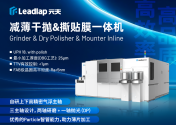
Other features include:
- DAG Process Optimization: Solves ultra-thin chip processing issues and pairs seamlessly with Yuanfu’s picosecond laser grooving equipment for complex material separation.
- DBG/SDBG Process Adaptation: Crucial for manufacturing HBM (High Bandwidth Memory) chips. It works with laser-guided hidden dicing to absorb warpage, allowing chip thickness to reach extreme limits of 25µm.
- Mid-Process Use: Provides high flatness for thinning and planarization prior to wafer bonding.
- Hardware Autonomy: Features highly precise TTV (Total Thickness Variation) control and a fully autonomous, self-managed spindle.
- Self-Developed Consumables: Yuanfu manufactures its own thinning grinding wheels (ranging from 320 to 8000 grit). These ceramic and resin-bonded wheels outperform mainstream market products in lifespan and wear ratio, particularly for high-end CIS (CMOS Image Sensor) products.
- Cost & Customization: Designed for easy maintenance and unmanned production. Yuanfu leverages standardized designs to keep costs down while rapidly fulfilling custom customer requests.
Yuanfu’s new integrated machine breaks through traditional manufacturing bottlenecks by combining ultra-high precision, smart automation, and dry processing. It offers semiconductor manufacturers a highly cost-effective, high-yield solution for the next generation of ultra-thin chips.