Chinese semiconductor thread II

tokenanalyst

Lieutenant General
Registered Member
Shanghai Institute of Optics and Fine Mechanics has made progress in achieving metal-semiconductor edge contact through optical manipulation.

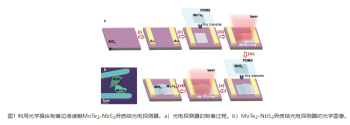
The Shanghai Institute of Optics and Fine Mechanics, Chinese Academy of Sciences, have developed a novel method to create metal-semiconductor edge contacts using optical manipulation with femtosecond lasers. This technique enables precise, fast, and damage-free movement of 2D nanosheets (MoTe₂ and NbS₂) on a dry substrate, allowing the fabrication of an edge-contacted MoTe₂–NbS₂ heterojunction photodetector.

Key advantages of this approach:
  • Edge contact improves electron injection efficiency by eliminating Schottky barriers and reducing tunneling resistance.​
  • The device achieves high performance:
    • Responsivity: 2 A/W​
    • Specific detectivity: 1.3 × 10⁸ Jones (at 900 nm)​
    • Ultrafast response: rise/fall times of 30/46 μs, bandwidth of 5.4 kHz​
  • Broad spectral detection from 280 to 1380 nm (or 1200 nm), enabling multi-wavelength sensing without complex calibration.​
  • Superior performance compared to traditional top-contact devices, which are limited by Schottky barriers and slow response times (seconds).​
The method is efficient, cost-effective, and scalable, offering new pathways for designing high-performance optoelectronic devices—especially lateral heterojunctions with customizable edge structures. The study was published in Small as a back cover article and supported by China’s National Key R&D Program and National Natural Science Foundation.
1764624268228.png

Please, Log in or Register to view URLs content!
 

tphuang

General
Staff member
Super Moderator
VIP Professional
Registered Member
Please, Log in or Register to view URLs content!

Favalon/广通远驰 has designed China's first 4nm flagship SoC for cockpit called AN762S and passes AEC-Q104 certification. It uses Vanchip's VCA chip for 5G front end component. This product passes AEC-Q100 certification.

Expects to enter production in 2026.
 

tokenanalyst

Lieutenant General
Registered Member

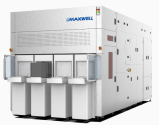
Maiwei Technology: The company's high selectivity etching equipment and hybrid bonding equipment can be used in DRAM processes.​


Maiwei Technology confirms that its high selectivity etching and hybrid bonding equipment can be applied in DRAM and HBM (High Bandwidth Memory) processes, supporting advanced memory manufacturing and capacity expansion. The equipment has already achieved mass production and stable operation in memory and logic chip fabrication, highlighting Maiwei’s capability in key front-end semiconductor processes.
1764684665105.png

HBM, critical for AI and high-performance computing, demands precise etching and reliable interconnects areas where Maiwei's technology directly impacts yield and performance. This entry into the HBM supply chain marks a significant step for domestic equipment firms in participating in memory technology upgrades.

Maiwei continues to expand its product portfolio through collaboration with wafer foundries, focusing on process compatibility and production stability. The company plans to strengthen offerings aligned with both memory and logic chip demands, capitalizing on advancements in advanced processes.

Analysts note that while domestic equipment players stand to benefit from memory tech upgrades and local substitution trends, order growth remains dependent on downstream capital spending, verification cycles, and global competition. Investors should monitor technological progress and remain cautious about market uncertainties.

Please, Log in or Register to view URLs content!
 

tokenanalyst

Lieutenant General
Registered Member

Rongda Photosensitive: Some of its photoresist products can now replace Japanese products and have been applied in batches by some customers.​


Rongda Photosensitive the company stated on the interactive platform that, as a leading domestic photoresist supplier, its products have covered PCBs, Display panels, semiconductors. The company operates in multiple fields, including [list of sectors]. Through years of continuous R&D and technological accumulation, some of its photoresist products have achieved substitution for certain Japanese products in key performance indicators and have been applied in batches by some customers. Under the current circumstances, the company highly values the strategic opportunities brought about by domestic substitution and has formulated corresponding work strategies, mainly including accelerating production line construction, deepening customer cooperation, and enhancing supply chain resilience, actively promoting the independent and controllable development of the photoresist industry.

Please, Log in or Register to view URLs content!
 

tokenanalyst

Lieutenant General
Registered Member

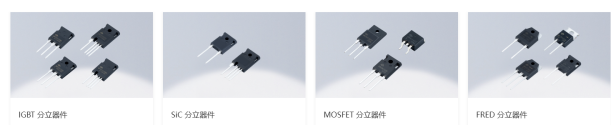
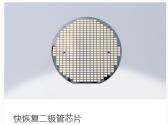
Hongwei Technology's self-developed GaN 100V/7m device is being sampled and verified for use in core robot drives.​


Hongwei Technology has entered the robotics sector by sampling its independently developed GaN 100V/7m power device for use in core robot drive systems. The device, leveraging gallium nitride’s high switching frequency, low losses, and compact size, is optimized for high-power density and efficiency—key demands in industrial robots and servo drives.

Currently in the prototype verification phase, the product targets niche applications such as robot motor control and is being tested by downstream manufacturers for system efficiency, thermal performance, and miniaturization. While not yet in mass production, Hongwei plans to scale up based on customer feedback and market demand.

The company, primarily known for power semiconductors (MOSFETs, IGBTs), has expanded into third-generation GaN technology to strengthen its presence in industrial automation and new energy sectors. By offering GaN solutions tailored to robotics, Hongwei aims to grow its footprint in intelligent manufacturing and high-end industrial applications.

1764686462123.png
1764686478904.png

Please, Log in or Register to view URLs content!
 

tokenanalyst

Lieutenant General
Registered Member

With a domestic production rate of 95%, Ningbo enterprises have independently developed advanced semiconductor packaging equipment.​


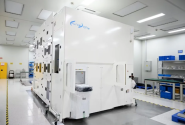
Ningbo-based Pratt Semiconductor has successfully developed it’s first fully domestic advanced chip packaging electroplating machine, with 95% of its components made locally. The equipment has just been shipped to nearby chip manufacturers, ending years of reliance on foreign suppliers for this critical technology.

1764692656435.png


Founder Dr. Jin Junjiang spent eight years working overseas in semiconductor R&D before returning to China. He chose Ningbo’s Qianwan New Area for its strong industrial ecosystem, supportive government policies, and proximity to key clients. “We didn’t have to travel far to work with local factories,” he said, emphasizing how the region’s tight-knit supply chain made it the perfect launchpad.

The machine handles high-performance chip packaging for smartphones, laptops, and wearables a step where foreign companies once held a monopoly. Pratt’s deep understanding of Chinese manufacturers’ needs lets them tailor solutions faster than international rivals. “We know exactly what these factories require,” Jin explained, noting how custom designs won immediate trust from local partners.

The 95% domestic production rate is already boosting nearby suppliers, helping traditional factories upgrade their capabilities. Mass production begins in 2026 after initial customer testing, with plans to expand into even more complex front-end chip equipment next. This shift could reshape China’s semiconductor supply chain from the ground up.


Looking ahead, Pratt aims to become a specialized innovator in a niche but vital field. “Our goal is to master electroplating technology and drive China’s semiconductor independence,” Jin said. For a small team with big ambitions, this breakthrough is just the start.

Please, Log in or Register to view URLs content!
 

tokenanalyst

Lieutenant General
Registered Member

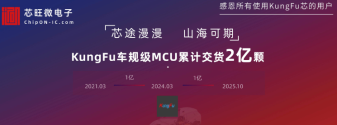
3 million kilometers of zero failures + 200 million units delivered: ChipON Microelectronics leads the way in both the quality and quantity of domestically produced automotive-grade chips.​


ChipON Microelectronics has achieved landmark milestones in China’s domestic automotive-grade chip industry, demonstrating both unmatched reliability and mass-market scalability.​
  • 3 million kilometers, zero failures: The company’s SMC6008AF chassis-specific chip, used in Changan Automobile’s ABS system, has accumulated nearly 3 million kilometers of real-world driving with no ABS failures, including a single vehicle reaching 20,000 km. This breakthrough proves the chip’s safety and robustness under extreme conditions and breaks international monopolies in high-end chassis control chips.​
  • Over 200 million units delivered: ChipON’s KungFu series automotive-grade MCUs have surpassed 200 million cumulative shipments, serving over 20 automakers across more than 200 models. The chassis application volume alone exceeds 10 million units, highlighting strong adoption in critical vehicle systems.​

1764720330691.png

These achievements are backed by:​
  • A decade-long focus on automotive-grade development since 2015.​
  • Full compliance with global standards (AEC-Q100, IATF 16949, ISO 26262).​
  • In-house development of the KungFu processor cores and full toolchain enabling complete technological autonomy.​
  • Self-built certification lab with advanced testing capabilities, including 5,500㎡ three-temperature FT testing facility.​
1764720348345.png
ChipON’s strategy starting with low-attention but high-usage body nodes (e.g., windows, seats) using 8-bit KF8A, then expanding into smart cockpits and BCMs with 32-bit KF32A has driven sustainable growth and innovation.

The company’s chips are now recognized by the State Administration for Market Regulation under the national “Quality Strengthening Supply Chain” initiative. As part of the first batch to pass the new domestic certification system, ChipON’s products have achieved an industry-leading failure rate of ≤1ppm, comparable to global top-tier standards.

This institutional validation is accelerating integration into mainstream OEM supply chains, with 15 major automakers—including Changan, BYD, FAW, and Dongfeng—now using certification results in supplier selection.

Please, Log in or Register to view URLs content!
 
Top