All these comparisons with Starship are pretty moot IMO, because the chance of LM9 using stainless steel is extremely low and steel massively reduces the effective deltaV available at the same size, specifically and especially through second stage m_f. It one of those things that's hard for most people to visually intuit unless they played around with rocket equation extensively.If I may, using a more realistic 110m tall CZ-9 Base, this is how I would depict a 16m diameter fairing.
View attachment 176284

You are using an out of date browser. It may not display this or other websites correctly.
You should upgrade or use an alternative browser.
You should upgrade or use an alternative browser.
China's Space Program Thread II
- Thread starter Blitzo
- Start date
Let me explain: CZ‑9’s 15‑meter fairing is most likely intended for the gigawatt‑level demonstration space solar power station planned for 2035.If I may, using a more realistic 110m tall CZ-9 Base, this is how I would depict a 16m diameter fairing.
View attachment 176284
It is indeed placed above the third stage (meaning it is for high‑orbit missions). Some say the deployed solar array would be several hundred meters to one kilometer long (likely stowed in a rolled configuration).
For China’s 10‑meter‑class heavy‑lift launch vehicle under the current design, the length‑to‑diameter ratio constraint is around 10, meaning the maximum height of the rocket must be slightly more than 10 times its 10.6‑meter diameter.
I believe the ultimate length‑to‑diameter ratio for such large‑diameter rockets in the future will be 13 to 14. Starship’s length‑to‑diameter ratio is an exception—it is not a conventional rocket.
As for a three‑stage rocket like CZ‑9 (which is structurally more flexible), the practical length‑to‑diameter ratio is limited (exceeding 12 would already be impressive). Therefore, CZ‑9 will most likely not be taller than Starship, because Starship can indeed reach 150 m in height, while CZ‑9 inherently cannot achieve that (due to having more stages—actually four stages, compared to Starship’s two).

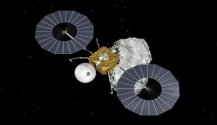

wireless microwave energy transmission in orbit phase in space. Goal of MW power station in 2030 & GW by 2050.
looks like SpaceSail's goal is to reach 324 satellites in space by end of July. Each satellite cost is now in the 10m RMB range. That seems okay, but could get cheaper if they scale up further.
looks like SpaceSail's goal is to reach 324 satellites in space by end of July. Each satellite cost is now in the 10m RMB range. That seems okay, but could get cheaper if they scale up further.
Just a question their target to reach 1296 satellites by 2027, is their own target, or the number of satellites required to maintain their slot in ITU.
I don’t think it’s possible for them to launch over 120 satellites in less than 2months. Plus their target for 2027 sounds even more unreachable
wireless microwave energy transmission in orbit phase in space. Goal of MW power station in 2030 & GW by 2050.
looks like SpaceSail's goal is to reach 324 satellites in space by end of July. Each satellite cost is now in the 10m RMB range. That seems okay, but could get cheaper if they scale up further.
that's their own targetJust a question their target to reach 1296 satellites by 2027, is their own target, or the number of satellites required to maintain their slot in ITU.

I don’t think it’s possible for them to launch over 120 satellites in less than 2months. Plus their target for 2027 sounds even more unreachable
June 1st - 10th batch launched
June 4th - 11th batch launched
June 5th - 12th batch launched
54 satellites have launched in just one week. so 120 in next 52 days is cakewalk. this could easily surpass their own target with decent margin.
Yes that’s if they maintain the current momentum , which I’m not sure yet if they will. So remains to be seen . Rather be cautious with our prediction than too optimistic with Chinas space program . Better to wait and see if their plans will work out this year. Since we have seen similar plans before that didn’t reach anywhere close the target .June 1st - 10th batch launched
June 4th - 11th batch launched
June 5th - 12th batch launched
54 satellites have launched in just one week. so 120 in next 52 days is cakewalk. this could easily surpass their own target with decent margin.
that is the general perception of China's space program. which is fine. but you didn't check the Qianfan constellation number of satellites per launch.. its 18Yes that’s if they maintain the current momentum , which I’m not sure yet if they will. So remains to be seen . Rather be cautious with our prediction than too optimistic with Chinas space program . Better to wait and see if their plans will work out this year. Since we have seen similar plans before that didn’t reach anywhere close the target .
they basically need 6 to7 flights in 2 months. which is even less than what China currently launching rockets per month.
 so this120 satellites in 2 months is a conservative estimate.