Which satellites system is this?Xingwang batch

You are using an out of date browser. It may not display this or other websites correctly.
You should upgrade or use an alternative browser.
You should upgrade or use an alternative browser.
China's Space Program Thread II
- Thread starter Blitzo
- Start date
View attachment 171751
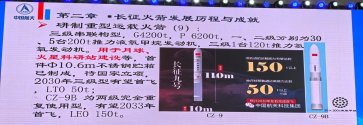
Now they are saying 2030 first flight, not that it means anything because the project STILL haven't been approved. Otherwise PPT slide remains identical, still 2033 first flight for fully reusable version, same engine arrangement etc.
I wouldn't worry about the exact timelines. Administrative approval is a necessary step but the real bottleneck is technical capabilities and maturity. Chinese approach to large scale projects like this is to first master the fundamentals. They're not quite there yet, there are still some key technologal hurdles: dry mass reduction (they did a lot of work on this for CZ-10; previous CZ-9 design had poor mass fractions), engine clustering and of course the engines themselves. The propulsion element remains the hardest part. High thrust, high chamber pressure, low dry mass engine with very granular throttling capability will take a few more years - up to a decade to fully mature.

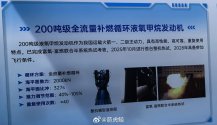
According to their own slides last year YF-215 is expected to be able to make first flight by 2028. For verification of everything else you've listed, there's a rumored 7m diameter rocket meant to use full methane fuel configuration. It'll likely share much of the same technology as CZ-9 but no news on it recently.I wouldn't worry about the exact timelines. Administrative approval is a necessary step but the real bottleneck is technical capabilities and maturity. Chinese approach to large scale projects like this is to first master the fundamentals. They're not quite there yet, there are still some key technologal hurdles: dry mass reduction (they did a lot of work on this for CZ-10; previous CZ-9 design had poor mass fractions), engine clustering and of course the engines themselves. The propulsion element remains the hardest part. High thrust, high chamber pressure, low dry mass engine with very granular throttling capability will take a few more years - up to a decade to fully mature.
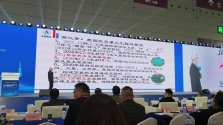
Also, demo for planetary defense is planned for a December 2027 launch while Tianwen-3 Mars sample return is planned for 2028 launch and Tianwen-4 Jovian orbiter in 2030. There is also some vague stuff on solar system edge exploration mission by 2049 and comprehensive sensing and science missions for Moon, Mars, asteroids/comets and other planets coming.
Lastly, they plan on launching and building ~203,000 satellites for multiple mega constellations by 2034 which is more or less on average 25,000 satellites launched per year starting from right now not counting replacements.
Also, demo for planetary defense is planned for a December 2027 launch while Tianwen-3 Mars sample return is planned for 2028 launch and Tianwen-4 Jovian orbiter in 2030. There is also some vague stuff on solar system edge exploration mission by 2049 and comprehensive sensing and science missions for Moon, Mars, asteroids/comets and other planets coming.
Lastly, they plan on launching and building ~203,000 satellites for multiple mega constellations by 2034 which is more or less on average 25,000 satellites launched per year starting from right now not counting replacements.
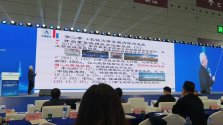
And an interesting announcement: The AT-1B suborbital spaceplane program is still active!
A few months ago there were rumors that the project had been re-prioritized, and CASC's 5 year plan goals of putting a suborbital tourism vehicle in operation hinted at it, and now it's confirmed: CASC will have a suborbital tourism vehicle that will fly weekly by the end of the decade.
"On July 14, 2021, the AT-1B lifting-body suborbital vehicle flew, , and reused the following year.
Flying at an altitude of 80–100 km, it allows passengers to briefly experience weightlessness. By 2030, weekly commercial flights are expected, with a market size reaching hundreds of billions (RMB)."
Note that the previous leader in suborbital tourism flight, blue origin, just stopped operations of its new shepard...

AFAIK, Tengyun is dead while AT-1B is a suborbital craft and "CSSQH" is the only operational Chinese spaceplane. There is also the Haolong cargo spaceplane from CAC that is meant to fly publicly as soon as next year to deliver cargo to Tiangong.Am I correct in understanding that China has at least three spaceplane projects, at least from state-owned companies: Tengyung (CASIC), AT-1B, and the CSSQH, currently in orbit. Are these all different projects?
WZ-8 would reportedly kinda count, with the optional boosters, there are claims it can indeed reach and maneuver back from 80-100km, but that it's not the main trajectory for recon flights, which are lower.
CSSHQ is CAST+SAST
Yes Tengyun is dead, there's a dubious startup called Hangzhou Longyuan Yidu Space Technology Co., Ltd. (greatest achievement is a small jet-powered VTVL demonstrator) that has been advertising work on Tengyun which makes me think CASIC doesn't care about the IP anymore.
AT-1B is CALTAm I correct in understanding that China has at least three spaceplane projects, at least from state-owned companies: Tengyung (CASIC), AT-1B, and the CSSQH, currently in orbit. Are these all different projects?
CSSHQ is CAST+SAST
Yes Tengyun is dead, there's a dubious startup called Hangzhou Longyuan Yidu Space Technology Co., Ltd. (greatest achievement is a small jet-powered VTVL demonstrator) that has been advertising work on Tengyun which makes me think CASIC doesn't care about the IP anymore.