
You are using an out of date browser. It may not display this or other websites correctly.
You should upgrade or use an alternative browser.
You should upgrade or use an alternative browser.
China's Space Program Thread II
- Thread starter Blitzo
- Start date

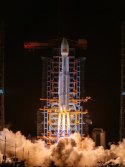
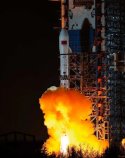
It was batch 20. Number of satellites in that batch should be 9.Yesterday saw a successful double launch, with a CZ-2D placing the SY-30 03/04 satellites into orbit and a CZ-8A launching the GW Batch 12 satellites.
View attachment 171517View attachment 171518
Not to orbit, no; A contract for part of heatshield manufacturing was awarded to Xi'an Xinyao Ceramic Composite Materials Co., Ltd a couple/few months ago which indicates it doesn't have the same readiness as Qingzhou (which isn't suprising since it's a more complicated spacecraft)Are they testing the Haolong resupply spaceplane this year?
Here's the source:Qingzhou-1 cargo spacecraft ready at Jiuquan
(This also mentions::
-Qianfan batch departed to launch site (maybe Jiuquan?)
-Xingwang batch departed to launch site (probably Wenchang, there are likely 3 xingwang launches there in April: 2 CZ-8A & CZ-10B)
-WHJSW sat passed its factory acceptance review
-Xingwang batch ready for launch
-SMILE Sino-european magnetosphere observation probe ready for launch at Kourou)
A trivia is that I think Smile is the first case of a large chinese-made satellite bus being launched on a western launcher.
For reference: Tianwen 1 entered this phase in September 2018 for a July 2020 launch () , everything seems to be on schedule so far (Flight production stage generally refers to flight model integration,actual flight model component production has already been ongoing for some time)
工程主线正在开展初样研制,计划今年转入正样研制阶段,各项工作进展顺利。
Correction, prototype development has been ongoing, the program will be building final product in 2026.
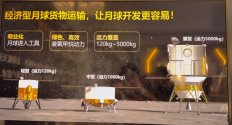
SAST unveilled a range of "Economic Lunar Cargo Transportation" lunar lander at the First Shanghai Commercial Aerospace Conference & Exhibition yesterday, with payload 120kg/1000kg/5000kg; and showed a test of the propulsion system (definitely a frugal one, since they didn't use the Hebei landing test infrastructure).
they advertise it with a lot of commercial applications but let's see, "commercial" and lunar exploration don't go well together, anyway this would be a useful complement to Chang'e and Lanyue-derived landers.
(For reference, as far as lunar exploration is concerned, SAST makes the orbital module and docking system on the Chang'e probes, as well as the service module of the Mengzhou capsule. the methalox propulsion part is likely derived from their experience on methalox launchers, also the Shanghai Institute of Space Propulsion recently tested a 300N Methalox attitude control thrusters that may be used for that: )
---
This is a good overview of recent official statements from the two sessions and 15th 5YP about the space program.
---
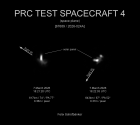
Finally some interesting observations on the current flight of the CSSHQ, when you consider what is written there (smaller length, solar panels in the middle of the spaceplane instead of on the aft) and the fact that SAST - which makes the aft service module - didn't communicate on this launch unlike the previous one, it seems likely that this 4th flight lacks a service module, which demonstrate the CSSHQ's similar flexibility to the X-37B
Commercial or private is the catch word of our time, just like AI. Everything without it is "backward, out of time". I would not bother if something is commercial so long as the work is done.they advertise it with a lot of commercial applications but let's see, "commercial" and lunar exploration don't go well together, anyway this would be a useful complement to Chang'e and Lanyue-derived landers.
SAST has no experience or competence in methalox propulsion or any proper rocket engine except maybe thrusters, the methalox engine used on CZ-12 was made by an outside company.(For reference, as far as lunar exploration is concerned, SAST makes the orbital module and docking system on the Chang'e probes, as well as the service module of the Mengzhou capsule. the methalox propulsion part is likely derived from their experience on methalox launchers, also the Shanghai Institute of Space Propulsion recently tested a 300N Methalox attitude control thrusters that may be used for that:
Within CASC, there are dedicated programs studying various options of lunar landing engines, including a 8T 10/1 staged combusion Kerosene/LOX engine by CASC 6th academy in Xi'an and Methalox 8T 10/1 by the 6th academy in Beijing. Then there is also a 3T methalox by 6th in Beijing for upper stage. The engine used by SAST proposals are very likely derived from one of the methalox engines above.

Yaogan network and Chinese satellite tech.
so this gives a pretty good idea. If they take about 2 hours to pass and a new one flies over every 10 minutes, then you essentially have continuous 24 hour coverage.A group of satellites believed to be operated by the Chinese military for intelligence purposes pass over Japan about one time every 10 minutes, it has been learned.
According to an analysis by The Yomiuri Shimbun, 10 of the satellites fly over areas around bases belonging to the Self-Defense Forces and U.S. military, taking about two hours to pass.
The Japanese government is aware of the satellites and has increased its vigilance, believing they are intended to track Japanese and U.S. activities in the event of a Taiwan contingency and other situations.
The Yomiuri Shimbun, in cooperation with space engineering experts and private companies, analyzed the movements of the Chinese Yaogan satellites using public data from Space-Track.org, a U.S. Space Force website.
China has been launching the satellites since 2006. They are believed to include optical satellites and signals intelligence satellites, with the majority operating in low-Earth orbit.
A U.S. congressional report noted that a Yaogan satellite located in geostationary orbit about 36,000 kilometers away may be capable of tracking objects the size of a car.
Of the about 160 Yaogan satellites confirmed as of December 2025, the analysis concluded that around 80 were active, as they appeared to have adjusted their altitudes over the past three years.
A computer-generated 3D simulation of the 80 satellites’ movements showed that they primarily operated between 35 degrees north latitude and 35 degrees south latitude, which includes areas over Japan and Taiwan.


A science popularization video about the competition between China and the United States in the moon landing. Mainly in Chinese with English subtitles.
It's definitely worth watching. Once you see it, you'll understand just how ridiculous Starship HLS is.
A science popularization video about the competition between China and the United States in the moon landing. Mainly in Chinese with English subtitles.
It's definitely worth watching. Once you see it, you'll understand just how ridiculous Starship HLS is.
Starship's value proposition is in its ability to launch Starlink V3. It's pretty clear Elon's sole focus right now is to debut, not rapid reuse or refueling, but a successful launch and deployment of V3s in orbit prior to the IPO. Many years down the line, NASA and other customers may take advantage of its upmass to LEO for orbital assembly approach to deep space exploration but they are many iterations away from being able to integrate any sort of meaningful capability. 20 tanker flights for one mission is ludicruous.