China's Space Program Thread II

taxiya

Brigadier
Registered Member
So apparently CZ-10C is fully methane? Hopefully this one doesn't have a joke of a payload capacity for its size and mass.

AFAIK possibly arrangement for first stage could be 9x140t with a stretched tank and the same or improved second stage from CZ-10B.
Where do you get that information? This 2023 slide shows 5m full methane LEO rocket having 12 80t methane engines (YF-209). It's payload is just 15t over CZ-10A's 14t. So far I haven't heard existance of a 140t methane engi.

The LEO payload figure is fluid because the rocket is under development. But something to consider is that due to its higher specific impulse measured by mass in its 1st stage CZ-10B should have higher payload than a methane 1st staged CZ-10C IF everything else is equal.

The CZ-10C should be considered a totally new rocket since it only shares toolings for 5m tank with CZ-10, nothing else. Therefor it is too early to do any estimation.
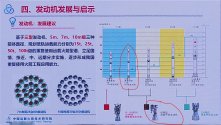
2023 发动机发展与启示.jpg
The whole CZ-10C situation has been confusing for over a year, I'm not excluding that there are actually a CZ-10C and a CZ-10D.µ
This is the only source of CZ-10C's existence that I am aware of. Note it may not matter but the logo says China Aerospace which isn't specific to any CASC units.

屏幕截图 2026-03-03 191726.jpg
 

Tomboy

Captain
Registered Member
Where do you get that information? This 2023 slide shows 5m full methane LEO rocket having 12 80t methane engines (YF-209). It's payload is just 15t over CZ-10A's 14t. So far I haven't heard existance of a 140t methane engi.

The LEO payload figure is fluid because the rocket is under development. But something to consider is that due to its higher specific impulse measured by mass in its 1st stage CZ-10B should have higher payload than a methane 1st staged CZ-10C IF everything else is equal.

The CZ-10C should be considered a totally new rocket since it only shares toolings for 5m tank with CZ-10, nothing else. Therefor it is too early to do any estimation.

View attachment 170643
I doubt it, 15t is hilariously low and even worse than CZ-10B which is already terrible. Given CZ-10B uses 140t engines for its upper stage it is most likely going to use sea level optimised version of the same engine, CZ-10's first stage was already pretty underpowered for what it is, it'll be a baffling choice not to fix it when they have the chance of doing a complete redesign.

I suppose we'll just have to see but if it indeed just turns out to be whatever this is then it is a hell of a disappointment
 

taxiya

Brigadier
Registered Member
I doubt it, 15t is hilariously low and even worse than CZ-10B which is already terrible.
CZ-10B may seem "hilariously low" to you but that is due to the fact that CZ-10B is derived from CZ-10A from CZ-10. Their propotion of stages and redundancy are optimized for going to the moon, not LEO. It is apple and orange.

Given CZ-10B uses 140t engines for its upper stage it is most likely going to use sea level optimised version of the same engine,
What engine is it? The 80t engine is the only known CASC open cycle methane engine, 80t is sea level thrust. I doubt tts vacum thrust can reach 140t. Also remember, you only get lower thrust at sea level than in a vacum.

CZ-10's first stage was already pretty underpowered for what it is, it'll be a baffling choice not to fix it when they have the chance of doing a complete redesign.
That is very wrong. CZ-10 is to launch human and human does not enjoy high g-force (= high thrust). NASA found out the same thing when studying their Ares/SLS variants.

I suppose we'll just have to see but if it indeed just turns out to be whatever this is then it is a hell of a disappointment
If CZ-10C is a clean sheet design which I believe so, it should have a much better figure compared to CZ-10B.
 

Tomboy

Captain
Registered Member
What engine is it? The 80t engine is the only known CASC open cycle methane engine, 80t is sea level thrust. I doubt tts vacum thrust can reach 140t. Also remember, you only get lower thrust at sea level than in a vacum.
Please, Log in or Register to view URLs content!

140t class open cycle methane engine tested last year

Also given that they'd likely to completely redesign the first stage due to adapting to new engines using new fuel, I feel like it's a no brainer to completely adapt to a LEO mission with maximum payload per launch while increasing launch rate from being methane fueled.
 

TheRathalos

Junior Member
Registered Member
Seems like there's been a fleetwide stand-down of the Long March 2-3-4 series of rockets, I'm guessing because of the launch anomaly earlier in the year? Are there any indications/rumours flying around about when they might be returning to launching?
The launch failure was due to CZ-3B's Hydrogen-Oxygen upper stage, directly shared with CZ-3C and CZ-7A; and with some common technologies with CZ-5 and 8A; this didn't ground Long March 2 and 4 series since CZ-2C and CZ-2F launched in the weeks after the failure, it caused the delay of 3B, 7A and 8A launches planned for late Jan/early Feb. According to current local touristic agencies information (not yet corroborated by NOTAM), a CZ-8A launch is planned on March 13th, and a Xichang launch (which could be any of 2-3-4 series) is planned around March 12th, no CZ-7A launch is planned in the near future because of the Tianzhou-10 launch on CZ-7 in early April having priority.
This is the only source of CZ-10C's existence that I am aware of. Note it may not matter but the logo says China Aerospace which isn't specific to any CASC units.

View attachment 170647

This conference was on December 22nd by , Guan Song, General Manager of Chinarocket (Commercial subsidiary of CALT) at the Wenchang International Aviation and Aerospace Forum 2025

It is indeed the only time CZ-10C was specifically named, however we've known for some time that CALT/Chinarocket has been working on a new 5m diameter reusable launcher that is significantly different from the CZ-10A.

I've listed some of the various announcements and sources about such launchers over the past year, both by CASC themselves and journalistic reporting there:

Please, Log in or Register to view URLs content!

I'll let you judge by yourself, IMO some of the informations are contradictory, and I trust more informations that come directly from CASC.

Also, side note, beside the YF-209 (80tf) and the new 140tf one, there also was the 60tf Open cycle methalox engine that was first test fired in 2016 and powered the reusable suborbital spaceplane during its two flights in 2021-2022 (I think that technically, this was the world's first methalox rocket to reach space, before Landspace's Zhuque-2, but we'll likely never get official confirmation because of the highly secretive nature of the program)
 

taxiya

Brigadier
Registered Member
Please, Log in or Register to view URLs content!

140t class open cycle methane engine tested last year

Also given that they'd likely to completely redesign the first stage due to adapting to new engines using new fuel, I feel like it's a no brainer to completely adapt to a LEO mission with maximum payload per launch while increasing launch rate from being methane fueled.
I am quite shocked that I missed this news.
 

TheRathalos

Junior Member
Registered Member
Diving a bit into it, seems legit
Please, Log in or Register to view URLs content!

1772594744284.png

Apparently ATMHUFK says that it doesn't use YF-209
So that leaves as options

-Open Cycle 140tf engine, with 9 of them it would have 40% higher thrust than CZ-10B, It should be able to reach at least 20t to LEO in partially reusable mode

-*supposedly* the CZ-10B uses a new closed cycle Methalox engine on its second stage (people noticed the low res picture of the static fire presented in December make it look like a staged combustion engine), IF this is true, this engine should be about the same thrust level as the YF-100M it replaces (so also ~140tf), as a staged combustion engine the performances would be higher, perhaps comparable to the American Terran R or even the intial version of New Glenn, (23-25t?)

-Out there option: The FFSC YF-215 engine, we know (from the presentation up above on the page) that CALT was looking at using a ⌀7m RLV as some kind of verification for the YF-215 before its application on CZ-9; but so far there hasn't been any hint of infrastructure/tooling work on such ⌀7m RLV, while there has been for the CZ-9. Maybe it's possible they instead decided to test it on a CZ-10-series launcher, in theory they should be able to fit 7 of them in such a LV, giving it >50% higher thrust compared to CZ-10B, with significantly higher isp... However that would mean that such launcher is probably a few years away from launch.

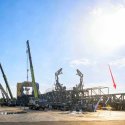
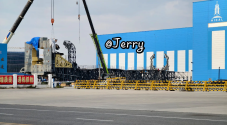
Anyway, talking about CZ-10B its Transporter-Erector has been moved to Hainan International Commercial Space Launch CenterHCeeK8sbkAAg_5_.jpg0fbef49a4d02d9427ecec086677fbbd73493280905955413.png
 

taxiya

Brigadier
Registered Member
Are there any more technical details about this news? Which satellite was involved, etc.
Please, Log in or Register to view URLs content!

This link does not provide much more details except that the ground station being 1.8m aperture in Yunnan and the statellite was GSO. The tech is ready for operational application.

It listed the applications as GSO being router/switch/hub while low orbit sats being data gatherers. One can imagine that images/videos taken by SSO sat from one side of earth can be transferred to ground station on the other side of earth in real time. The other application is 6G sat to phone where data from low orbit sat being routed/relayed by GSO hubs to anywhere avoiding the need of ground stations in unavailable area. The third application is high speed communication to moon or mars.
 
Top