Elon Musk is quoted saying that a starship will fly once every hour in 4 years.
It took like 10 years for Falcon 9 to ramp up to 1 launch every 2 weeks.

Elon Musk is quoted saying that a starship will fly once every hour in 4 years.

it's a waste of time to post this crap that he says. Honestly, it frankly hurts my intelligence level to have to deal with every lie that he says in the media.But Musk has done enough feats which earlier scoffed at and dismissed off hand, for him to be taken seriously. Even if he undershoots by 24x, it is still 1 launch of starship a day (which is very easily feasible), implying over 36,500 tonnes of mass to orbit.
What if this is used to place say 35,000 tonnes of stainless steel rods (that are able to survive reentry, and have a terminal speed of 10 Mach) in orbit?

Which vessel was this launch carried out from — Dongfang Hangtiangang, or, as they say, from the DeFu barge?Well, that launch occurred not too long ago, carrying the IOT satellite series Tianqi-1 37, 38, 39 and 40, from Haiyang. Pictures are quite nice, and I believe this completes the first phase of the series so far, they are looking to launch hundreds more in the near future and then thousands more eventually down the line, it is China's first LEO IOT constellation.
This was the fourth launch in China in 2026.
Next flight will be a CZ-3B from Xichang in about 14-16 hours.

Rust is oxidization of Fe with Oxygen and water. It's literally in the formula. But it takes time, several million times more than the few minutes for something to fall from space.Well, during re-entry, there is oxygen and water, along with high temperatures.
But for one-time use, I guess it doesn't matter?
Rust is oxidization of Fe with Oxygen and water. It's literally in the formula. But it takes time, several million times more than the few minutes for something to fall from space.
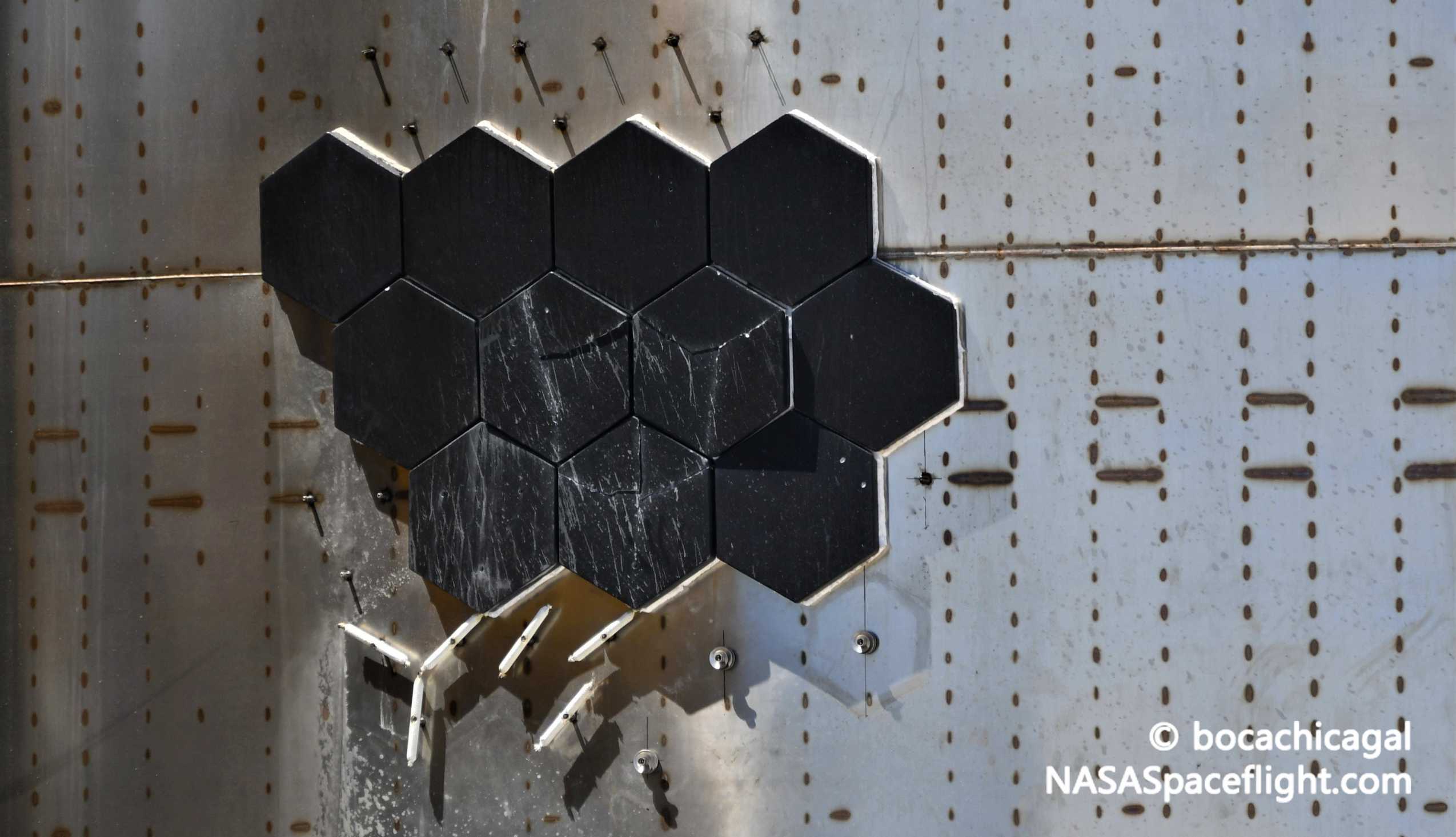
If you spend just a minute in studying you should know that starship 2nd stage relies on ceremic heat tiles, the stainless steel skin inside does NOT do the job that you think.How is spacex using stainless steel for its booster and second stage re-entry then? Apparently, the temperature doesn't rise to that much due to reflection and radiative heat dissipation from stainless steel.


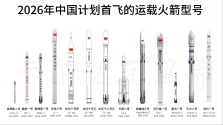
It's better than nothing assuming it actually works, though there is still a massive gap with SpaceX and will likely take years until they could increase recovery payload to similar levels (CZ-12B is heavier than F9 FT B5). As far as I've heard the main limit with these rockets are the engines, YF-102s apparently aren't very good.CZ-12B has excellent LEO capacity. Rocket has successfully completed its static firing test.
CZ-12 : LEO 12 tons.
CZ-12A : LEO 9 tons or 6 tons (recovery).
CZ-12B : LEO 20 tons or 12 tons (recovery).

It's better than nothing assuming it actually works, though there is still a massive gap with SpaceX and will likely take years until they could increase recovery payload to similar levels (CZ-12B is heavier than F9 FT B5). As far as I've heard the main limit with these rockets are the engines, YF-102s apparently aren't very good.
I suspect there is rapid transfer of engine know how across both private and state programs. Falcon 9 is 3.66 m in diameter and about 70 m tall, whereas this vehicle is roughly 4.37 m wide and 72 m tall. From dimensions alone, and given the stated propellant choice, it is hard to see how a “classical” YF-102R level engine could loft it. If the liftoff mass is above ~700 tonnes, the vehicle likely needs more than ~1,000 tonnes of liftoff thrust to keep T/W comfortably above 1.3. That implies a per-engine sea level thrust on the order of ~110 tonnes for a nine-engine first stage, which points toward a newer engine class rather than an older, lower-thrust design. One possibility is that they are using a non-derated variant of an engine comparable to Space Pioneer’s TH-12 class, or a similar engine family benefitting from shared design and manufacturing practices. Deep Blue Aerospace’s “Thunder” RS family is also reported in the ~130-tonne sea-level thrust range, which would be consistent with the thrust budget.It's better than nothing assuming it actually works, though there is still a massive gap with SpaceX and will likely take years until they could increase recovery payload to similar levels (CZ-12B is heavier than F9 FT B5). As far as I've heard the main limit with these rockets are the engines, YF-102s apparently aren't very good.