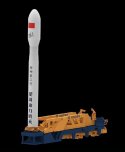
The extremely quick development cycles we've seen recently with Zhuque and CZ-12B, is giving confidence in the entire astronautics industry, its skill and technological base and supply chain. SpaceX has built an amazing Falcon machine over 20 years, and their work on the Starship program is the mightiest since Apollo, but what has been built and invested in the Chinese space industry over 20 years has the potential to be far more adaptive and ultimately useful.
Anyway has anyone heard about the CZ-3B launch, I know it's eep time but things are very silent.
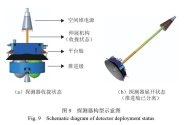
Interesting article on the newest incarnation of the Heliopause Probe/Shensuo/Interstellar Express, which seems to have gained renewed support following the . Wu weiren*'s article, the highlight of the latest issue of the Journal of Deep Space Exploration, can be read here ; it would still involve two probes going in opposite front and tail directions of the Heliosphere, and if launched in early 2030s toward a Jupiter Gravity assist, expeccted to reach the Heliopause in the 2050s.
Note the use of 2 nuclear reactors (very conservative ones, 500kg for 1 kWe, the soviet were more ambitious) and the rejection of RTGs, which has been one of the most interesting and audacious aspect of the chinese exploration program these past handful of years.
If these are approved, then China will be sending no fewer than 4 probes toward jupiter in the early 2030s!
*(chief designer of the Chang'e Program, head of DSEL),
Anyway has anyone heard about the CZ-3B launch, I know it's eep time but things are very silent.
Interesting article on the newest incarnation of the Heliopause Probe/Shensuo/Interstellar Express, which seems to have gained renewed support following the . Wu weiren*'s article, the highlight of the latest issue of the Journal of Deep Space Exploration, can be read here ; it would still involve two probes going in opposite front and tail directions of the Heliosphere, and if launched in early 2030s toward a Jupiter Gravity assist, expeccted to reach the Heliopause in the 2050s.
Note the use of 2 nuclear reactors (very conservative ones, 500kg for 1 kWe, the soviet were more ambitious) and the rejection of RTGs, which has been one of the most interesting and audacious aspect of the chinese exploration program these past handful of years.
If these are approved, then China will be sending no fewer than 4 probes toward jupiter in the early 2030s!
*(chief designer of the Chang'e Program, head of DSEL),