China's Space Program Thread II

TheRathalos

New Member
Registered Member
The extremely quick development cycles we've seen recently with Zhuque and CZ-12B, is giving confidence in the entire astronautics industry, its skill and technological base and supply chain. SpaceX has built an amazing Falcon machine over 20 years, and their work on the Starship program is the mightiest since Apollo, but what has been built and invested in the Chinese space industry over 20 years has the potential to be far more adaptive and ultimately useful.

Anyway has anyone heard about the CZ-3B launch, I know it's eep time but things are very silent.

Please, Log in or Register to view URLs content!
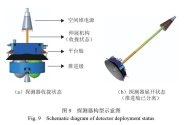
Interesting article on the newest incarnation of the Heliopause Probe/Shensuo/Interstellar Express, which seems to have gained renewed support following the
Please, Log in or Register to view URLs content!
. Wu weiren*'s article, the highlight of the latest issue of the Journal of Deep Space Exploration, can be read here
Please, Log in or Register to view URLs content!
; it would still involve two probes going in opposite front and tail directions of the Heliosphere, and if launched in early 2030s toward a Jupiter Gravity assist, expeccted to reach the Heliopause in the 2050s.
Note the use of 2 nuclear reactors (very conservative ones, 500kg for 1 kWe, the soviet were more ambitious) and the rejection of RTGs, which has been one of the most interesting and audacious aspect of the chinese exploration program these past handful of years.
If these are approved, then China will be sending no fewer than 4 probes toward jupiter in the early 2030s!
bafkreig7lagadpqidszms6klx5jbd76bes3cclgogl3b4kkeszcgvlu34i.jpg


*(chief designer of the Chang'e Program, head of DSEL),
 

TheRathalos

New Member
Registered Member
I suspect there is rapid transfer of engine know how across both private and state programs. Falcon 9 is 3.66 m in diameter and about 70 m tall, whereas this vehicle is roughly 4.37 m wide and 72 m tall. From dimensions alone, and given the stated propellant choice, it is hard to see how a “classical” YF-102R level engine could loft it. If the liftoff mass is above ~700 tonnes, the vehicle likely needs more than ~1,000 tonnes of liftoff thrust to keep T/W comfortably above 1.3. That implies a per-engine sea level thrust on the order of ~110 tonnes for a nine-engine first stage, which points toward a newer engine class rather than an older, lower-thrust design. One possibility is that they are using a non-derated variant of an engine comparable to Space Pioneer’s TH-12 class, or a similar engine family benefitting from shared design and manufacturing practices. Deep Blue Aerospace’s “Thunder” RS family is also reported in the ~130-tonne sea-level thrust range, which would be consistent with the thrust budget.

Even if thrust is sufficient, the payload fraction still appears worse than Falcon 9. That could be explained by structural and propulsion mass penalties, for example a lack of a common bulkhead, heavier engine hardware, and more conservative structural margins or alloys that increase dry mass. If the stage dry mass is high, extra thrust does not translate cleanly into payload.

I still think there is a plausible path to ~20 tonnes to LEO in an reusable mode, mainly by pushing mass fraction and trajectory rather than raw thrust. A larger diameter does help aerodynamically during recovery, since higher frontal area can increase aero-drag and reduce peak heating and propellant needed for deceleration in landing. Just the hooks from CZ 10B and the common bulkhead in both stages would reduce the structural mass significantly from this version.
It's probably at least using the "90-tons reusable kerosene-oxygen engine" that was developped last year:
Please, Log in or Register to view URLs content!
* , it's only a slight 6% uprating over base YF-102R but that may be enough to lift the launcher at 1.15-1.2 TWR, which is enough for initial flights (it's not just the chinese who have engine problems, remember the first New Glenn had a staggeringly low 1.07 TWR at liftoff!)


*On December 8, 2024, the first 90-ton-class reusable liquid oxygen-kerosene engine was successfully ignited, marking a new breakthrough in my country's commercial aerospace industry in reusable launch vehicle engine technology. The entire process, from the start of research and development to the successful test of the engine, was completed in just six months.
 

madhusudan.tim

New Member
Registered Member
It's probably at least using the "90-tons reusable kerosene-oxygen engine" that was developped last year:
Please, Log in or Register to view URLs content!
* , it's only a slight 6% uprating over base YF-102R but that may be enough to lift the launcher at 1.15-1.2 TWR, which is enough for initial flights (it's not just the chinese who have engine problems, remember the first New Glenn had a staggeringly low 1.07 TWR at liftoff!)
Tianlong 3 which has similar height but is only 3.8 m in diameter has around 90 tonnes per engine. I wonder why they wouldn’t go for shorter version to optimize for the engine if it is only around 90 tonnes like the ZQ3.
 

ZachL111

Junior Member
Registered Member
Which vessel was this launch carried out from — Dongfang Hangtiangang, or, as they say, from the DeFu barge?
It was the DeFu barge, they specially modified it to be able to launch.

Also for everyone wondering, the Long March 3B was confirmed to have launched, payload is believed to be the Tianlian 2-06 satellite from what I am getting, this was supposed to launch in December of last year, and again I want to stress that this is according to information I have that is rumored so I do not want to act like this is the payload 100 percent.

Another source told me this could be Communication Test Satellite No. 24 but I am not too sure.

This was the fifth launch from China in 2026, next launch should be in two hours or so.
 

ZachL111

Junior Member
Registered Member
It was the DeFu barge, they specially modified it to be able to launch.

Also for everyone wondering, the Long March 3B was confirmed to have launched, payload is believed to be the Tianlian 2-06 satellite from what I am getting, this was supposed to launch in December of last year, and again I want to stress that this is according to information I have that is rumored so I do not want to act like this is the payload 100 percent.

Another source told me this could be Communication Test Satellite No. 24 but I am not too sure.

This was the fifth launch from China in 2026, next launch should be in two hours or so.
Delete both of these if possible, holy cr*p was I wrong.

I sincerely apologize for this post and will try to get more accurate information in the future.

Launch failure and payload was completely different.
 

gpt

Junior Member
Registered Member
The CZ-3B third stage has been the main point of failure in almost all of the rocket's recent anomalies.

Shijian 32 (Jan 16, 2026)

Indonesia's Nusantara-2 (April 2020): third-stage failed to ignite.

Zhongxin-9A (June 2017): launch failure; third stage shut down early during GTO, but using maneuvers the satellite still reached GEO with a shortened lifespan.

Maybe they'll standardize around the YF-75DA/B on the CZ-8A which uses a more advanced and reliable closed expander cycle after this?
 
Top