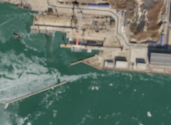
This original discussion was about the proportion of construction slots allocated to SSN constriction, per #4375 with my contention being they likely have up to 12-14 slots active for SSN production at present.
If you agree with that then I have nothing else to really add.
I think it is more like 6-8 slots in active use, so about half of that estimate.
I just don't see Type-093B assembly taking 24-36 months.
And even if Type-093B assembly times are 24 months, that implies only 6 slots used. Add 2 Type-095 and an SSBN, and it still only comes to 10 slots out of the 12 slots in the 1st Assembly Hall. So what about the 2nd Assembly Hall with another 8 slots which has presumably been sitting empty since 2021.
--
In the past 5 years, Virginia SSN assembly times have jumped to an average of 34 months.
I think this is due to the effects of COVID, personel retirements and also the Columbia-class being a higher priority which sucks up all the available resources.
In the prior 12 year period (from 2008-2020), there were 14 boats built with an average assembly time of 18 months. But at the beginning of this period, assembly times were less than
10 months.
At the time, the key driver was to get the costs down and US nuclear submarine construction was funded at a minimal level of 1 submarine per year. And you can reduce costs by extending construction times.
Given that 2 shipyards (Groton and NN) alternated assembly, that meant each shipyard only assembled a new submarine every 24 months. So there was no rush to assembly submarines quickly and get them launched.
So during this 12 year period, we can see that the US nuclear submarine chain was being run down.
(Note this run down began before, from 1990-2020.)
---
Now, data on Chinese submarine construction is much less available.
But it does look like that in the 2008-2020 period, the Chinese supply chain was building the equivalent of 1 SSN per year, when you look at the Type-093 and Type-094 combined.
So in the 2008-2020 period, we have both the Chinese and American supply chains at 1 SSN-equivalent per year.
But the American supply chain is running down, and the Chinese supply chain is ramping up.
By 2020, the Type-093 is a mature platform, and we see the first Type-093B variant emerge after 24-36? months.
It is the first ship from a new construction hall and it is a new, larger variant, so we can expect it would take longer to assemble than subsequent boats.
---
So an average 36 month estimate of assembly times for the overall Type-093B programme just doesn't look correct.
Even a 24 month assembly time, means an assumption that the Chinese supply chain for building an established SSN design is significantly worse than the US supply chain. But that assumption flies in the face of:
1. Brand-new, modern production facilities at Bohai, compared to the old facilities in the US
2. A separate building for painting and/or anechoic tile outfitting, which means this task doesn't have to happen in the assembly hall, unlike in the US
3. That the Type-093B should be an easier boat to build, given its smaller size
4. The Virginia is at 1.2 boats per year, with an 18month average assembly time, split across two assembly sites. This means that for two-thirds of the 2010-2020 period, Groton wasn't actively assembling any submarines. The same applies to the Newport News site. You can see how shipbuilding skills atrophy, there are wait times to get resources and there is was urgency to quickly assemble submarines.
5. The increased scale of production of the Type-093B, which is running at 2.5x greater than the Virginia rate Plus this is all concentrated in a single building, not across 2 locations.
6. Adjacent industries such as civilian nuclear reactors, surface warship construction and heavy industry in general. In all these cases, we can see Chinese capability when we're talking about scaling up and producing established designs.
---
But let's go with a 24 month assembly time, which means an average of 6 Type-093B (occupying 6 slots) are in various stages of module assembly at any time. This would compare to Groton/NN having an average of 0.33 SSNs to assemble at any time, so Bohai would have
18x more submarines under simultaneous assembly at a single site .
If a shipyard is assembling at a scale which is 18x greater, you simultaneously benefit from:
1. Specialist resources being available quicker, so there's no waiting around like in Groton/NN with its 18 month assembly times. And costs go down, because those specialist resources have a higher utilisation rate.
2. And because they are repeating tasks at a faster rate, they get better at this faster, it's cheaper, and it's worthwhile to automate/specialise. You end up with a virtuous cycle regarding cost and time. So why should the Type-093B remain at 24 or even 18 months?
Therefore my guess is that assembly times for the Type-093B should be around 12 months. That would mean 3 slots occupied which still represents 9x more submarines under simultaneous assembly than at Groton/NN.
In the absence of information (and with no contrary information), this is my best guess as to what has already happened, or will soon happen with the subsequent batch of Type-093B.
Given China's known industrial capabilities, I think the default assumption should be that China can match and exceed any pre-existing achievement that has already occurred. Or at least, will soon do so.