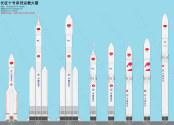
China's Space Program Thread II

TheRathalos

Junior Member
Registered Member
Finally data on the CZ-10C!
Liftoff mass: 940t
Liftoff thrust: 1260tf
Height with standard fairing is 91m, the same as CZ-10.
Engines seems to be as predicted before as 9xYF-219, hence the design is now fully methane fueled.
It says Kerozene/oxygen (presumably on the 1st stage) which in theory would rule out 9xYF-219
We know of CASC AALPT advertising 14xYF-102R in a 5m launcher, which would also be ~1260tf thrust, so that's a possibility.
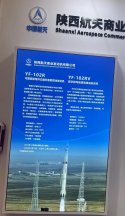
AALPTYF102R.jpg

However the mass and height are suspicious, this is 20m taller than CZ-10B with the 18m fairing, you'd expect the lift off mass to be above 1100t, even if the upper stage was changed to a cheaper separate bulkhead design.

But if the 1st stage holds lower density Methane-Oxygen mix, that would much more plausibly explain that lower mass despite the additional weight.
So probably there's a mistake there, latest rumors and document indicated more a full-methalox design so I guess the text is wrong instead of the numbers. As for other rumors, this may fly in the 2nd half of 2027, capability at least 20t to LEO reusable, probably comparable to the similarly-sized Relativity space terran r (23.5t)

Please, Log in or Register to view URLs content!
by @水分子不飞不改名
c5ecb66eb607197df9a3c274cb25c9c5698149041.png
 
Last edited:

Tomboy

Captain
Registered Member
As for other rumors, this may fly in the 2nd half of 2027, capability at least 20t to LEO reusable, probably comparable to the similarly-sized Relativity space terran r (23.5t)

Please, Log in or Register to view URLs content!
by @水分子不飞不改名
View attachment 177098
I heard some rumors about ~25t reusable and up to 30+ tons expendable which does seem reasonable given the payload to mass percentage for these respectively. Anyhow CZ-10C could likely provide a good stopgap before the 7m, 50t reusable class LV in the late 2020s and the 100t fully reusable class CZ-9B in the early 2030s.
 

Chaos314159

New Member
Registered Member
I heard some rumors about ~25t reusable and up to 30+ tons expendable which does seem reasonable given the payload to mass percentage for these respectively. Anyhow CZ-10C could likely provide a good stopgap before the 7m, 50t reusable class LV in the late 2020s and the 100t fully reusable class CZ-9B in the early 2030s.
~25t of reusable payload capacity will only occur under optimistic conditions of overall rocket dry mass ratio. And I have my doubts about that.
Please, Log in or Register to view URLs content!
 

Tomboy

Captain
Registered Member
~25t of reusable payload capacity will only occur under optimistic conditions of overall rocket dry mass ratio. And I have my doubts about that.
Please, Log in or Register to view URLs content!
23t should really be the minimum, even Terran R is able to do 23.5t with a similar configuration. ZQ-3A with a heavy steel hull and much smaller takeoff mass is said to be able to do 18t reusable.

Given that they should have quite a bit of experience with CZ-10B and A, I expect them to be able to optimise the dry mass of the upcoming CZ-10C by a significant degree to the point of being globally competitive with Falcon 9 like dry mass ratio.
 

Chaos314159

New Member
Registered Member
23t should really be the minimum, even Terran R is able to do 23.5t with a similar configuration. ZQ-3A with a heavy steel hull and much smaller takeoff mass is said to be able to do 18t reusable.

Given that they should have quite a bit of experience with CZ-10B and A, I expect them to be able to optimise the dry mass of the upcoming CZ-10C by a significant degree to the point of being globally competitive with Falcon 9 like dry mass ratio.
This is CALT. As far as I know, they are extremely conservative in rocket design. None of the Long March series cryogenic/semi-cryogenic rockets currently in service designed by them have a dry mass ratio exceeding 15, not even 14 (even the second stage of the LM-10B is calculated to be at most a little over 13). For them to achieve a dry mass ratio of over 15 for cryogenic/semi-cryogenic rockets is already a miracle, I have to say.
 
Last edited:

Tomboy

Captain
Registered Member
This is CALT. As far as I know, they are extremely conservative in rocket design. None of the Long March series cryogenic/semi-cryogenic rockets currently in service designed by them have a dry mass ratio exceeding 15, not even 14 (even the second stage of the LM-10B is calculated to be at most a little over 13). For them to achieve a dry mass ratio of over 15 for cryogenic/semi-cryogenic rockets is already a miracle, I have to say.
Really depends, we've all been hearing extremely high things about the Chinese space sector here. Depending on who you ask here, China is either already "far ahead" of the US or is "guaranteed" to catchup in the very near future. Hence having a very high expectation should really be the norm these days.

Anyways for more grounded discussion on the otherhand, IMO for the sake of completing any of the megaconstellation goals within alotted time, budget and having a chance to compete with the US in LEO infrastructure within a timely manor, China needs to start having some real world leading LVs operational fast and not the current very low payload, overweight, extra fat and non reusable rockets.
 
Top