12-inch SiC Inspection Equipment Successfully Delivered
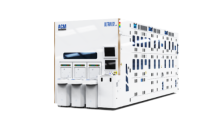
Recently, Onkun Semiconductor Co., Ltd., a domestic Chinese semiconductor testing equipment manufacturer, announced the successful delivery of China's first independently developed 12-inch silicon carbide (SiC) wafer defect inspection system, model E3500 G4XP. This milestone represents a major breakthrough for China's semiconductor industry, particularly in the field of ultra-large-size third-generation semiconductor manufacturing. The equipment shipment provides crucial support for the industry's transition toward larger wafer sizes and scaled production capabilities.
The growing demand for silicon carbide substrates is being driven by rapid expansion in applications such as new energy vehicles, AI data centers, photovoltaic energy storage, and smart grids. Within this context, 12-inch SiC substrates have emerged as a strategic focus for reducing production costs and increasing manufacturing capacity globally. However, producing these larger wafers presents significantly greater technical challenges compared to the current mainstream 6-inch and 8-inch products. The complexity of crystal growth, cutting, polishing, and epitaxial fabrication makes large-size substrates more prone to defects such as microtubes, dislocations, cracks, and stacking faults—all of which directly impact device yield and long-term reliability.
To address these challenges, high-precision defect detection equipment has become essential for ensuring wafer quality and process stability. Historically, China has lacked mature domestic solutions in this specialized field, creating a bottleneck for the mass production of 12-inch SiC wafers. The newly delivered E3500 G4XP system was specifically engineered to meet the inspection demands of 12-inch SiC wafers. It integrates multiple advanced technologies, including bright-field differential interferometry, laser dark-field scattering, and laser PL fluorescence detection, enabling comprehensive identification of diverse defect types. The equipment incorporates technical features comparable to mainstream international inspection systems and is capable of detecting multiple critical defects in ultra-large-size SiC wafers, thereby enhancing the consistency and reliability of both substrate and epitaxial products.
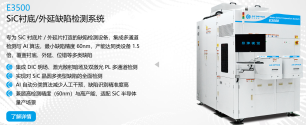
In terms of operational intelligence, the system supports multi-task parallel processing and rapid analysis of massive datasets, with capabilities for automatic identification and classification of typical defects such as triangles, micropipes, scratches, and particles. Additionally, the equipment features an intelligent operating interface designed to lower the technical threshold for operators, improve overall inspection efficiency, and better accommodate batch production needs in complex manufacturing environments.
Industry experts view this delivery as having significant implications for China's semiconductor ecosystem. First, it is expected to help domestic SiC manufacturers overcome quality control challenges during production scale-up, accelerating the industrialization and cost reduction of 12-inch substrates. Second, it provides Chinese wafer fabs with a more cost-effective, locally sourced testing solution, reducing both procurement and maintenance expenses while fostering coordinated development across the supply chain. Most importantly, this achievement signals China's gradual reduction of reliance on imported high-end SiC testing equipment. As global competition intensifies in the third-generation semiconductor sector, self-sufficiency in core process equipment like defect inspection systems is becoming increasingly strategic. Looking ahead, as the 12-inch SiC industry continues to mature, the market for related inspection equipment is poised for substantial growth.