Chinese semiconductor thread II

sunnymaxi

Colonel
Registered Member
no specific date or year regarding self-sufficiency in Ai chips.. but most likely by 2027.

there is massive 7nm capacity coming online next year. all blacklisted companies like Cambricon/Moore Thread are going for IPO. Huawei will mass produce 910C.

one example.

Cambricon was struggling with sanctions.. look at now ''Cambricon achieved operating income of 1.727 billion yuan in the third quarter, a year-on-year increase of 1332.52%''
 

bsdnf

Senior Member
Registered Member
My understanding on H200 is that it's just another H20, a regular tug-of-war in the US-China tech war

One side hopes controlled dumping will hinder the development of the domestic AI and chip industry again. Promising AI labs like DeepSeek are unlikely to receive US approval for procurement, while large corporations with deep pockets but weak AI capabilities like Baidu are welcomed.

While the other hopes H200 can act as a catalyst again, alleviating computing power shortages through controlled sales while keeping the domestic chip industry less complacent under protectionist policies, buying time in the hopes of another "BYD".
 
Last edited:

Hyper

Junior Member
Registered Member
Please, Log in or Register to view URLs content!

Chinese chipmaker Hygon calls off merger with top shareholder​

Shares fall as companies blame 'market environment' for change of plan

SHANGHAI -- Chinese chipmaker Hygon Information Technology is abandoning its plans to merge with its top shareholder and server maker Dawning Information Industry, known as Sugon.

The merger, initially
Please, Log in or Register to view URLs content!
, involved Hygon absorbing Sugon through a share swap. While Sugon owns about 28% of Hygon's shares, Hygon's market capitalization is much larger than Sugon's, which is backed by the Chinese Academy of Sciences. A combination would have marked one of the biggest M&A deals in China's chip sector this year.

"Since the commencement of this transaction, the company and relevant parties have actively advanced various aspects of the transaction," Hygon said in an announcement late on Tuesday. "However, because the transaction is large in scale and involves many related parties, the demonstration and evaluation of the major asset restructuring plan has taken an extended period of time."

"Currently, the market environment has changed significantly since the initial planning of this transaction, and the conditions for implementing this major asset restructuring are not yet mature," the company added.

Shares of Hygon opened 3.3% lower on Wednesday morning. Sugon fell by the daily limit of 10%.

China is racing to develop a homegrown semiconductor supply chain and reduce its dependence on U.S. technologies. Consolidation remains a key challenge for the sector as companies struggle with scale and profitability due to intense competition at home.

There were 3,901 chip design firms in China this year, according to local media reports. Wei Shaojun, vice chairman of the Chinese Semiconductor Industry Association, reportedly said at a conference last month that the key to solving "involution," a term that refers to excessive competition, is to let market forces drive consolidation.

"We should recognize that the main reason for [involution's] persistence lies within ourselves," Wei was quoted as saying.

Hygon makes central processing units (CPUs) used in servers, competing with the likes of Huawei Technologies in China. Sugon makes servers and related equipment. The merger would have combined the two companies' financial resources and talent, potentially helping them speed up research and development.

Why do they avoid consolidating. Same with some carmakers. They won't survive in the long run. How are they supposed to compete with something like Alibaba Arm servers. If they don't consolidate, they will decline.
 

tokenanalyst

Lieutenant General
Registered Member

Chipdonglai Semiconductor: Opening a New Chapter in Equipment Localization with New Lithography Power​

Chipdonglai Semiconductor has launched a major milestone in China’s semiconductor lithography equipment localization by successfully commercializing its domestically produced i-line lithography machines. As part of its mission to achieve full domestic production of lithography equipment, the company founded in 2023 with top-tier R&D talent from global leaders has built an integrated ecosystem across R&D (Beijing, Shanghai), manufacturing (Shanghai), and sales/service (Wuhan, Xiamen).

Its i-line lithography equipment has been adopted by a leading global MEMS chip foundry in 2025, offering superior performance 10%–30% better resolution, precision, and throughput while reducing costs by 20% and cutting delivery time from 20 months to just 6–8 months.

Recognized with the "IC Power List" Annual Best Solution Award for innovation and industry impact, Chipdonglai Semiconductor is advancing China’s self-reliance in chip manufacturing. Its long-term vision includes ensuring every Chinese chip uses a domestically made lithography machine, strengthening national industrial security and enabling sustainable technological progress in China's semiconductor supply chain.

Please, Log in or Register to view URLs content!
 

tokenanalyst

Lieutenant General
Registered Member

CloudWalk Technology: The Nova 500 series currently under development will be fully upgraded with a GPNPU architecture.​

CloudWalk Technology has announced that its upcoming Nova 500 series will be fully upgraded with the advanced GPNPU (General-Purpose Neural Processing Unit) architecture, marking a significant leap in AI inference performance, efficiency, and ecosystem compatibility. As one of the global pioneers in NPU-driven AI chips, CloudWalk has completed four generations of NPU R&D and holds numerous patents, contributing to China’s neural network processor ecosystem.

The new GPNPU features 3D stacked storage and hardware-software co-design, delivering a triple improvement in performance, energy efficiency, and compatibility. Built on an "inference-first" approach, the architecture optimizes matrix/vector units and bandwidth, aiming for a hundredfold boost in inference efficiency.

CloudWalk’s IPU-X6000 accelerator card, launched in 2024, is already being integrated with major clients—including Kingdee Software—where they jointly developed an enterprise benchmark combining domestic computing power with software ecosystems, enabling deeper AI integration into business operations.

The company's vision for the future includes a fifth-generation GPNPU that blends GPU versatility and NPU energy efficiency through a "computing power building block" design. This innovation targets improved cost-effectiveness (especially in token usage) and enables scalable deployment of large models and intelligent agents, achieving "ultimate cost-effectiveness of millions of tokens" via full-stack optimization.

Please, Log in or Register to view URLs content!
 

tokenanalyst

Lieutenant General
Registered Member

Eswin Materials Technology Co., Ltd​


Xi'an Eswin Materials Technology Co., Ltd. released an investor activity record. In the record, Eswin Materials stated that the company has formulated a 15-year long-term strategic plan, aiming to become a global leader in the 12-inch silicon wafer field by building 2-3 core bases and several modern 12-inch silicon wafer factories.

The company’s first factory started in 2018 and achieved 500,000 wafers per month by 2023, ranking first in China. The second factory began construction in 2022 and entered operation in 2024. In October 2025, Eswin listed on the Science and Technology Innovation Board, with funds fully dedicated to expanding capacity at its second facility. Through technological innovation and efficiency improvements, both factories can reach over 600,000 wafers per month each. By 2026, total output is expected to exceed 1.2 million wafers per month.

Key growth factors include internal strengths like production management, equipment use, quality control, and yield, as well as external alignment with evolving customer technology needs and co-development of advanced processes. Domestically, China has high self-sufficiency in memory-grade wafers but still relies on overseas sources for logic chips especially advanced ones. Overseas procurement exceeds 50% for such products.

Eswin’s strategy focuses on domestic roots with global reach, targeting one domestic customer and three overseas ones. Overseas sales currently account for about 30% of revenue and are expected to grow as volume increases. Products are already in mass production for 2YY-layer NAND Flash, advanced DRAM, and advanced logic chips. Verification is complete for next-gen wafers needed by mainstream customers in advanced NAND, DRAM, and logic processes.

Please, Log in or Register to view URLs content!
 

tokenanalyst

Lieutenant General
Registered Member

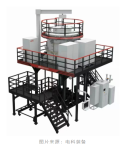
Shanxi CETC's second-generation vertical silicon carbide coating equipment process iteration and upgrade.

Recently, the second-generation vertical silicon carbide coating equipment independently developed by China Electronics Technology Equipment Shanxi Zhongdianke Company has successfully achieved a process technology upgrade, increasing the furnace loading capacity by 70% and shortening the coating cycle by 33%.

After more than 30 process experiments and structural design optimizations, the R&D team successfully overcame technical challenges such as flow field and temperature field uniformity control, coating process matching, and reduction of by-products. Through continuous optimization of process parameters, the furnace loading capacity of the equipment was increased by 70% compared to the first-generation vertical silicon carbide coating equipment, while ensuring product performance. The coating products produced by this equipment fully meet the technical specifications, effectively satisfying the diversified and large-scale demands of the market.

1765386625782.png
Please, Log in or Register to view URLs content!

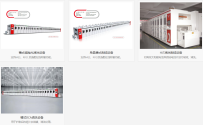
Jiejia Weichuang: Semiconductor cleaning equipment and silicon carbide high-temperature heat treatment equipment have been shipped to customers.


Jiejia Weichuang stated on its interactive platform that the company continues to expand into the semiconductor and third-generation semiconductor fields. Currently, its semiconductor cleaning equipment and silicon carbide high-temperature heat treatment equipment have been shipped to customers, and the company is continuously developing other semiconductor and related equipment. Back in September, the company revealed that its silicon carbide high-temperature heat treatment equipment had been shipped to a "leading customer in the industry," and its semiconductor cleaning equipment was also receiving new orders, demonstrating the company's rapid progress and customer recognition in the third-generation semiconductor equipment field. In terms of performance, JiejiaWeichuang continued its "nine-year growth" momentum. In the first three quarters of 2025, the company's operating revenue was 13.106 billion yuan, a year-on-year increase of 6.17%; net profit attributable to the parent company was 2.688 billion yuan, a year-on-year increase of 32.9%; gross profit margin was 29.07%, and net profit margin was 20.52%, representing year-on-year increases of 1.27 and 4.13 percentage points, respectively.

1765386801933.png


Please, Log in or Register to view URLs content!
 

AndrewS

Brigadier
Registered Member
Industrial electricity prices in China is 55% cheaper than US on a cost per KWh basis, and acquisition cost of Huawei GPUs is 20-60% cheaper than Nvidia on a cost per performance basis.

5nm/7nm nodes + cheaper electricity + additional state subsidies or imported/smuggled 3nm Nvidia chips is more than sufficient for China's AI applications needs for the foreseeable future while domestic EUV ramps up. This is the misguided folly of "annihilation-ists" who failed and now shift the goalpost to "at what costs?-ist" as if they going to bankrupt China on spending more on chips and cooling electricity cost... (rolls eye).

Do you have a breakdown of the performance versus cost for the different Nvidia and Huawei chips?

But more importantly are the cluster level comparisons if you have them
 

HighGround

Senior Member
Registered Member
Industrial electricity prices in China is 55% cheaper than US on a cost per KWh basis, and acquisition cost of Huawei GPUs is 20-60% cheaper than Nvidia on a cost per performance basis.

5nm/7nm nodes + cheaper electricity + additional state subsidies or imported/smuggled 3nm Nvidia chips is more than sufficient for China's AI applications needs for the foreseeable future while domestic EUV ramps up. This is the misguided folly of "annihilation-ists" who failed and now shift the goalpost to "at what costs?-ist" as if they going to bankrupt China on spending more on chips and cooling electricity cost... (rolls eye).

I don't believe we are at a point where the electricity cost is actually all that important. From what I can tell, the biggest issue with the electric grid in U.S. is capacity and access.

For example, as you all exhaustively know and poke fun at, the actual act of building something in America, is a years long process. Not just the actual concrete-pouring, but the permitting, regulations, political handshaking, etc.

The way in which some of these things are mitigated, is by finding areas where the regulatory process can be "speedrun". The problem, is that this goldilocks area where the regulatory process can be sped up, but also has the available electricity capacity is fairly limited. This is why things like this modular, deployable gas generator got so much hype. Because it allows data centers to be potentially built in the middle of nowhere, as fast as possible.

Cost, isn't a problem or a bottleneck for these companies. China's electricity advantage will take far more time to materialize. Possibly after the AI bubble bursts in America (assuming it does). Currently, the industry is just not that price sensitive.

1765388861716.png
 
Top