D
Deleted member 27830
Guest
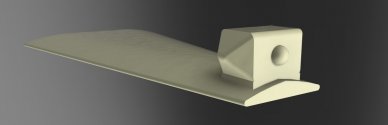
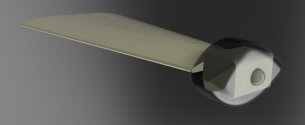
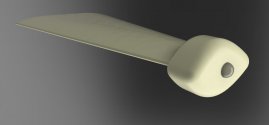
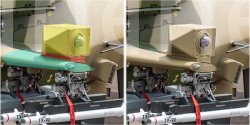
You don't have to redesign the fuselage or airframe, but you certainly can do a better job than boxes and pyramids.This is an upgraded variant of an existing airframe/fuselage -- if you are adding in packages like new sensors (AESA MAWS, ESM on the fuselage), countermeasures (DIRCM on the stubwings), and armour pads (engine and cockpit adjacent), you aren't going to tailor and redesign the fuselage for that.
The solutions for all these issues are endless. The PLA likely just want to reduce the price as much as possible without sacrificing too much performance to in order to increase sales.Placing the DIRCM at the bottom of the fuselage couldhave been feasible, but based on the size of the overall DIRCM pod on top of the stub wing, it is apparent that they take up meaningful volume and it is very possible that Z-10 as an airframe does not have that sort of excess volume on the bottom of the fuselage (it is a 7t aircraft after all, lighter than a AH-64, Mi-28 or Ka-52 class helicopter) -- and alternatively if it were to be placed protruding out from the bottom of the fuselage then it would protrude out and potentially offer unacceptable clearance to the ground.
Furthermore, being mounted on top of the stub wings may also offer benefits in terms of providing greater coverage and also greater ease of access for maintenance. One might ask "why not mount the DIRCM package more lateral on the tip of the stub wing rather than on top of the stub wing" -- well the most immediate natural answer would be that being mounted on top of the stub wing reduces the span of the stub wings, and more importantly mounted on top of the stub wing offers greater structural support than having to mount it on the tips where they would have to support themselves (again, the ability of the stub wings to structurally support payloads or pods in this case is dependent on its structural bearing capability which in turn is dependent on the aircraft's overall MTOW as designed, which is lighter than Apache, Mi-28, Ka-52 etc)
Yes It does. A good example of how big of a deal drag is, would be the Ka-52 retractable landing gear. The front gear have a large optical suite infront of them and don't have a door and the wheel doesn't even fully retract. The rear landing gear do have doors and semisunk pockets for the wheels where they sit exposed. Despite all of these imperfections, it still improves drag and reduces moment of inertia to the point where the designers are willing to indroduce all these mechanical complexities and points of failures into the equation.There's also the fact that being mounted on top of the stub wing and looking like there are "boxes with sharp edges" literally doesn't matter.
I has nothing to do with aesthetics, just efficiency.And if it's because you dislike the aesthetics of it, then well, beauty is in the eye of the beholder. And maybe care a bit less about aesthetics to begin with.
There's nothing wrong with constructive criticism and discussing design elements in a forum where its relevant. Everyone ends up learning something from it.You keep making some odd complaints and questions, like wanting the PLAGF's truck SPHs to be fully automatic, despite obvious answers as to why that was not pursued nor feasible.
At least, if you want to ask these questions can you not make it sound like your assumption is a natural and obvious conclusion, and to put some effort into the question?
I never objected to this part. I agree, the Z-10ME looks like a very deadly attack helicopter with proper armament and plenty of modern sensors..... Frankly, for a 7t helicopter, the Z-10ME as depicted is rather well equipped. A mast mounted radar, enhanced ESM, AESA MAWS integrated with DIRCM, retaining upturned turboshaft exhausts for IR suppression, and a reinforced armour package, all with the usual turret, four hardpoints -- that is probably about as much as you can squeeze out of a 7t helicopter with contemporary technology, and frankly there should be little that one should complain about with the package as a whole. If anything it's impressive they were able to put everything together in a single aircraft like this.
This is not a valid excuse. It's not okay to misspell sentences on a precision machine like this.That's just because they don't care much about English showing at defense expos (regardless of whether it's domestic at somewhere like Zhuhai or abroad), that has no bearing on the integration of the subsystems on the helicopter itself, which we've already seen in flight test years back. You can be assured the integration of the subsystems would be done with regular due diligence of any other product.
Both sentences are incorrect.Is it correct to write "at towing"?
Answer:- Yes, it is correct to use the preposition “at” in the context of towing. When you tow a vehicle, there are specific considerations and safety measures to keep in mind. (example of similar words - at playing, at swimming etc).
"When Manipulate" (you write manipulating only if when ther is presence of "is", "are", "were", "will be" etc, When you are manipulating).
ma·nipu·late
[məˈnɪpjʊleɪt]
VERB
- handle or control (a tool, mechanism, information, etc.) in a skilful manner:
"he manipulated the dials of the set"
- alter, edit, or move (text or data) on a computer:
"the pupils can manipulate the data or screen image"- examine or treat (a part of the body) by feeling or moving it with the hand:
"this system of healing is based on manipulating the ligaments of the spine"