Trump 2.0 official thread

Matcher6130

New Member
Registered Member
I agree ,before China was ever this strong we Chinese immigrants had to adapt ,keep low-profile and survive for us in even elementary /high school an English first name as well as my Chinese name on my legal documents was just to make things smoother-i.e Bruce Jun Fan Lee.

This one is a little more complicated than "we must survive". Asian cultures as a whole do this a lot more because of entirely different scripts for nearly every language.
  • Chinese: 汉字
  • Korean: 한글
  • Japanese: 日本語
    • Note: It is a blend of Chinese and older Japanese script.
  • Mongolian:
    • Traditional: ᠣᠩᠭᠣᠯ ᠪᠢᠴᠢᠭ
    • Cyrillic: Монгол Кирилл үсэг
  • Manchu: ᠮᠠᠨᠵᡠ ᡥᡝᡵᡤᡝᠨ
  • Tibetan: བོད་ཡིག་
Meanwhile in Europe there's really only three:
  • Latin: English, Français. Español, Deutsch, Italiano, Português, Polski, Nederlands, Svenska, Türkçe
  • Cyrillic: Русский, Українська, Беларуская, Български, Српски, Српски
  • Greek: Ελληνικά
Europe is relatively smaller than China (London to Moscow is closer than Urumqi to Beijing), and the various nations are fairly small, so names travel across borders a lot more. For example, if an Israeli with the Hebrew name מִיכָאֵל went on a tour across Europe, their names in each region would be pronounced:
  • England: Michael
  • France: Michel
  • Spain: Miguel
  • Italy: Michele
  • Greece: Michaelis
  • Turkey: Mikail
  • Sweden: Mikael
  • Russia: Mikhail
Combine the two and a person's name is being localized. It's just that there's only a few writing systems and the cultures have blurred together so much that localizing a common name is just a tweak in pronunciation.

Compare this with a Chinese with the name 王. In English it'd be "King". But "Wáng" and "King" have wildly different pronunciations and the word "Wáng" doesn't exist in English. One of the very few exception is "Li" as it and the Old English name "Leigh" are both pronounced "Lee".

If you want to maintain your personal identity and still "blend in", localize your name instead picking some generic sounding.
My favorite example is Premier Li Qiang. His name 李强 can be localized into English as "Eric Plum".
  • 李: Meaning "Plum", which itself is an uncommon but "normal" sounding surname.
  • 强: Meaning "Powerful". "Eric" comes from Old Norse and has the exact same translation.
You can even take this a step further and incorporate his official title by calling him "Kendrick Plum". With "Kendrick" being the Anglo-Saxon variation of the Old English name "Cyneric" meaning "Kingly Eric".

This is also a useful way of showing both cultural courtesy and intellect. Since you're willing to put in the effort of understanding local languages and understanding the cultural nuances.

EDIT: Snuck in some edits to spelling and translation.
 
Last edited:

manqiangrexue

Brigadier
Who that Steven cheung? And what’s the deal with Chinese who move to the west taking western names as their first name? Is there a reason for this ? Since I don’t think they had a name like Steven before leaving China?
Man when I first saw him, I thought the White House was joking and got somebody to cosplay an Austin Powers villain or some shit. He looks like he can do Pigsy (ZhuBaJie) from Journey to the West without make-up. After I saw him for maybe the 3rd time, I realized he's Trump's new Asian mutt; looks like a Sharpei/British Bulldog mix.
 

Serb

Senior Member
Registered Member
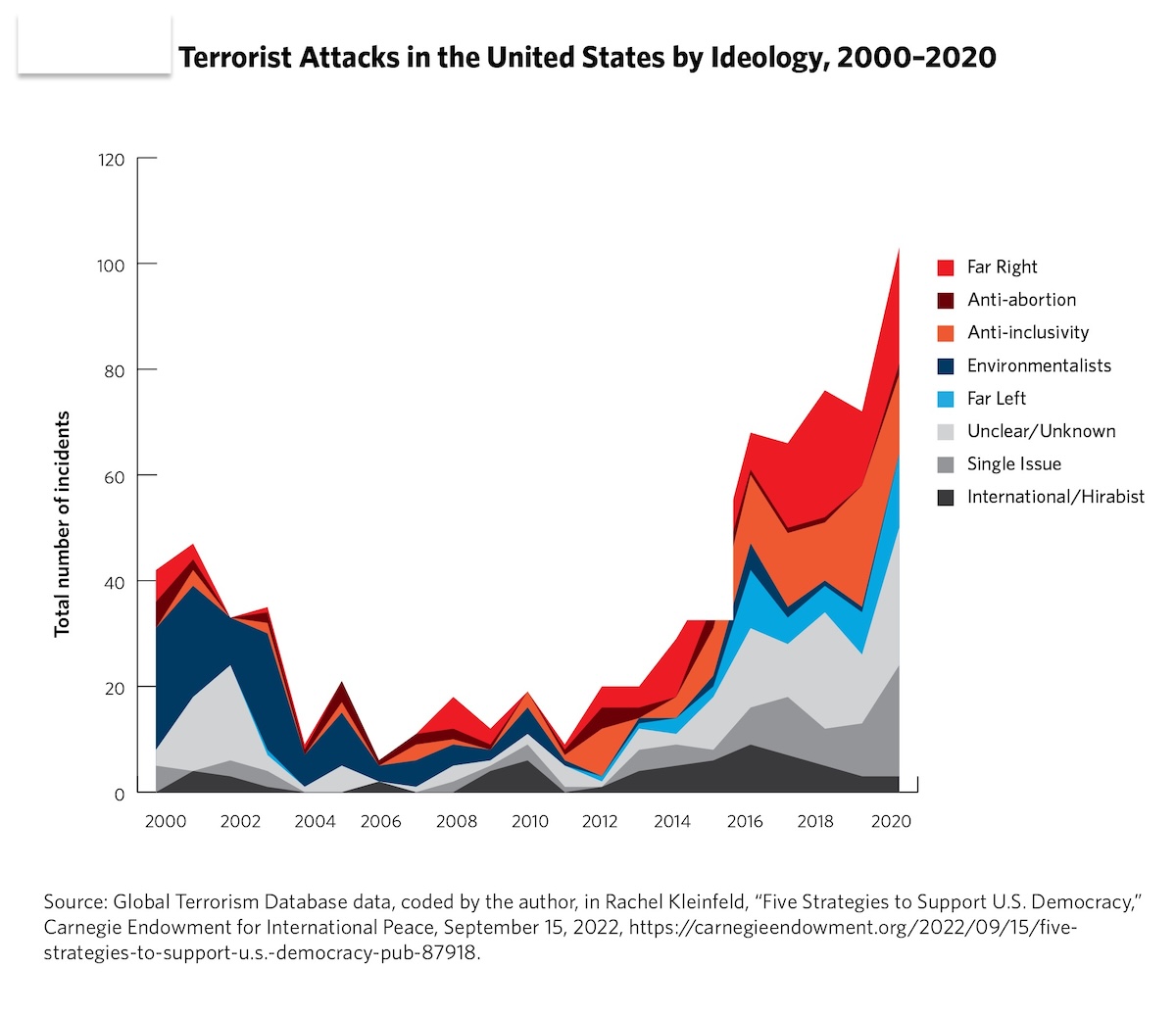
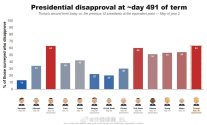
I am almost certain that even failed states with militias, cartels, and warlords do not get presidential assassination attempts this regularly.

But according to some users here, 98% of countries are still closer to collapse than America.

Right. And tomorrow, Jesus comes down, opens a Substack, and explains why the US is perfectly fine.


Please, Log in or Register to view URLs content!

Please, Log in or Register to view URLs content!


23124.jpeg


political_violence_graph.jpeg
 

ficker22

Senior Member
Registered Member
This one is a little more complicated than "we must survive". Asian cultures as a whole do this a lot more because of entirely different scripts for nearly every language.
  • Chinese: 汉字
  • Korean: 한글
  • Japanese: 日本語
    • Note: It is a blend of Chinese and older Japanese script.
  • Mongolian:
    • Traditional: ᠣᠩᠭᠣᠯ ᠪᠢᠴᠢᠭ
    • Cyrillic: Монгол Кирилл үсэг
  • Manchu: ᠮᠠᠨᠵᡠ ᡥᡝᡵᡤᡝᠨ
  • Tibetan: བོད་ཡིག་
Meanwhile in Europe there's really only three:
  • Latin: English, Français. Español, Deutsch, Italiano, Português, Polski, Nederlands, Svenska, Türkçe
  • Cyrillic: Русский, Українська, Беларуская, Български, Српски, Српски
  • Greek: Ελληνικά
Europe is relatively smaller than China (London to Moscow is closer than Urumqi to Beijing), and the various nations are fairly small, so names travel across borders a lot more. For example, if an Israeli with the Hebrew name מִיכָאֵל went on a tour across Europe, their names in each region would be pronounced:
  • England: Michael
  • France: Michel
  • Spain: Miguel
  • Italy: Michele
  • Greece: Michaelis
  • Turkey: Mikail
  • Sweden: Mikael
  • Russia: Mikhail
Combine the two and a person's name is being localized. It's just that there's only a few writing systems and the cultures have blurred together so much that localizing a common name is just a tweak in pronunciation.

Compare this with a Chinese with the name 王. In English it'd be "King". But "Wáng" and "King" have wildly different pronunciations and the word "Wáng" doesn't exist in English. One of the very few exception is "Li" as it and the Old English name "Leigh" are both pronounced "Lee".

If you want to maintain your personal identity and still "blend in", localize your name instead picking some generic sounding.
My favorite example is Premier Li Qiang. His name 李强 can be localized into English as "Eric Plum".
  • 李: Meaning "Plum", which itself is an uncommon but "normal" sounding surname.
  • 强: Meaning "Powerful". "Eric" comes from Old Norse and has the exact same translation.
You can even take this a step further and incorporate his official title by calling him "Kendrick Plum". With "Kendrick" being the Anglo-Saxon variation of the Old English name "Cyneric" meaning "Kingly Eric".

This is also a useful way of showing both cultural courtesy and intellect. Since you're willing to put in the effort of understanding local languages and understanding the cultural nuances.

EDIT: Snuck in some edits to spelling and translation.
There is no "older Japanese script", Kana and Hiragana are evolutions from standard and cursive 汉子 and try to emulate the sound value to the respective 汉子 to create a script system not based on logograms but phonetically coded. Before the Chinese expeditions, Yayoi Japanese were late Stone/ early bronze age people with no system of writing, not much different from the aborigines.
 

Ringsword

Senior Member
Registered Member
This one is a little more complicated than "we must survive". Asian cultures as a whole do this a lot more because of entirely different scripts for nearly every language.
  • Chinese: 汉字
  • Korean: 한글
  • Japanese: 日本語
    • Note: It is a blend of Chinese and older Japanese script.
  • Mongolian:
    • Traditional: ᠣᠩᠭᠣᠯ ᠪᠢᠴᠢᠭ
    • Cyrillic: Монгол Кирилл үсэг
  • Manchu: ᠮᠠᠨᠵᡠ ᡥᡝᡵᡤᡝᠨ
  • Tibetan: བོད་ཡིག་
Meanwhile in Europe there's really only three:
  • Latin: English, Français. Español, Deutsch, Italiano, Português, Polski, Nederlands, Svenska, Türkçe
  • Cyrillic: Русский, Українська, Беларуская, Български, Српски, Српски
  • Greek: Ελληνικά
Europe is relatively smaller than China (London to Moscow is closer than Urumqi to Beijing), and the various nations are fairly small, so names travel across borders a lot more. For example, if an Israeli with the Hebrew name מִיכָאֵל went on a tour across Europe, their names in each region would be pronounced:
  • England: Michael
  • France: Michel
  • Spain: Miguel
  • Italy: Michele
  • Greece: Michaelis
  • Turkey: Mikail
  • Sweden: Mikael
  • Russia: Mikhail
Combine the two and a person's name is being localized. It's just that there's only a few writing systems and the cultures have blurred together so much that localizing a common name is just a tweak in pronunciation.

Compare this with a Chinese with the name 王. In English it'd be "King". But "Wáng" and "King" have wildly different pronunciations and the word "Wáng" doesn't exist in English. One of the very few exception is "Li" as it and the Old English name "Leigh" are both pronounced "Lee".

If you want to maintain your personal identity and still "blend in", localize your name instead picking some generic sounding.
My favorite example is Premier Li Qiang. His name 李强 can be localized into English as "Eric Plum".
  • 李: Meaning "Plum", which itself is an uncommon but "normal" sounding surname.
  • 强: Meaning "Powerful". "Eric" comes from Old Norse and has the exact same translation.
You can even take this a step further and incorporate his official title by calling him "Kendrick Plum". With "Kendrick" being the Anglo-Saxon variation of the Old English name "Cyneric" meaning "Kingly Eric".

This is also a useful way of showing both cultural courtesy and intellect. Since you're willing to put in the effort of understanding local languages and understanding the cultural nuances.

EDIT: Snuck in some edits to spelling and translation.
Don't forget Chinese is a tonal language and it's easy to butcher by non-Chinese whose languages are usually syllabllic so our names and places are readily mangled by them ("sing-song ching-chong") as the old slur goes.
 

Michael90

Senior Member
Registered Member
Don't forget Chinese is a tonal language and it's easy to butcher by non-Chinese whose languages are usually syllabllic so our names and places are readily mangled by them ("sing-song ching-chong") as the old slur goes.
Yeah that what I thought originally. I think that’s also the main reason for Chinese taking western names for ease of communication
 

A potato

Junior Member
Registered Member

Apparently racism against Indians has gotten big enough that a reporter had to ask Marco on it. Marco just gave the standard PR answer. Pretty smart of him since all he really wants is India to purchase $500B worth of stuff from the US. I don't believe he actually gives a crap.

The department of state deleted that post as well.

I always thought its just 4chan and twitter being edgy, But I guess we are reaching the stage where its no longer just an edgy phase.
You have clearly not seen instagram where they straight up believe it and are committed to it.

Please, Log in or Register to view URLs content!
1779815377301.png
Please, Log in or Register to view URLs content!
 
Top