Chinese firm pushes humanoid robot intelligence forward with 300 FPS control speed
Real-time 300FPS edge inference enables fast, low-latency robot control without cloud dependency.
By
May 20, 2026 08:13 AM EST
Chinese firm Horizon Robotics has released an open-sourced AI model, named HoloMotion-1, designed for whole-body humanoid robot control.
The company says the 4-billion-parameter robot cerebellum model represents a major leap in robot motion intelligence, pushing cerebellum models beyond the million- and ten-million-parameter scales commonly used previously.
HoloMotion-1 can perform real-time inference at 300 frames per second on edge devices, enabling faster, more responsive humanoid robot movements.
According to Horizon Robotics, the new model marks a significant advance in scalable humanoid robot control and edge AI deployment.
Zero-shot motion learning
HoloMotion-1 is a humanoid motion foundation model designed to improve real-time whole-body robot control through large-scale motion learning, reports
.
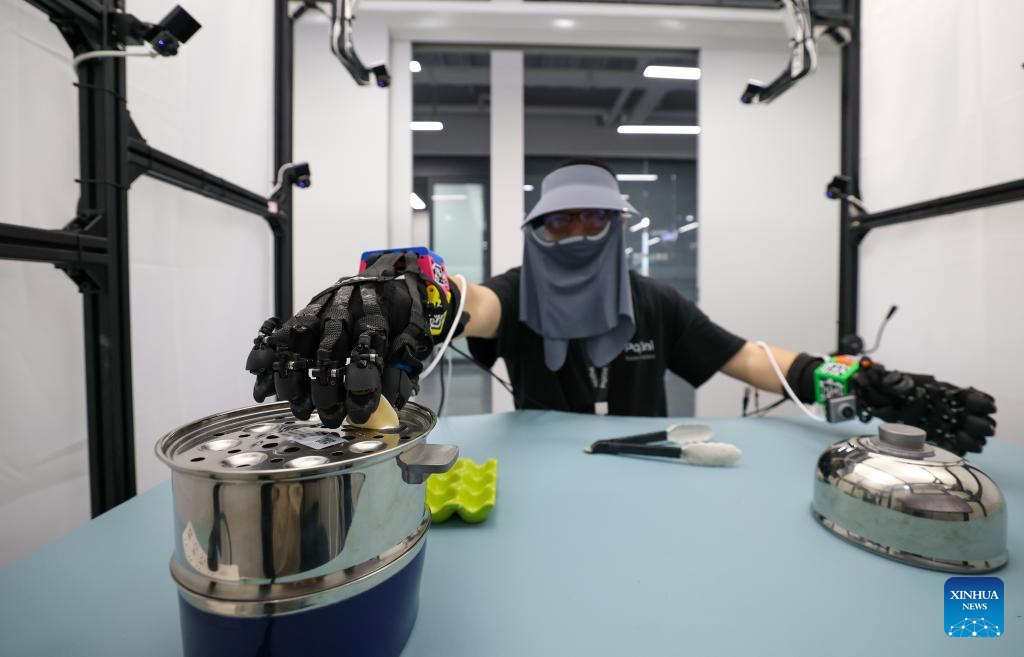
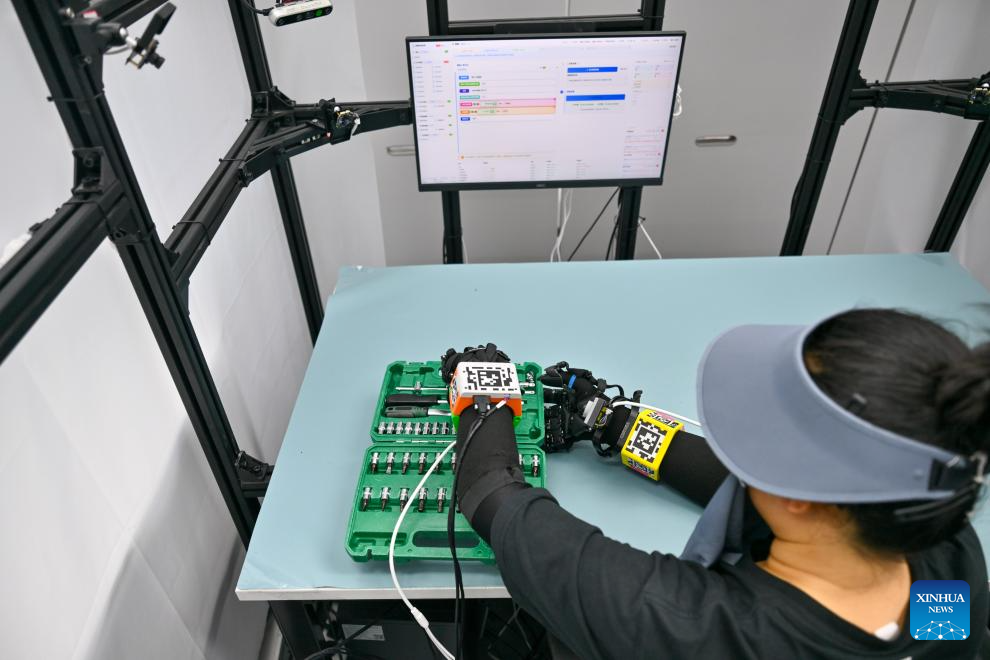
HoloMotion-1 is a system designed to help humanoid robots copy and perform human-like movements more reliably in real time. Instead of relying only on small motion capture (MoCap) datasets, which are recordings of human movement made in controlled environments, it uses a much larger and more varied collection of motion data.
This includes curated MoCap data, motion data created inside the company, and movements reconstructed from real-world videos taken “in the wild.” This mix gives the robot a much wider range of examples, helping it handle new or unseen movements and situations where its sensors may not work perfectly.
Real-world zero-shot transfer of the HoloMotion policy.
To manage this complex data, HoloMotion-1 uses a Transformer-based neural network, a type of deep learning model that is especially good at understanding sequences over time, such as motion steps. This is better than older MLP (Multi-Layer Perceptron) policies, which are simpler neural networks that struggle with long and complex motion patterns, according to the firm’s
.
For efficient real-time use on
, the system uses a Mixture-of-Experts (MoE) Transformer. This means only a few parts (“experts”) of the model are activated at each step, saving computing power. It also uses KV-cache (Key-Value cache), a technique that speeds up repeated calculations. Together, these allow the system to run at about 300 frames per second on edge devices.
Finally, the system uses a sequence-level PPO (Proximal Policy Optimization) training method. PPO is a reinforcement learning technique, and here it is applied to whole motion segments instead of single time steps, making training more efficient and stable when learning from large, mixed datasets.
Agile humanoid tracking
To test how well the system works in the real world,
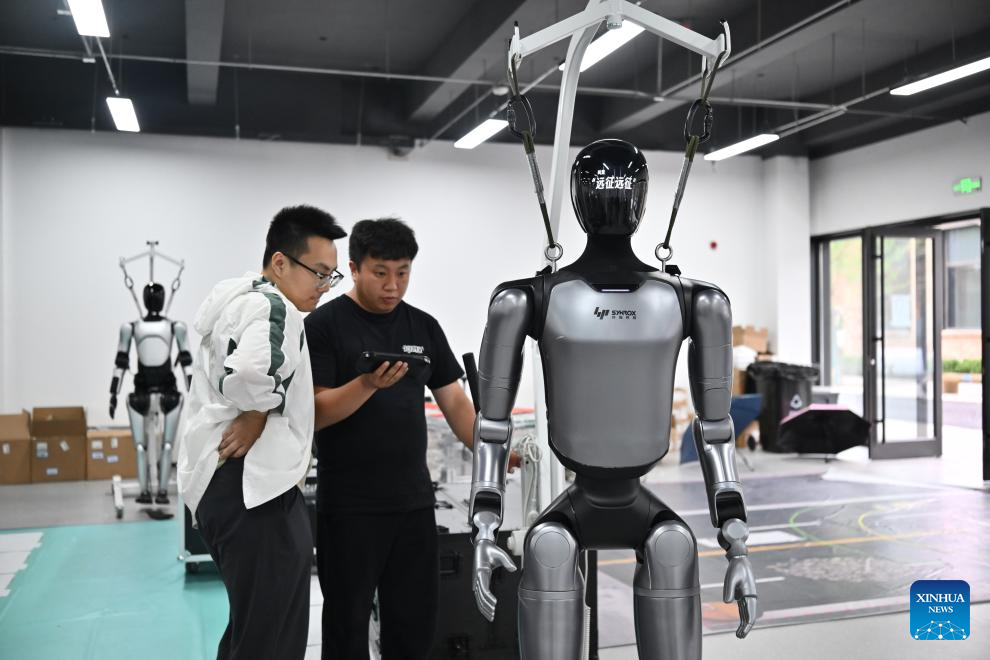
was directly installed on a Unitree G1
. Importantly, it was used without any extra training on real-world data. All the computing needed for the robot’s movement was done on its own built-in computer system.
The system used the MoE Transformer along with a technique called KV-cache, which helps the model reuse past calculations efficiently. According to Horizon Robotics, this combination allows the robot to make very fast decisions, running at about 200–300 cycles per second on its onboard hardware. At the same time, the robot’s movement system itself runs at 50 cycles per second to keep the motion smooth and stable.
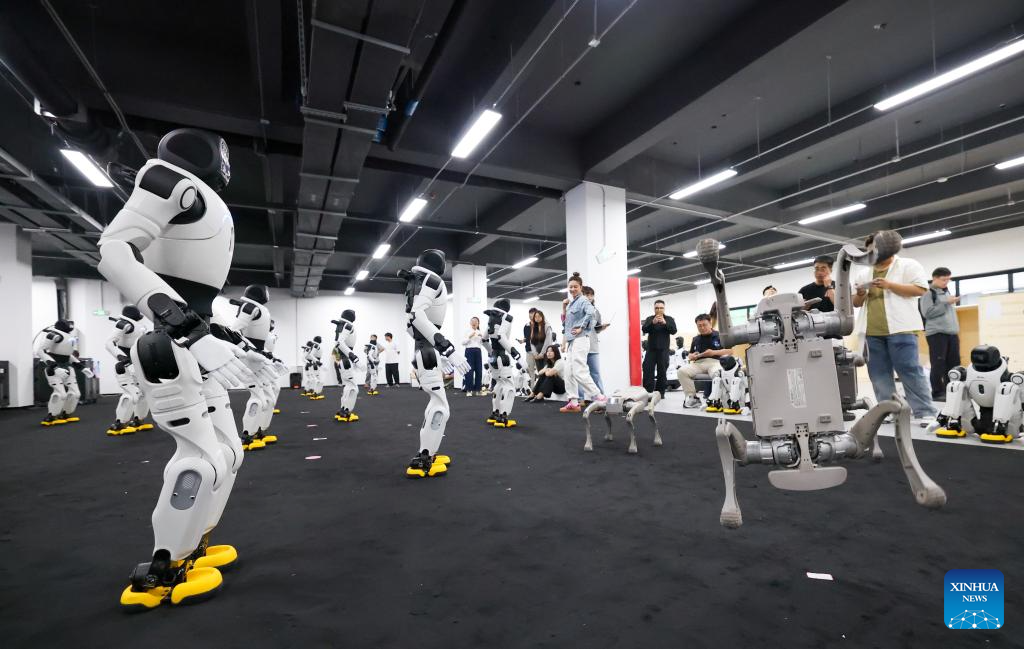
The results show that the robot could successfully transfer what it learned in simulation to the real world without extra adjustment. It was able to perform many different movements it had never been directly trained on in real hardware, including dancing, crawling, sitting, and martial arts-style kicks.
The system was also tested with live human control using devices like motion capture suits and VR-based controllers. In these tests, the robot followed human movements closely and responded smoothly, showing stable and reliable real-time tracking of user actions.
Researchers highlight that HoloMotion follows a 4-step plan for humanoid robot control: Imitate Any Pose, Follow Any Command, Move on Any Terrain, and Control Any Robot Type. HoloMotion-1 completes the first step by letting robots copy many human movements from videos or live input. It also acts as a base for future improvements.