Assuming any basic hypersonic from the mainland into Miaoli its probably enough time to enjoy the ROC national anthem once after detection.Even if PAVE PAWS were still standing the compressed warning lead times given the short travel distances for standoff munitions involved basically make it useless heh.

You are using an out of date browser. It may not display this or other websites correctly.
You should upgrade or use an alternative browser.
You should upgrade or use an alternative browser.
PLA Strategy in a Taiwan Contingency
- Thread starter pugachev_diver
- Start date
Or just MLRS from Fujian. Even subsonic cruise missiles take like 20 minutes to reach destination. Air launched standoff missiles from the median line would be half that time. Why waste hypersonics for this.Assuming any basic hypersonic from the mainland into Miaoli its probably enough time to enjoy the ROC national anthem once after detection.

(1)continuous AWACS coverage is difficult, unless done from space. The problem with Space is of course that in direct high end combat, space itself is a target, and LEO AMTI(important, vulnerable and expensive) is first candidate for personal attention. I am also a bit sceptical how well 1st installments of this tech will really be able to detect small low altitude targets.Given that the Chinese Air Force would have continuous AWACs coverage over all of Taiwan, they should be able to detect the launch of any opposing drones and then track them continuously.
The Chinese military should also be able to flood the airspace over Taiwan with its own drone swarms continuosly, so it won't be possible for Taiwan to launch large swarms.
And to counter any drones that are launched, helicopters with $20K APKWS rockets seem to be a workable solution for slower targets, and I see an Apache can carry 76 APKWS rockets at a time.
EDIT. I also notice F-16s are now flying with 42 APKWS rockets as well
For air: Taiwan is a big island with big shadow zone established by central mountains(shadows) and cities, as well as SAM threat and EW interference. Drones are also small, low RCS targets flying over clutter.
My take is you'll need to have ~2 KJ-3000 class aircraft on orbits behind Taiwan to really make the air picture there crystal clear. This isn't possible at the moment. It's also dangerous. KJ-500As can work as a substitute, but they're are troublesome from multiple points of view for the task. KJ-600...count me sceptical for effeciency of maritime LB AEW for the specific task over land.
(2)
Yes, but drone swarms don't quite counter other launches this way ... drone swarms are also attritable.
(3)
Yes, though to be fair it won't take too long to come up with drones fighting back. It already happened, but got delayed by starlink adventures over Ukraine. It's going to be straighforward within next few years, but going down the line situation will shift.

(1)continuous AWACS coverage is difficult, unless done from space. The problem with Space is of course that in direct high end combat, space itself is a target, and LEO AMTI(important, vulnerable and expensive) is first candidate for personal attention. I am also a bit sceptical how well 1st installments of this tech will really be able to detect small low altitude targets.
For air: Taiwan is a big island with big shadow zone established by central mountains(shadows) and cities, as well as SAM threat and EW interference. Drones are also small, low RCS targets flying over clutter.
My take is you'll need to have ~2 KJ-3000 class aircraft on orbits behind Taiwan to really make the air picture there crystal clear. This isn't possible at the moment. It's also dangerous. KJ-500As can work as a substitute, but they're are troublesome from multiple points of view for the task. KJ-600...count me sceptical for effeciency of maritime LB AEW for the specific task over land.
I suppose the question is what "all over Taiwan" means.
Tbh in all the scenarios of a cross straight conflict, I've never actually given much thought to the idea of the PLA needing to have AEWC coverage "behind" Taiwan (i.e. on the eastern side looking west), at least not during the most active and important phases of a conflict, and that's because any ROC aircraft or munitions that the PLA would be interested in would have to venture from the islands Western side, towards the west, northwest or southwest sides.
In that sense if they wanted robust overlapping of Taiwan and its surrounding western, northern and southern approaches, a continuous coverage of three AEWCs, running 8 hr sorties (let's be conservative and assume no air refuelling and to preserve crew endurance) over 24 hrs, with consistent one backup per 8 hr sortie for each of the three approaches, that's a whopping 12 AEWCs, which would be... less than one fifth of the overall PLA KJ-500 family fleet.
Of course, during the phase of conflict where the PLA would want such robust AEWC coverage over Taiwan itself they'd still have AEWC up in other aspects of China's maritime (and land) approaches outside of Taiwan's immediate periphery in case there are any ROC aircraft or missiles or drones that take the "long way" around from the Eastern side of Taiwan to try and hit any PRC assets or locations elsewhere. But that doesn't require a AEWC literally situated on the eastern side of Taiwan island itself to do that. Instead, the rest of their AEWC fleet would just be doing normal monitoring of the airspace and maritime approaches of China's borders.
There actually isn’t much support infrastructure on the Eastern flank of the island for hiding launches. There’s almost no lowland or roads outside the main highway hugging the coast, which connect a sparse chain of towns and cities. This makes surveillance of that side of the island pretty straightforward. Most of the cities don’t offer much shadow at all since the’re on the Western face most accessible to surveillance.(1)continuous AWACS coverage is difficult, unless done from space. The problem with Space is of course that in direct high end combat, space itself is a target, and LEO AMTI(important, vulnerable and expensive) is first candidate for personal attention. I am also a bit sceptical how well 1st installments of this tech will really be able to detect small low altitude targets.
For air: Taiwan is a big island with big shadow zone established by central mountains(shadows) and cities, as well as SAM threat and EW interference. Drones are also small, low RCS targets flying over clutter.
My take is you'll need to have ~2 KJ-3000 class aircraft on orbits behind Taiwan to really make the air picture there crystal clear. This isn't possible at the moment. It's also dangerous. KJ-500As can work as a substitute, but they're are troublesome from multiple points of view for the task. KJ-600...count me sceptical for effeciency of maritime LB AEW for the specific task over land.
(2)
Yes, but drone swarms don't quite counter other launches this way ... drone swarms are also attritable.
(3)
Yes, though to be fair it won't take too long to come up with drones fighting back. It already happened, but got delayed by starlink adventures over Ukraine. It's going to be straighforward within next few years, but going down the line situation will shift.

Sat linked MALE drones can literally fly circles near every single airport on the eastern side during the pre-war tension phase. If Taiwan shoots them down, it needs to bring SAMs to the eastern side and then initiate hostilities. If it doesn't, then the MALE drones can see everything in real time and target for SRBMs.(1)continuous AWACS coverage is difficult, unless done from space. The problem with Space is of course that in direct high end combat, space itself is a target, and LEO AMTI(important, vulnerable and expensive) is first candidate for personal attention. I am also a bit sceptical how well 1st installments of this tech will really be able to detect small low altitude targets.
For air: Taiwan is a big island with big shadow zone established by central mountains(shadows) and cities, as well as SAM threat and EW interference. Drones are also small, low RCS targets flying over clutter.
My take is you'll need to have ~2 KJ-3000 class aircraft on orbits behind Taiwan to really make the air picture there crystal clear. This isn't possible at the moment. It's also dangerous. KJ-500As can work as a substitute, but they're are troublesome from multiple points of view for the task. KJ-600...count me sceptical for effeciency of maritime LB AEW for the specific task over land.
(2)
Yes, but drone swarms don't quite counter other launches this way ... drone swarms are also attritable.
(3)
Yes, though to be fair it won't take too long to come up with drones fighting back. It already happened, but got delayed by starlink adventures over Ukraine. It's going to be straighforward within next few years, but going down the line situation will shift.
Near=over? Of course they'll get shoot down, that's within island airspace.Sat linked MALE drones can literally fly circles near every single airport on the eastern side during the pre-war tension phase. If Taiwan shoots them down, it needs to bring SAMs to the eastern side and then initiate hostilities. If it doesn't, then the MALE drones can see everything in real time and target for SRBMs.
But no, you don't need to bring SAMs over to shot down MALE - not only they're there in the first place, you don't need big SAMs within LOS for the job. Especially in uninterrupted peacetime sensory network.
Basically it'll do nothing but provoke hostilities in a rather strange manner(obvious wronggul act getting drones destroyed); there are better ways to start a conflict.
Near=over? Of course they'll get shoot down, that's within island airspace.
But no, you don't need to bring SAMs over to shot down MALE - not only they're there in the first place, you don't need big SAMs within LOS for the job. Especially in uninterrupted peacetime sensory network.
Basically it'll do nothing but provoke hostilities in a rather strange manner(obvious wronggul act getting drones destroyed); there are better ways to start a conflict.
Chinese aircraft flying continuosly around Taiwan in peacetime will send a message.
If Taiwan shoots one down, then they will restart the civil war.

lcloo
Major
AR of Taiwan will be very interesting because of the 3 geographical features of the island, it affects doctrines on attacks, defense and falling back areas, and possible evacuation areas on the East coast for escape to Philippines or Japan.
The first and most important area is the West Coast lowland plains facing Fujian coasts. This is where PLA marines beach assaults and air borne troops insertions are expected at the initial phase of AR. This is the belt area for major population, agriculture, finance, manufacturing, power generation and highway network etc.
Another area of interest are the naval base and air bases on the pockets of lowland on the East coast like Hualien airbase and Su'ao port. PLA could either block off totally the East coast or leave an escape corridor here for tactical reason. Hualien airbase is the largest airbase on the island, and it is expected to be destroyed on the first minutes of the AR, so are the ships on Su'Ao navy base.
The 3rd area is the central mountain range where there might be a lot of radar sites and long range SAM sites. These sites are also to be the target of the Day 1 of AR. Mountains are natural fallback area for remnants of ROC forces once the coastal plains on both coasts have been taken over by PLA.
Problem for ROC remnants in mountain areas are fragile mountain roads that could easily be cut off by floods and landslides during storms or typhoon seasons or rocket/ bomb blasts. Movement of heavy equipment would be difficult and can be easily take out by PLA aerial sensors and strikes. Without logistic support, ROC remnants would have to resort to guerrilla warfare, but lacking ammo supplies, food, medical supplies, batteries and petrol, they will not last long.
Logistic, equipment and manpower numerical inferiority are the factors that ROC troops will be losing fast.
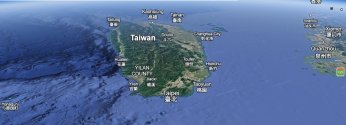
The first and most important area is the West Coast lowland plains facing Fujian coasts. This is where PLA marines beach assaults and air borne troops insertions are expected at the initial phase of AR. This is the belt area for major population, agriculture, finance, manufacturing, power generation and highway network etc.
Another area of interest are the naval base and air bases on the pockets of lowland on the East coast like Hualien airbase and Su'ao port. PLA could either block off totally the East coast or leave an escape corridor here for tactical reason. Hualien airbase is the largest airbase on the island, and it is expected to be destroyed on the first minutes of the AR, so are the ships on Su'Ao navy base.
The 3rd area is the central mountain range where there might be a lot of radar sites and long range SAM sites. These sites are also to be the target of the Day 1 of AR. Mountains are natural fallback area for remnants of ROC forces once the coastal plains on both coasts have been taken over by PLA.
Problem for ROC remnants in mountain areas are fragile mountain roads that could easily be cut off by floods and landslides during storms or typhoon seasons or rocket/ bomb blasts. Movement of heavy equipment would be difficult and can be easily take out by PLA aerial sensors and strikes. Without logistic support, ROC remnants would have to resort to guerrilla warfare, but lacking ammo supplies, food, medical supplies, batteries and petrol, they will not last long.
Logistic, equipment and manpower numerical inferiority are the factors that ROC troops will be losing fast.
Last edited:
Near is perfectly fine, but it is exactly that - near(relatively)/peacetime. It to a degree already happens.Chinese aircraft flying continuosly around Taiwan in peacetime will send a message.
If Taiwan shoots one down, then they will restart the civil war.