
You are using an out of date browser. It may not display this or other websites correctly.
You should upgrade or use an alternative browser.
You should upgrade or use an alternative browser.
PLA (strategic) news, pics, and videos
- Thread starter dxq4412
- Start date
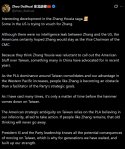

Today, 5 February 2026, the New START treaty has officially expired.

Nothing will changeToday, 5 February 2026, the New START treaty has officially expired.
Both signatories lacks the capacity to modernize their nuclear arsenals, let alone expanding them.
The sole major power capable of nuclear expansion never participated in the first place.
That's likely because china has expanded its nuclear enterprise that the USA's current 1550 warheads aren't enough to target both china and Russia. By conservative estimates, the newly built 320 silos close to the Mongolian border would require 640 warheads. American planners likely believe that the USA should match combined Russian and Chinese intercontinental war fighting capacity. They want to remain hegemonic and that's likely smart for them. Russia won't be able to engage in any meaningful nuclear buildup due to having smaller economy than Germany and Italy combined. And china has got a long way to catch up to the current American or Russian capacity. The overall situation presents a unique premise for a nuclear arms race. But there won't be cold war style race because it requires too much money no one has at this point; even the USA struggle to pay social benefits. Interesting times ahead...Today, 5 February 2026, the New START treaty has officially expired.
That's likely because china has expanded its nuclear enterprise that the USA's current 1550 warheads aren't enough to target both china and Russia. By conservative estimates, the newly built 320 silos close to the Mongolian border would require 640 warheads. American planners likely believe that the USA should match combined Russian and Chinese intercontinental war fighting capacity. They want to remain hegemonic and that's likely smart for them. Russia won't be able to engage in any meaningful nuclear buildup due to having smaller economy than Germany and Italy combined. And china has got a long way to catch up to the current American or Russian capacity. The overall situation presents a unique premise for a nuclear arms race. But there won't be cold war style race because it requires too much money no one has at this point; even the USA struggle to pay social benefits. Interesting times ahead...
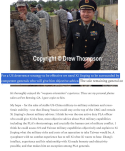
China's strategy is quite clearly to leverage its "No First Use" policy, dual-use ambiguity and industrial scale to create a sanctuary for conventional very-long-range/intercontinental strikes, which is the real game-changer because it has an edge in the testing and production of these vehicles. Why play a game of symmetric competition where other powers have equal footing?
Also, keep in mind DoD's unclassified assertions about Chinese warhead count is based on questionable assumptions about their
1) new fissile material production and
2) tritium/plutonium availability
As I said in the ICBM thread I expect them to drastically revise that number upwards in the next couple of years, perhaps well over even that number.

Paper on various AI procurement tenders put out by the PLA.
This report examines thousands of open-source requests for proposal (RFPs) published by China’s People’s Liberation Army between January 1, 2023, and December 31, 2024. The RFPs we reviewed offer insights into the PLA’s priorities and ambitions for AI-enabled military technologies associated with C5ISRT: command, control, communications, computers, cyber, intelligence, surveillance, reconnaissance, and targeting. In analyzing these RFPs, we find that the PLA is pursuing AI-enabled capabilities across all domains. The applications include AI-enabled decision support systems (AIDSS), sensor enhancement tools, data fusion algorithms, and much more. The RFPs reflect China’s desire to generate, augment, and fuse increasing quantities of data to speed military decision-making and improve the precision and efficacy of the PLA’s operations.
Specifically, we found requests for AI-DSS that can leverage opensource data for strategic decision-making. We also came across requests for AI-DSS to support tactical decisions, such as for targeting. While many militaries are investing in AI-DSS, these systems are of particular importance to the PLA, which views them as a means of compensating for perceived weaknesses in its officer corps. More specifically, we found an emphasis on AI applications that would counter perceived U.S. military advantages. This emphasis was especially apparent in numerous requests for technologies to detect U.S. naval assets on and under the sea, as well as technologies that could counteract U.S. space-based systems. Outside of the maritime and space domains, the PLA’s RFPs reveal that it aims to acquire increasingly sophisticated surveillance and cognitive domain capabilities. RFPs for facial and gait recognition systems, digital surveillance tools capable of recovering deleted data, and technologies for generating and detecting deepfakes point to ongoing efforts to better secure military installations and develop AI-enabled psychological warfare and cognitive targeting tools.
These documents, which are published by the PLA, are strikingly explicit in their requests for sensitive capabilities, including those related to operations in the space, cyber, and cognitive domains. The level of specificity is notable and likely reflects an effort to access advanced capabilities from nontraditional, commercial vendors outside China’s traditional defense industrial base. Moreover, most of the RFPs involve relatively small budgets and short acquisition timelines—often three to six months— suggesting an emphasis on experimentation, prototyping, and rapid iteration.
DANCERS AT THE KNIFE’S EDGE:
PLA ROCKET FORCE NUCLEAR WARHEAD MANAGEMENT
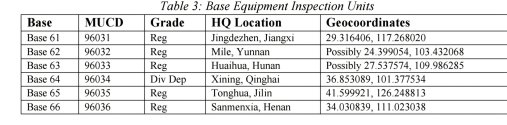
This document provides an in-depth analysis of China's PLA Rocket Force's nuclear warhead management, storage, transportation, and practices security.
**PLA Rocket Force and Nuclear Capabilities**
- The PLA Rocket Force (PLARF), formerly PLASAF, manages China’s ground-based strategic missiles, including nuclear and conventional types. It has expanded significantly since 2015, with at least 11 new missile brigades, most likely nuclear-capable.
- China has been a nuclear power since 1964, with the PLARF serving as its primary nuclear deterrent, forming the largest and most capable part of its nuclear triad.
**Central Warhead Storage and Management**
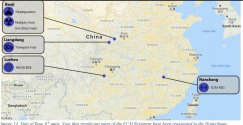
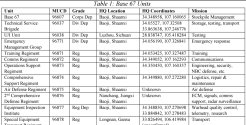
- The main stockpile, known as “Hongchuan,” is located deep in the Qinling Mountains near Baoji, Shaanxi, and is managed by Base 67. It includes underground and above-ground facilities with limited external access.
- The storage complex is overseen by the Technical Service Brigade, responsible for secure storage, testing, and transport. It includes specialized units for quality control, environmental monitoring, and emergency response.
**Organization and Functions of Base 67**
- Base 67, established in 1958, manages the PRC’s nuclear stockpile and oversees multiple units for storage, testing, security, and emergency response. It is headquartered in Baoji and employs personnel known as “Guardians of the National Treasure.”
- The base includes support units such as communication, logistics, electronic countermeasures, and specialized security teams, with some units scattered across various provinces.
**Warhead Storage and Testing Facilities**
- Hongchuan is a remote, heavily secured site with underground facilities, emphasizing physical security and environmental controls. It has undergone upgrades to standardize storage and improve safety.
- The Equipment Inspection Institute within Base 67 conducts warhead quality control, testing, and research. It employs highly educated personnel and supports long-term warhead safety and reliability.
**Warhead Transport and Security Operations**
- Warheads are transported via road, rail, or air by specialized units with armed escort. Security measures include dedicated battalions, special operations teams, and electronic countermeasures.
- Facilities employ layered security, including civilian police cooperation, remote outposts, and advanced camouflage and anti-satellite defenses to enhance survivability.
**Support and Emergency Response Capabilities**
- The PLA maintains extensive communication networks, including fiber optic cables and satellite links, to support warhead management and command.
- The Emergency Management Group is tasked with nuclear, biological, and chemical incident response. It is equipped with UAVs, contamination detection vehicles, and robotic systems for decontamination and rescue operations.
**Foreign Equipment Reliance in Nuclear Handling**
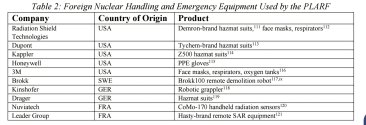
- The PLARF nuclear units heavily depend on foreign-made equipment, including high-tech robots and basic PPE, some of which are likely export-controlled.
- Key foreign companies involved are from the USA, Sweden, Germany, and France, providing hazmat suits, masks, robotic demolition robots, radiation sensors, and SAR equipment.
**Support and Logistics Infrastructure**
- The Base 67 Support Regiment manages logistics, repair, and maintenance, with depots for fuel, munitions, and materiel, and can leverage civilian facilities during wartime.
- The Operations Support Regiment provides security, engineering, NBC defense, meteorology, and mapping support for the base.
**Warhead Transport and Storage Methods**
- Warheads are transported via rail, road, and possibly air, with rail transport supported by the specialized regiment around Gansu Province.
- Road transport involves convoy security, camouflage, and rapid repair capabilities, with vehicles trained for chemical and radiological environments.
**
Attachments
-
 Screenshot_20260310_055055_Chrome.jpg318.7 KB · Views: 20
 -
 Screenshot_20260310_055035_Chrome.jpg318.1 KB · Views: 20
 -
 Screenshot_20260310_055004_Chrome.jpg377.8 KB · Views: 20
 -
 Screenshot_20260310_054932_Chrome.jpg386.6 KB · Views: 18

FriedRiceNSpice
Major
Woah, was this part of the massive intel leak in around 2023 that led to the sackings within PLARF leadership?
DANCERS AT THE KNIFE’S EDGE:
PLA ROCKET FORCE NUCLEAR WARHEAD MANAGEMENT
This document provides an in-depth analysis of China's PLA Rocket Force's nuclear warhead management, storage, transportation, and practices security.
**PLA Rocket Force and Nuclear Capabilities**
- The PLA Rocket Force (PLARF), formerly PLASAF, manages China’s ground-based strategic missiles, including nuclear and conventional types. It has expanded significantly since 2015, with at least 11 new missile brigades, most likely nuclear-capable.
- China has been a nuclear power since 1964, with the PLARF serving as its primary nuclear deterrent, forming the largest and most capable part of its nuclear triad.
**Central Warhead Storage and Management**
- The main stockpile, known as “Hongchuan,” is located deep in the Qinling Mountains near Baoji, Shaanxi, and is managed by Base 67. It includes underground and above-ground facilities with limited external access.
- The storage complex is overseen by the Technical Service Brigade, responsible for secure storage, testing, and transport. It includes specialized units for quality control, environmental monitoring, and emergency response.
**Organization and Functions of Base 67**
- Base 67, established in 1958, manages the PRC’s nuclear stockpile and oversees multiple units for storage, testing, security, and emergency response. It is headquartered in Baoji and employs personnel known as “Guardians of the National Treasure.”
- The base includes support units such as communication, logistics, electronic countermeasures, and specialized security teams, with some units scattered across various provinces.
**Warhead Storage and Testing Facilities**
- Hongchuan is a remote, heavily secured site with underground facilities, emphasizing physical security and environmental controls. It has undergone upgrades to standardize storage and improve safety.
- The Equipment Inspection Institute within Base 67 conducts warhead quality control, testing, and research. It employs highly educated personnel and supports long-term warhead safety and reliability.
**Warhead Transport and Security Operations**
- Warheads are transported via road, rail, or air by specialized units with armed escort. Security measures include dedicated battalions, special operations teams, and electronic countermeasures.
- Facilities employ layered security, including civilian police cooperation, remote outposts, and advanced camouflage and anti-satellite defenses to enhance survivability.
**Support and Emergency Response Capabilities**
- The PLA maintains extensive communication networks, including fiber optic cables and satellite links, to support warhead management and command.
- The Emergency Management Group is tasked with nuclear, biological, and chemical incident response. It is equipped with UAVs, contamination detection vehicles, and robotic systems for decontamination and rescue operations.
**Foreign Equipment Reliance in Nuclear Handling**
- The PLARF nuclear units heavily depend on foreign-made equipment, including high-tech robots and basic PPE, some of which are likely export-controlled.
- Key foreign companies involved are from the USA, Sweden, Germany, and France, providing hazmat suits, masks, robotic demolition robots, radiation sensors, and SAR equipment.
**Support and Logistics Infrastructure**
- The Base 67 Support Regiment manages logistics, repair, and maintenance, with depots for fuel, munitions, and materiel, and can leverage civilian facilities during wartime.
- The Operations Support Regiment provides security, engineering, NBC defense, meteorology, and mapping support for the base.
**Warhead Transport and Storage Methods**
- Warheads are transported via rail, road, and possibly air, with rail transport supported by the specialized regiment around Gansu Province.
- Road transport involves convoy security, camouflage, and rapid repair capabilities, with vehicles trained for chemical and radiological environments.
**
Last edited:
Think this info is extrapolated from old cctv documentaries and careful study of public sources, along with looking at commercial satellite info. A lot of info is outdated and locations can be found by looking at the terrain in video footage.Woah, was this part of the massive intel leak in around 2023 that led to the sackings?