
"Beijing’s famous fried bean sauce noodles"
*Taps sign*
Incidentally, the corresponding Wikipedia page is not translated.

"Beijing’s famous fried bean sauce noodles"
*Taps sign*

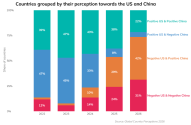
Just three years ago, the U.S. enjoyed a comfortable lead globally in terms of soft power. Almost no one had a good opinion of China and a bad opinion of the United States. The situation has changed dramatically in a short span of time. Today, most countries around the world now view China more favorably than the United States. It is useful to note that most people in the world are not choosing between China and the United States. Back in 2023, public in most countries had positive perceptions of both China and the U.S., followed closely by those countries where the public had a better image of the U.S. than of China.
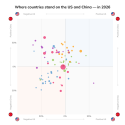
Today, the most common category of countries is the group of those that have a negative public image of the United States and a positive image of China. This is especially common among the countries in Middle East and North Africa, but also applies to some countries from the Asia-Pacific, Sub-Saharan Africa, Latin America, and Europe.


USA edition: 9 year old goes out to dinner alone, ends up raped and eaten on Epstein Island


to be fairi thought regulators there were strict on "criminal" characters?

Imagine that:i thought regulators there were strict on "criminal" characters?
will she be apprehended again?Imagine that:
1. Regulator greens lights a film, possibly deceive by film maker on their true political motive.
2. Film airs, people are pissed saying its in concempt of the legal system and allows an ex-criminal to whitewash her original crime.
3. Regulator hears the response from citizen, orders the movie showing to be stopped and starts an investigation on how this slipped through the process.
Seems to me like the system is working, give or take the initial slip up. Also a good example on why regulators on mass media is needed in the first place.