Chinese Military Exports (Land Systems)

Tanker_MG

Junior Member
Registered Member
Where did you get 200 from?
We don't and that is part of the problem. You know (my assumption) that reading
Please, Log in or Register to view URLs content!
that the 2A46 M-5 has a reported barrel life of 800 EFC and the normal round has an EFC of 1.2. Although the same source has long rod munition EFC at 600. That seems ridiculously high so there is an error or the source is totally wrong.
So 200 barrel life is reported (and said often here), and that is very low, even with no chrome lined barrels. If you extrapolate the 2A46 M5 125mm 1.2 EFC per munition that is a barrel of 240 EFC and that is quite low. I think that NORINCO that has the TDC of the 105mm L7 at least has the data to make a chrome lined 105mm rifled barrel and so of that tech should lend to the 125mm smooth bore, especially since the make the same gun for the PLA and have to demonstrate reliability.

On Defense blog article on the Thai Soldiers commenting on the VT4 performance, it goes to X.com accounts which say the same thing as this blog. But when you go to Thai Soldier TikTok (ugh:rolleyes: - OPSEC Thai!) those same Soldiers say it is great.
Now the vid of the M88A2 towing a INOP VT4 is not good publicity, considering that the Thai Army bought the recovery vehicle with the VT4 procurement. Then again we don't know which units were operating where and what was available at the time in a tactical and fluid situation to conduct the recovery of the VT4. Great picture and videos, but we all know and understand this certainly does not paint the entire picture. I struggle with this with the PLA Engineering vehicle employment that I am still trying to document and write on.

 

Tanker_MG

Junior Member
Registered Member
Just a general thought, I think on the next Zhuhai posts, we should ask for images on the display charts on the vehicle capabilities to see what NORINCO actually publishes or at least ask for images of handouts. Without looking thought the entire Blizto Zhuhai thread, I thought there are tank rounds and some data, although some of that is not readable. Maybe ask
Please, Log in or Register to view URLs content!
if they have anything on specs from the last or other shows?
 

ztqfan1999

New Member
Registered Member
We don't and that is part of the problem. You know (my assumption) that reading
Please, Log in or Register to view URLs content!
that the 2A46 M-5 has a reported barrel life of 800 EFC and the normal round has an EFC of 1.2. Although the same source has long rod munition EFC at 600. That seems ridiculously high so there is an error or the source is totally wrong.
So 200 barrel life is reported (and said often here), and that is very low, even with no chrome lined barrels. If you extrapolate the 2A46 M5 125mm 1.2 EFC per munition that is a barrel of 240 EFC and that is quite low. I think that NORINCO that has the TDC of the 105mm L7 at least has the data to make a chrome lined 105mm rifled barrel and so of that tech should lend to the 125mm smooth bore, especially since the make the same gun for the PLA and have to demonstrate reliability.

On Defense blog article on the Thai Soldiers commenting on the VT4 performance, it goes to X.com accounts which say the same thing as this blog. But when you go to Thai Soldier TikTok (ugh:rolleyes: - OPSEC Thai!) those same Soldiers say it is great.
Now the vid of the M88A2 towing a INOP VT4 is not good publicity, considering that the Thai Army bought the recovery vehicle with the VT4 procurement. Then again we don't know which units were operating where and what was available at the time in a tactical and fluid situation to conduct the recovery of the VT4. Great picture and videos, but we all know and understand this certainly does not paint the entire picture. I struggle with this with the PLA Engineering vehicle employment that I am still trying to document and write on.
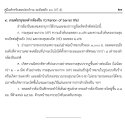
This passage from the operating manual of VT-4 might help, translates to:
"The barrel service life is 500 rounds with a standard load at normal temperatures, using an armor-piercing (AP) : anti-tank (HA) : high-explosive (HE) ratio of 4 : 3 : 3."
1767717994074.png
 

Tanker_MG

Junior Member
Registered Member
This passage from the operating manual of VT-4 might help, translates to:
"The barrel service life is 500 rounds with a standard load at normal temperatures, using an armor-piercing (AP) : anti-tank (HA) : high-explosive (HE) ratio of 4 : 3 : 3."
View attachment 167666
EDITED for addition of two articles

So this is the manual image (also shown on
Please, Log in or Register to view URLs content!
)? The EFC is 500 and the round EFC is AP 4, HA and HE are 3? Just a EFC of 3 divided into 500 is 167 rounds. Or is it 500 rounds of barrel life if firing HA and HE (EFC 3) which is closer to 1500 EFC Barrel Life (500 x 3). Given that the 'manual' states the AP is a value of 4, that means it wears the barrel at a rate of 1.3334 times faster than just using HA or HE, and so the barrel life of just strictly firing AP is 666 Rounds total. Just to confirm that is that the manual is saying (1500 EFC Barrel life, with the EFC for the rounds at either 4 or 3 depending on type), correct or incorrect?

If this is accurate, then the VT4 ZPT98 125mm tank gun is about as good as common main battle tanks.

I would expect the Royal Thai Army to have a report something like
Please, Log in or Register to view URLs content!
. Another good article to understand on barrel life is this article “
Please, Log in or Register to view URLs content!
”, dated January 10, 2024 written by Daniele B Tochnyi. A point some of use may pick up on in the article and connecting to the report by the Thai Soldier of rapid fire is this "The simulation showed that after firing 24 rounds, the risk of the propellant ‘cooking off’ became severe, leading to potentially catastrophic consequences for the system and its operators." All conjecture on my part that rapid fire by the RTA tank crews lead to this incident.

Then this would lead me to conclude that there was barrel obstruction that led to incident. However I still will with hold final determination pending the outcome of official reports.
 
Last edited:

Tomboy

Captain
Registered Member
EDITED for addition of two articles

So this is the manual image (also shown on
Please, Log in or Register to view URLs content!
)? The EFC is 500 and the round EFC is AP 4, HA and HE are 3? Just a EFC of 3 divided into 500 is 167 rounds. Or is it 500 rounds of barrel life if firing HA and HE (EFC 3) which is closer to 1500 EFC Barrel Life (500 x 3). Given that the 'manual' states the AP is a value of 4, that means it wears the barrel at a rate of 1.3334 times faster than just using HA or HE, and so the barrel life of just strictly firing AP is 666 Rounds total. Just to confirm that is that the manual is saying (1500 EFC Barrel life, with the EFC for the rounds at either 4 or 3 depending on type), correct or incorrect?

If this is accurate, then the VT4 ZPT98 125mm tank gun is about as good as common main battle tanks.

I would expect the Royal Thai Army to have a report something like
Please, Log in or Register to view URLs content!
. Another good article to understand on barrel life is this article “
Please, Log in or Register to view URLs content!
”, dated January 10, 2024 written by Daniele B Tochnyi. A point some of use may pick up on in the article and connecting to the report by the Thai Soldier of rapid fire is this "The simulation showed that after firing 24 rounds, the risk of the propellant ‘cooking off’ became severe, leading to potentially catastrophic consequences for the system and its operators." All conjecture on my part that rapid fire by the RTA tank crews lead to this incident.

Then this would lead me to conclude that there was barrel obstruction that led to incident. However I still will with hold final determination pending the outcome of official reports.
If direct translation is to be believed it simply means 500 round total life in a 4:3:3 ratio
 

ztqfan1999

New Member
Registered Member
EDITED for addition of two articles

So this is the manual image (also shown on
Please, Log in or Register to view URLs content!
)? The EFC is 500 and the round EFC is AP 4, HA and HE are 3? Just a EFC of 3 divided into 500 is 167 rounds. Or is it 500 rounds of barrel life if firing HA and HE (EFC 3) which is closer to 1500 EFC Barrel Life (500 x 3). Given that the 'manual' states the AP is a value of 4, that means it wears the barrel at a rate of 1.3334 times faster than just using HA or HE, and so the barrel life of just strictly firing AP is 666 Rounds total. Just to confirm that is that the manual is saying (1500 EFC Barrel life, with the EFC for the rounds at either 4 or 3 depending on type), correct or incorrect?

If this is accurate, then the VT4 ZPT98 125mm tank gun is about as good as common main battle tanks.

I would expect the Royal Thai Army to have a report something like
Please, Log in or Register to view URLs content!
. Another good article to understand on barrel life is this article “
Please, Log in or Register to view URLs content!
”, dated January 10, 2024 written by Daniele B Tochnyi. A point some of use may pick up on in the article and connecting to the report by the Thai Soldier of rapid fire is this "The simulation showed that after firing 24 rounds, the risk of the propellant ‘cooking off’ became severe, leading to potentially catastrophic consequences for the system and its operators." All conjecture on my part that rapid fire by the RTA tank crews lead to this incident.

Then this would lead me to conclude that there was barrel obstruction that led to incident. However I still will with hold final determination pending the outcome of official reports.
I believe it's the former, and what Tomboy said.
The manual doesn't elaborate on the lifespan after that passage, but it did include this that describes what would happen at the end of its lifespan which might give us more clues:

"The gun barrel will reach the end of its service life, and the following facts will occur:

A. Armor-piercing (AP) rounds will have their muzzle velocity reduced by 3.8%, and anti-tank (HA) and high-explosive (HE) rounds will have their muzzle velocity reduced by 2.9%.
B. The dispersion range of accuracy at a distance of 1,000 meters will decrease to the point where the probable error in both distance and direction will be more than eight times that of a normal gun barrel.
C. Certain ballistic abnormalities with the projectiles occur repeatedly (at least 2-3 times). For example, armor-piercing (AP) rounds enter the target sideways, or break apart, and the safety pin of an explosive (HE) round fails to disengage in time or explodes while the round is in trajectory after leaving the barrel, etc.
D. Wear on the gun barrel causes the barrel diameter to enlarge by 3.4 mm at the 25 mm position in front of the bullet pressure cone."
37488.jpg
 

Tanker_MG

Junior Member
Registered Member
I believe it's the former, and what Tomboy said.
The manual doesn't elaborate on the lifespan after that passage, but it did include this that describes what would happen at the end of its lifespan which might give us more clues:

"The gun barrel will reach the end of its service life, and the following facts will occur:

A. Armor-piercing (AP) rounds will have their muzzle velocity reduced by 3.8%, and anti-tank (HA) and high-explosive (HE) rounds will have their muzzle velocity reduced by 2.9%.
B. The dispersion range of accuracy at a distance of 1,000 meters will decrease to the point where the probable error in both distance and direction will be more than eight times that of a normal gun barrel.
C. Certain ballistic abnormalities with the projectiles occur repeatedly (at least 2-3 times). For example, armor-piercing (AP) rounds enter the target sideways, or break apart, and the safety pin of an explosive (HE) round fails to disengage in time or explodes while the round is in trajectory after leaving the barrel, etc.
D. Wear on the gun barrel causes the barrel diameter to enlarge by 3.4 mm at the 25 mm position in front of the bullet pressure cone."
Excellent description and source ZTQfan1999! This is the sort of thing that disproves or at least should redirect those that are reporting the low barrel life to cite their sources. I still think barrel obstruction may be the cause of the incident.
 

ztqfan1999

New Member
Registered Member
I believe it's the former, and what Tomboy said.
The manual doesn't elaborate on the lifespan after that passage, but it did include this that describes what would happen at the end of its lifespan which might give us more clues:

"The gun barrel will reach the end of its service life, and the following facts will occur:

A. Armor-piercing (AP) rounds will have their muzzle velocity reduced by 3.8%, and anti-tank (HA) and high-explosive (HE) rounds will have their muzzle velocity reduced by 2.9%.
B. The dispersion range of accuracy at a distance of 1,000 meters will decrease to the point where the probable error in both distance and direction will be more than eight times that of a normal gun barrel.
C. Certain ballistic abnormalities with the projectiles occur repeatedly (at least 2-3 times). For example, armor-piercing (AP) rounds enter the target sideways, or break apart, and the safety pin of an explosive (HE) round fails to disengage in time or explodes while the round is in trajectory after leaving the barrel, etc.
D. Wear on the gun barrel causes the barrel diameter to enlarge by 3.4 mm at the 25 mm position in front of the bullet pressure cone."
View attachment 167674
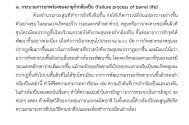
There's this that I forgot to include before the one I posted, apologies. Should be the last one.
Translates to:

"With the increasing number of rounds fired, certain changes occur. For example, initially, cracks (a network of fractures), pits, or chipping of the chrome-plated surface appear in the cone area of the barrel. Later, the deterioration progressively worsens. After approximately 200 rounds, the pitting increases, and the erosion rings in the cone become more pronounced. Furthermore, erosion tends to develop on other surfaces of the barrel, with more severe cracks and network fractures appearing. Even chipping or scaling pits may become common on the unchromed surfaces. This development of erosion on the barrel surface gradually reduces ballistic capabilities such as muzzle velocity and barrel pressure, leading to decreased accuracy (ball spread). Eventually, the external trajectory of the bullet becomes distorted. At this stage, the barrel loses its normal ballistic capabilities and must be replaced."
37501.jpg
 

ztqfan1999

New Member
Registered Member
I'd say it's most likely that the barrel has been unchanged since the first border conflict last year where they've reportedly participated in. After all the live fire training and whatnot, I doubt it's been unchanged since delivery, but who knows.
 
Top