What is this stupid obsession with nominal value about?
Which nominal value, USD or Yuan?

What is this stupid obsession with nominal value about?

So you're not talking about USD to RMB conversion; you're talking about nominal vs real as in inflation adjusted vs. direct volume or production. We're gonna talk about Korea then revisit this in the last section.Nominal isn't merely in USD terms, its also in yuan terms. Why is nominal important? That's a long discussion about deflation and its negative effects.
The definition is funny, political, and largely useless. There are many "developed" countries that look ancient with poor or niche technology and languishing economies. And there's China, until recently a "developing" country, but one that has an economy, technology and military that makes the granddaddy of all developed countries so scared and insecure that it's turning into Nazi Germany.I am comparing with Korea because that's the country that reached the developed stage recently.
Apples and oranges. 10 willing slaves don't necessarily become 1,000 warriors when they have the numbers. Sometimes, they can, but that needs to be proven, not assumed. Everything South Korea did was with American permission; unlike their northern brethren, they have never demonstrated the courage to rise and oppose whatever plan the dominant power of the world throws at them, and that plan is never to create another superpower.Korea is not a contender for a super power because it lacks mass. Give Korea a billion people, and it would be a superpower contender.
That's what everybody wants in macro terms. I thought you meant you wanted China to adjust the RMB to USD conversion but since you are talking instead about inflation adjusted vs direct volume, then what are you asking China to directly do about it? The macro terms are the intended effects of those actions but what are those actions?As for what I want, in micro terms:
I want Chinese citizens to be as rich as an American, owning large homes, driving large/expensive cars, having greater buying power.
I want them to work less, produce more kids.
I want the brightest minds from China (someone like the Yao class students) staying predominantly in China. I want international talent to immigrate to China en masse.
I don't want them sitting in factories producing rubber ducks for a wage of 1000 usd a month. Such things, unless extremely important from a national security point of view, should be imported.
In macro terms, I want:
A big stimulus that targets the tech sector, and boosts child births.


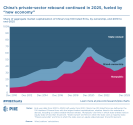
All the land in China is publicly owned, and you can either rent or be granted free land if you are a peasant lol. China is a socialist market economy.China is not a meaningfully Marxist country in any way and arguably is hard to even call it socialist if your definition is strict. It's a mixed-capitalist economy with a structural tailwind towards private enterprise. And that's a good thing.
