Now that actual work is beginning on aspects of the CZ-9 project, we can probably expect expendable and partially reusable flights in the 2030-2035 time frame. But what is really interesting are the nuclear thermal and nuclear electric engines/stages since their progress would determine in part the time-line for crewed Martian and other deep-space flights. (It really seems like the China space sector is taking seriously the best ideas from the 1960s and 1970s, including ideas from the book "The High Frontier").C. The development of heavy-lift launch vehicles must consider a 30-year lifecycle, ensuring sufficient upgrade potential so that from its service entry around 2030 until 2060, the entire rocket lifecycle remains world-class and top-tier. Therefore, it must be developed in phases to meet the needs of the 2040s, 2050s, and 2060s. It must support and be compatible with Mars and deep-space mission requirements. Mars missions would require nuclear-thermal + nuclear-electric hybrid propulsion (necessary for deep space in general), thus a three-phase goal was basically planned for 2030-2045: Phase 1 achieving a series of expendable rockets (140t class), Phase 2 reusable rockets, Phase 3 nuclear-thermal upper stage (third stage).

You are using an out of date browser. It may not display this or other websites correctly.
You should upgrade or use an alternative browser.
You should upgrade or use an alternative browser.
China's Space Program Thread II
- Thread starter Blitzo
- Start date

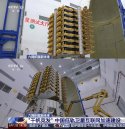
18-pack stack sat platform is undergoing test.
From lyman2003 via Weibo
I don't think it's for the reasons you mentioned. I believe the information asymmetry is purely due to one-sided arrogance and prejudice, turning a blind eye to a lot of early information.There's a difference between being aware of long term plans versus actually seeing things being implemented in a way that is visually and physically present.
That is especially so given the nebulous way in which various PRC space launch projects go through milestones, and different messaging at different levels of loudness and officiality.
In fact, within the circle of Chinese space enthusiasts, those who dare to share space-related information on foreign websites or open internet forums are overwhelmingly non-industry people, or individuals marginally related to the industry.
Real experts in this field simply don't look at these discussions. The reason is simple: they usually spend their entire workday researching related topics, and their personal time is mostly occupied by other hobbies and life chores. On top of that, relevant institutions emphasize education and warnings about leaking classified information online. So real experts in this field simply don't participate in online discussions.
Most people engaging in social discussions on the Chinese side are industry fringe figures or pure enthusiasts.
Many of these enthusiasts studied this major (or related fields) but mostly never entered aerospace/national defense organizations; instead, they went abroad or work in unrelated industries.
Most of the time, these people don't read—or even dislike reading—Chinese scientific research literature. Before 2020, when you tried to communicate with them and explain certain issues, once you cited Chinese literature, the vast majority would activate a contempt chain, with reasoning as follows:
Chinese scientific research literature has too much officialese (stereotyped writing), no need to read it.
The quality of Chinese scientific literature is too low; they only read advanced literature from Europe, America, and Japan (mostly encyclopedia entries and Google-retrieved information).
Chinese scientific research literature is too full of water and fraud, lacking direct information (specific models), only indirect data and analysis.
In short, it's a debating tactic to deny the opponent's chain of evidence. When the opponent's evidence is problematic or not direct enough, naturally everything becomes questionable.
It can be said that precisely because of this attitude (arrogance + prejudice), many obvious pieces of key information have rarely been seen or known by the general public (enthusiasts).
Because the arguments and evidence were simply not accepted.
The most typical example is the controversy between CZ-9 and CZ-10. In China's aerospace officialese (I mean the real officialese—not a single word about specific models, just praise or mobilization articles),
terms like "new-generation launch vehicle" (CZ-5 series), "heavy-lift launch vehicle" (CZ-9), and "next-generation crewed launch vehicle" (CZ-10) have long appeared listed together in parallel. Think about it—they must be three different rocket families. This phrase frequently appears in Chinese aerospace publications and newspapers. Basically, everyone in the circle should know what it means. Yet, despite this, the discussion about CZ-9 and CZ-10 being in competition managed to drag on for three years (2018-2021). CZ-10 and CZ-9 are complementary, not competitive. And they still claim to understand China's aerospace?
So I believe the core issue is that, due to long-standing doubt and disdain toward China's scientific, technological, and military capabilities (from the 1990s to the early 2020s), when key information emerged early on,
it was filtered out and discarded through these lenses. Much information simply never got transmitted.
Of course, this situation is less common today. But for aerospace, many projects need to be analyzed and observed over a span of 15-20 years to better understand their causes and consequences—how things were thought of early on, how they are thought of now, what changes occurred in between, why those changes happened, and what those changes reveal.
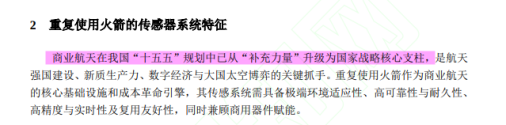
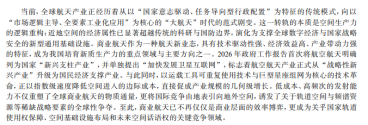
The two images below are excerpts from several documents released after the 2026 Two Sessions (the first Two Sessions of the 15th Five-Year Plan period, a critical juncture after the new leadership took office. In China's traditional political ecosystem, this is the observation window for "new brooms sweeping clean," and also the overarching policy blueprint for the next five years).I don't really think this needs to be emphasized -- the fact that China is pursuing multiple tracks with extensive technological and industry reserves is known.
From here the decisive outcome to measure is now speed and quantity of implementation.
Pay attention to the entirely new phrasing regarding the positioning of commercial space. I prefer reading this kind of literature.
Actually, I'm not worried about what you mentioned—implementation efficiency and quantity—because based on my comparisons, China's catching-up is rapidly accelerating. Many people, however, ignore this when making comparisons, focusing only on the current snapshot. They see the mature Falcon 9 launching smoothly, and Starship advancing quickly despite repeated failures, and conclude that China is failing. But China has always said: the darkest hour is just before dawn.

I don't think it's for the reasons you mentioned. I believe the information asymmetry is purely due to one-sided arrogance and prejudice, turning a blind eye to a lot of early information.
In fact, within the circle of Chinese space enthusiasts, those who dare to share space-related information on foreign websites or open internet forums are overwhelmingly non-industry people, or individuals marginally related to the industry.
Real experts in this field simply don't look at these discussions. The reason is simple: they usually spend their entire workday researching related topics, and their personal time is mostly occupied by other hobbies and life chores. On top of that, relevant institutions emphasize education and warnings about leaking classified information online. So real experts in this field simply don't participate in online discussions.
Most people engaging in social discussions on the Chinese side are industry fringe figures or pure enthusiasts.
Many of these enthusiasts studied this major (or related fields) but mostly never entered aerospace/national defense organizations; instead, they went abroad or work in unrelated industries.
Most of the time, these people don't read—or even dislike reading—Chinese scientific research literature. Before 2020, when you tried to communicate with them and explain certain issues, once you cited Chinese literature, the vast majority would activate a contempt chain, with reasoning as follows:
Chinese scientific research literature has too much officialese (stereotyped writing), no need to read it.
The quality of Chinese scientific literature is too low; they only read advanced literature from Europe, America, and Japan (mostly encyclopedia entries and Google-retrieved information).
Chinese scientific research literature is too full of water and fraud, lacking direct information (specific models), only indirect data and analysis.
In short, it's a debating tactic to deny the opponent's chain of evidence. When the opponent's evidence is problematic or not direct enough, naturally everything becomes questionable.
It can be said that precisely because of this attitude (arrogance + prejudice), many obvious pieces of key information have rarely been seen or known by the general public (enthusiasts).
Because the arguments and evidence were simply not accepted.
The most typical example is the controversy between CZ-9 and CZ-10. In China's aerospace officialese (I mean the real officialese—not a single word about specific models, just praise or mobilization articles),
terms like "new-generation launch vehicle" (CZ-5 series), "heavy-lift launch vehicle" (CZ-9), and "next-generation crewed launch vehicle" (CZ-10) have long appeared listed together in parallel. Think about it—they must be three different rocket families. This phrase frequently appears in Chinese aerospace publications and newspapers. Basically, everyone in the circle should know what it means. Yet, despite this, the discussion about CZ-9 and CZ-10 being in competition managed to drag on for three years (2018-2021). CZ-10 and CZ-9 are complementary, not competitive. And they still claim to understand China's aerospace?
So I believe the core issue is that, due to long-standing doubt and disdain toward China's scientific, technological, and military capabilities (from the 1990s to the early 2020s), when key information emerged early on,
it was filtered out and discarded through these lenses. Much information simply never got transmitted.
Of course, this situation is less common today. But for aerospace, many projects need to be analyzed and observed over a span of 15-20 years to better understand their causes and consequences—how things were thought of early on, how they are thought of now, what changes occurred in between, why those changes happened, and what those changes reveal.
I am actually somewhat sympathetic to people's "arrogance and prejudice" causing information asymmetry, because the amount of work that is needed to get an accurate gauge of Chinese space launch is quite in excess of what is needed in most domains of other nations' space efforts.
It's similar to PLA watching --- it took years of discourse and sustained conversation to make PLA watching a more credible and accepted part of the Chinese military tracking discourse. And it's because PLA watching itself is just more difficult than tracking those of other national military forces. The same principle applies for PRC space watching.
The fact that Chinese space launch documentation and planning is relatively impermeable is also not helped by the fact that it often takes a long time for new projects to come to fruition, and it is only in the last couple of years that some projects have entered physical existence that most people are forced to definitively accept as real.
In the short to medium term, the solution is fairly simple -- once the PRC space launch industry is able to annually launch and recover a few hundred rockets per year, then it will close the mouths of remaining detractors and skeptics, and of course on the road of achieving it there will be gradual reduction of skeptics.
Until then, PRC space observers will have to accept that there's going to be some degree of skepticism for each and every step they make until they achieve it.
The two images below are excerpts from several documents released after the 2026 Two Sessions (the first Two Sessions of the 15th Five-Year Plan period, a critical juncture after the new leadership took office. In China's traditional political ecosystem, this is the observation window for "new brooms sweeping clean," and also the overarching policy blueprint for the next five years).
Pay attention to the entirely new phrasing regarding the positioning of commercial space. I prefer reading this kind of literature.
Actually, I'm not worried about what you mentioned—implementation efficiency and quantity—because based on my comparisons, China's catching-up is rapidly accelerating. Many people, however, ignore this when making comparisons, focusing only on the current snapshot. They see the mature Falcon 9 launching smoothly, and Starship advancing quickly despite repeated failures, and conclude that China is failing. But China has always said: the darkest hour is just before dawn.
View attachment 176577View attachment 176578
I am not talking about whether something is a "worry" -- I am just saying that now that we know what their intent and plan is, it is just a matter of observing how well they execute and scale their efforts up.
We can talk about how the future trajectory is what matters, yes, but very soon the future will become the near future, and the near future will become the present, and eventually they will have to start to deliver on their plans for us to actually judge their success. I think they have a good chance of succeeding in many domains, but it would also be arrogant to ignore the successes of other existing incumbent leading products in today's "snapshot".
I am actually somewhat sympathetic to people's "arrogance and prejudice" causing information asymmetry, because the amount of work that is needed to get an accurate gauge of Chinese space launch is quite in excess of what is needed in most domains of other nations' space efforts.
It's similar to PLA watching --- it took years of discourse and sustained conversation to make PLA watching a more credible and accepted part of the Chinese military tracking discourse. And it's because PLA watching itself is just more difficult than tracking those of other national military forces. The same principle applies for PRC space watching.
The fact that Chinese space launch documentation and planning is relatively impermeable is also not helped by the fact that it often takes a long time for new projects to come to fruition, and it is only in the last couple of years that some projects have entered physical existence that most people are forced to definitively accept as real.
In the short to medium term, the solution is fairly simple -- once the PRC space launch industry is able to annually launch and recover a few hundred rockets per year, then it will close the mouths of remaining detractors and skeptics, and of course on the road of achieving it there will be gradual reduction of skeptics.
Until then, PRC space observers will have to accept that there's going to be some degree of skepticism for each and every step they make until they achieve it.
Here's the truth: I can understand why foreigners make mistakes when observing China's military and aerospace sectors (the vast language barrier of Chinese, unfamiliarity with Chinese culture and specialized information). What I'm really complaining about are those who call themselves Chinese space enthusiast groups—purely Chinese and overseas Chinese communities. These people are on X, even on domestic platforms like Weibo, WeChat, Zhihu, Bilibili, and formerly dedicated sections of forums like CD and Aerospace Harbor. Up to this day, they remain largely unreasonable and effectively control the so-called channels of aerospace popular science, spreading massive amounts of misinformation to the public.
Wherever you engage in public discussion, if you publish articles or opinions they disagree with, a crowd of people who don't really understand aerospace will swarm in, subjecting you to personal attacks, targeted belittlement, or deliberate distortion of your views. They also set up comment restrictions (blocking comments from anyone they haven't approved). So in reality, a lot of aerospace information and observations on the Chinese internet have long been polluted by this misinformation.
Similar situations can be seen on NSF (NASASpaceFlight), where a group of fanatical SpaceX supporters—often called "internet man-children"—cannot tolerate any criticism of SpaceX. Their frequent cyberbullying has driven many industry experts away from public commentary. Of course, these issues have eased somewhat in the last 2-3 years.
For non-Chinese aerospace or military enthusiasts, the language barrier makes it very difficult to gain deep insight into China's aerospace developments (through unofficial channels). Currently, those capable of transmitting such information through public channels almost never hold official positions; it's entirely speculation by enthusiasts. And most enthusiasts have flawed understandings. For example, in some groups I'm in, discussions about stainless steel for rocket bodies are completely opposite to mainstream public science popularization. In those groups, the two core discussants are: one from a private commercial rocket company building stainless steel rockets, and another with a background from the "Defense Seven Sons" universities, likely in aerospace-related fields, a professional who works with stainless steel materials daily. The content of their discussions would never survive in the Weibo, WeChat, Zhihu, or Twitter groups run by certain famous aerospace science popularization influencers (with hundreds of thousands or millions of followers)—they'd be shouted down before they could finish a sentence.
So, if the groups transmitting China's aerospace information to the outside world inherently have biased positions, it's natural that their judgments on core issues will be wrong.
Take an example: Do these people know the three official Chinese codename phrases—"new-generation launch vehicle," "heavy-lift launch vehicle," and "next-generation crewed rocket"? Actually, they all do. Nobody misjudged the first two. But when it came to what "next-generation crewed rocket" referred to, they got it wrong.
Back then, the vast majority assumed the "next-generation crewed rocket" meant a crewed launch vehicle developed from the CZ-724 configuration. Everyone knew this rocket was closely related to CZ-7 and CZ-5 (as stated on the 921 Crewed Space Engineering Office website). But most people failed to link it to CZ-5DY.
If you trace CZ-9's history (from 2005 to 2020), you'll find a very clear thread. Entering the 21st century, with the U.S. initiating a new wave of lunar exploration, the Constellation Program was the first to propose abandoning Saturn V's crew-and-cargo-combined approach (a concept existing before roughly 2003) in favor of a safer crew-and-cargo-separate model. This approach was adopted as a standard and norm by global space agencies, naturally influencing China's crewed lunar program. Thus, during the early pre-research phase (2005-2010), China followed this design principle. In 2010, Long Lehao's two-phase lunar mission proposal outlined a first phase involving three launches with separate crew and cargo. The CZ-5DY mentioned at the time was essentially a 6-booster + 5-meter core stage (first stage: 6×2 + 4×1 = 16 YF-100 engines), combining CZ-7 and CZ-5 kerosene-stage bodies.
Why do I mention this detail? Because back then, Chinese space enthusiasts were puzzled: why did the 921 Crewed Space Engineering Office website list CZ-5 alongside CZ-2F and CZ-7? Today, the answer is clear: from the very beginning, China's aerospace authorities designated CZ-5DY (the kerosene first-stage variant of CZ-5) as the candidate for the next-generation crewed rocket, not as a simple replacement of CZ-2F with CZ-724.
There's another crucial difference: most of today's big-name aerospace science popularizers fail to recognize the significance of the crew-and-cargo-separate approach for crewed deep-space exploration in both China and the U.S. Many are fascinated by artistic renderings of Starship with windows, carrying 100 people to Mars. But in aerospace terms, that's exactly crew-and-cargo-combined transport.
So these people, until 2020, believed CZ-9 would send people to the moon in the same way as Saturn V (most still can't distinguish today). Hence, they thought developing CZ-9 and CZ-10×2 represented competition.
This highlights that studying the details of China's crewed lunar program requires starting from before 2000 (the kerosene-stage CZ-5 concept appeared in pre-2000 literature), then grasping the key moment between 2005-2010 when China chose to follow the U.S. Constellation Program's crew-and-cargo-separate approach. Between 2010-2015, China decided on a high-lunar-orbit rendezvous scheme for crewed lunar missions (CZ-9 adopting a three-and-a-half-stage configuration; by elimination, CZ-724 was confirmed incapable of high-orbit missions). Only through this process could one accurately connect "next-generation crewed rocket" with CZ-5DY during the 2016-2020 period. Without this prerequisite understanding, most people would only see the next-generation crewed rocket as a variant of CZ-724, not recognizing that it is fundamentally a lunar mission rocket—primarily designed for high-orbit tasks, with low-orbit missions (at the CZ-724 scale) being secondary.
All I can say is that the Chinese government's long-term cultivation of public credibility is understood differently by the outside world than it actually is.I am not talking about whether something is a "worry" -- I am just saying that now that we know what their intent and plan is, it is just a matter of observing how well they execute and scale their efforts up.
We can talk about how the future trajectory is what matters, yes, but very soon the future will become the near future, and the near future will become the present, and eventually they will have to start to deliver on their plans for us to actually judge their success. I think they have a good chance of succeeding in many domains, but it would also be arrogant to ignore the successes of other existing incumbent leading products in today's "snapshot".
For us, the Chinese government is the type of country that deliberates carefully before acting. Either it says nothing, or if it speaks, it must deliver. So when I read literature, I distinguish which level of official or influential figure within the industry made the statement, in order to determine whether this is a national-level action and how much room for growth and credibility it has. I don't wait for the physical product to emerge before making a judgment.
Regarding China's commercial reusable rockets, I am actually not worried at all. I expressed this view long ago on NSF. China's reusable rocket program is not about creating a single tech giant (SpaceX). That model is actually unhealthy for the industry (just look at the problems Tesla and Apple have caused in their respective industries). China aims to incubate an entire industrial cluster. Whether this cluster emerges a few years earlier or later doesn't make much difference (the difference is at the starting point, where SpaceX has already claimed some orbital slots).
Whether SpaceX/the U.S. occupies these orbital resources or not is actually not a big deal. If China cares about this now, it's because China is still willing to operate within the framework of the current international order, abiding by the rules set by Western powers. Please understand: China has the strength to flip the table at any time. In other words, China has the ability to redefine the game in its own favor (whether on the ground or in space).
For true powers, certain things can be rules or scraps of paper. Right now, it's not China itself that is being pushed to flip the table. So under this premise, the pressure you perceive doesn't actually exist. Consider how the FCC has manipulated things against China in other fields, like the comprehensive exclusion of Chinese companies from future wireless communication standards such as 6G. It's highly likely that China has already prepared for the necessity of global technological decoupling. Once decoupled, all previously self-imposed constraints become unnecessary.
Thus, under this premise, the so-called competitive pressure discussed here doesn't actually exist (this is important).
Remember: China's space program has never denied the current leadership of the U.S. space program (officially, China acknowledges it will not have the capability to contend for dominance in the space domain with the U.S. until at least 2035). China's mindset has always been to walk its own path, ignoring external distractions, and act according to its own rhythm and established goals. In Chairman Mao's era, this was called "You fight your way, I fight mine."
In China's eyes, the future is not 5-10 years, but 20-50 years. The U.S.'s current space advantage is actually only about 10 years. Many of China's technological preparations are planned to overtake on multiple tracks 10-20 years from now. Being behind right now, and finding it difficult to catch up within 5 years—this has always been the honest truth. But once the inflection point is crossed, it will be just like how Chinese automobiles are now dominating the world.

Wenchang is currently working towards flying 30 Long March 8's per year, completing two new launch pads.